Why Six Nations Rugby Trips from Ireland Are About the Day, Not Just the Match
Key Takeaways
- Most trips fail through timing pressure, not poor enthusiasm, because every small delay lands inside a fixed kick-off window.
- Cardiff may look walkable on paper, yet dense crowds can turn short distances into slow and stressful journeys.
- Glasgow-based Scotland trips often save money, but they replace convenience with disciplined transfer timing on matchday.
- Many supporters assume packages include tickets, only discovering later that entry usually needs separate planning.
- Experienced travellers plan the whole day first, because the match itself is the easiest part to organise.
The match is fixed. The day around it is where trips succeed or fail
When Irish fans look at fixtures like Six Nations Championship away games, the focus naturally sits on kick-off time, opponent, and result. That part is simple. Dates are published months in advance, stadiums are known, and travel looks manageable on paper.
The difficulty starts when you build the day around it.
A 14:00 kick-off in Cardiff or an evening match in Edinburgh sets off a chain of decisions that most first-time travellers underestimate. Ferry times, coach transfers, hotel locations, walking routes, and entry queues all compress into a narrow window where delays are not easily absorbed.
This is why experienced travellers plan the full day first and treat the match as the centre point, not the entire plan.
What does a Six Nations rugby trip from Ireland involve?
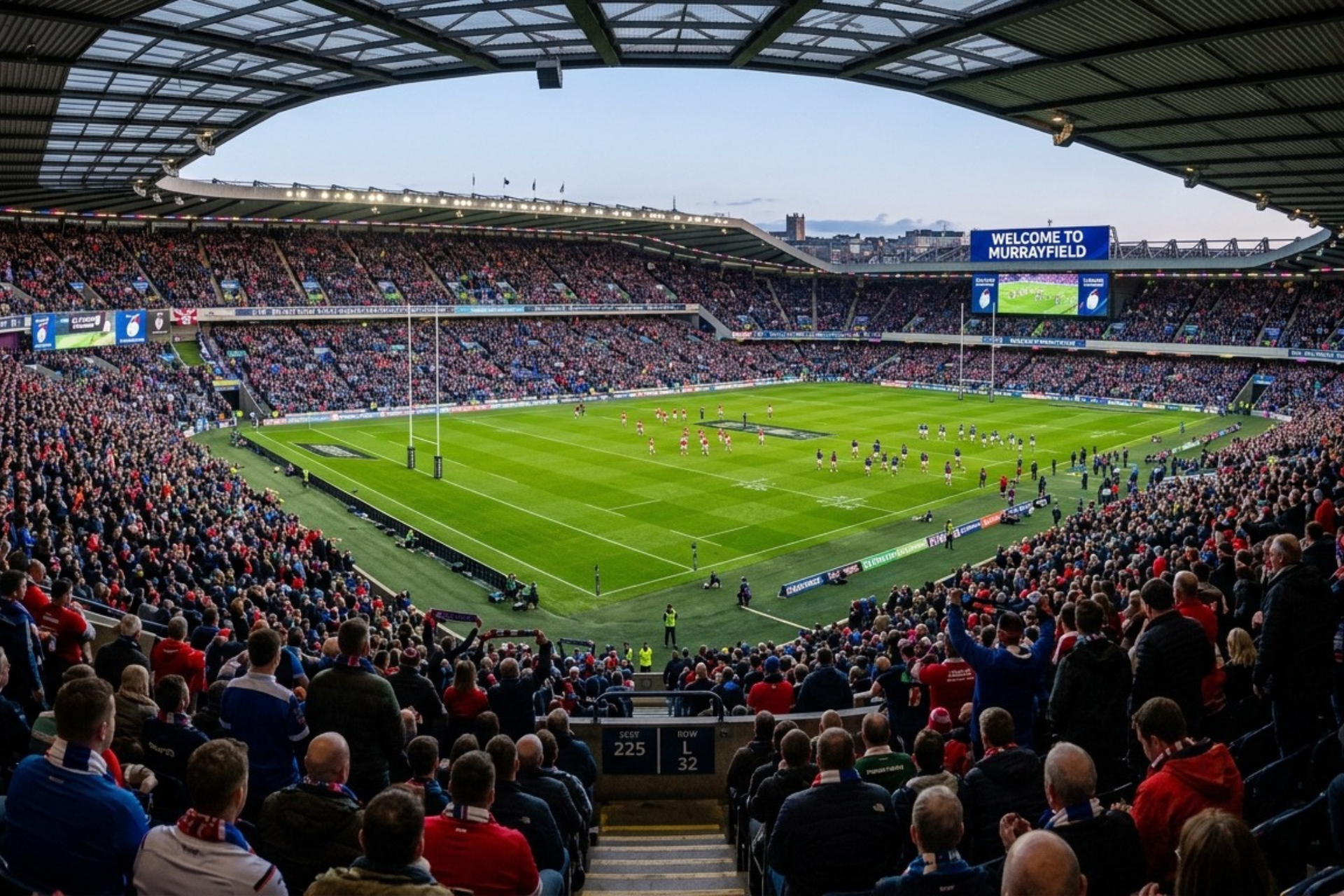
For fixtures such as Wales v Ireland in Millennium Stadium or Scotland v Ireland at Murrayfield Stadium, the structure is broadly consistent, whether you plan independently or travel as part of a group.
You are dealing with:
- Cross-channel travel, usually ferry and coach for group trips
- A hotel base that may not be in the stadium city
- A fixed matchday transfer window
- High footfall around compact city centres
- Strict stadium entry processes
The itinerary itself looks straightforward when written down. In practice, it runs on tight timing, and small delays tend to stack rather than cancel out.
Why do first-time fans underestimate rugby trip logistics?
Most first-time travellers approach rugby trips the same way they would a weekend city break. Book transport, pick a hotel, and assume everything else falls into place.
That assumption rarely holds for Six Nations weekends.
Cities like Cardiff operate at full capacity on matchday. Roads close early. Public transport becomes crowded well before kick-off. Walking routes slow down significantly in the final hour before entry.
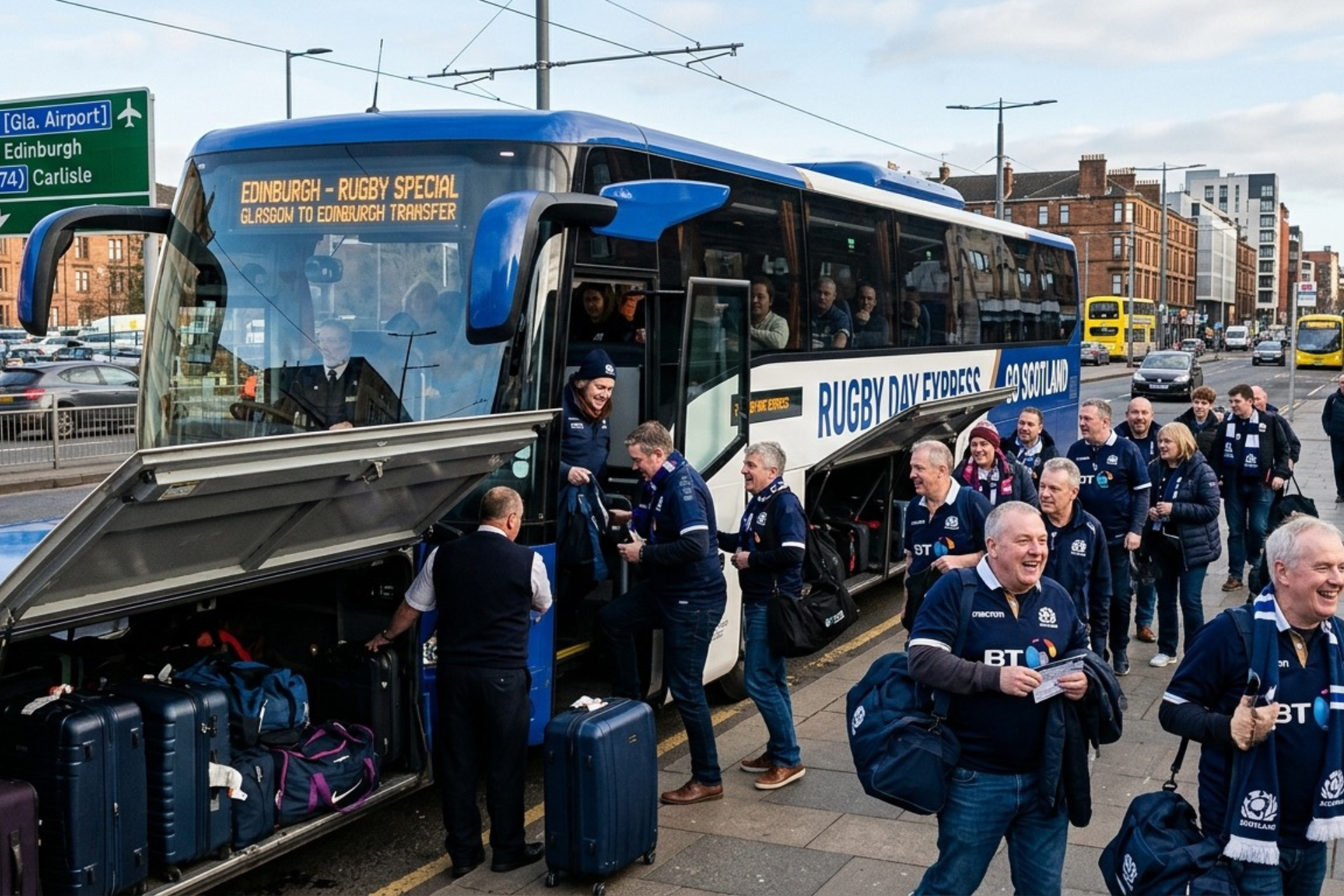
In Edinburgh, the issue shifts slightly. Many packages use Glasgow as a base, which means a planned transfer to the stadium rather than a short walk. That introduces timing pressure that is easy to misjudge if you are unfamiliar with the route.
This is where trips begin to feel rushed rather than enjoyable.
Transport realities: Dublin to Cardiff or Edinburgh is not a straight line

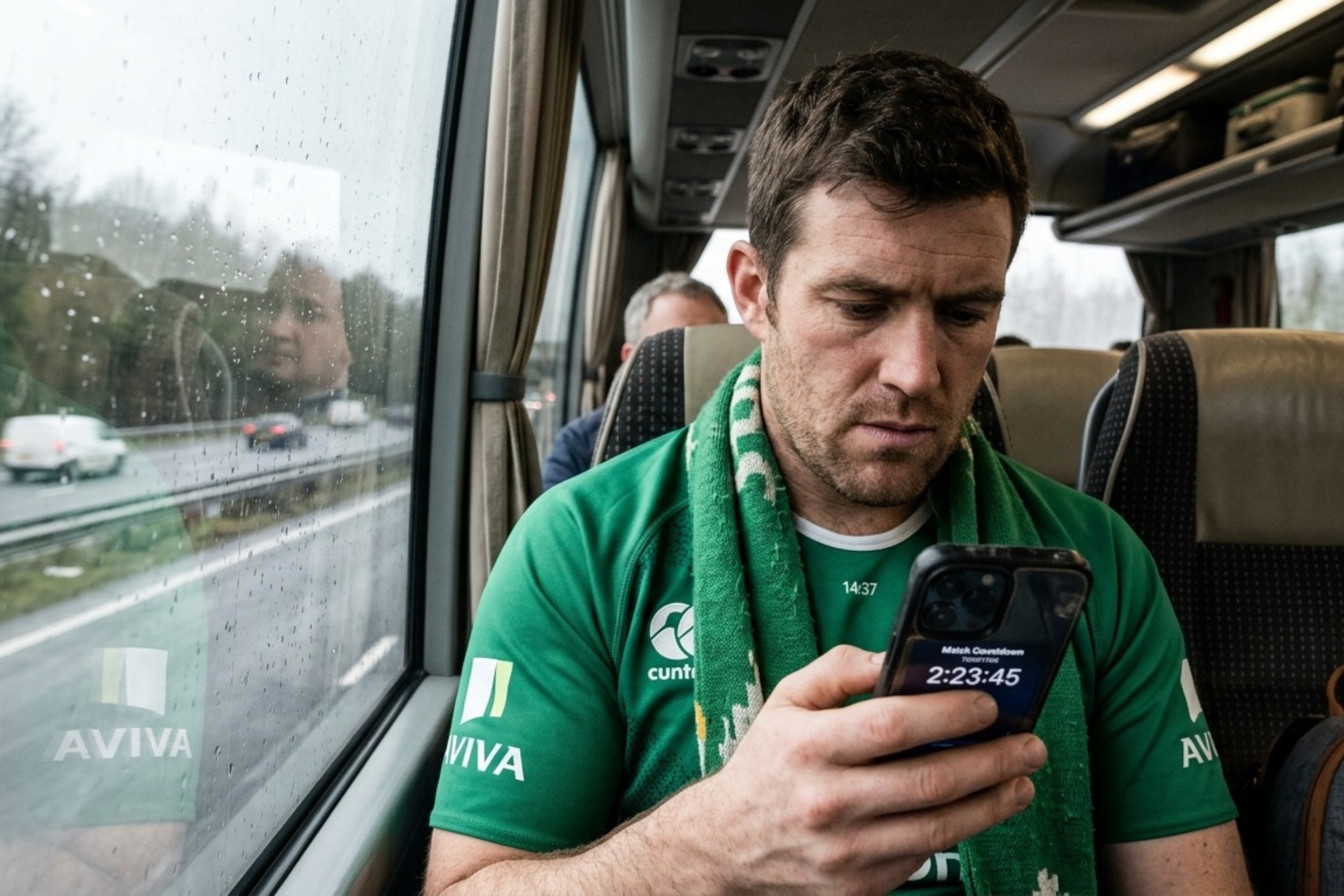
Search interest often centres around “how to get there,” but the more relevant question is how long each stage takes.
A typical coach and ferry journey from Dublin to South Wales involves:
- Early departure to meet ferry schedules
- Fixed crossing times that cannot be adjusted
- Road travel after arrival that depends on matchday traffic
For Scotland trips, the journey often includes:
- Ferry crossing to the UK
- Road travel north to Glasgow
- A separate matchday transfer to Edinburgh
None of these steps are complex on their own. The challenge comes from combining them without margin for delay.
If you are trying to line this up independently, map your journey backwards from kick-off rather than forwards from departure. That alone removes a large portion of the risk.
How far are the stadiums from where you stay?
This is one of the most searched but least clearly answered questions.
In Cardiff, the stadium sits within the city centre. From most central hotels, you can walk to Millennium Stadium in 10 to 20 minutes. That sounds easy, but on matchday those streets are dense with supporters, and movement slows noticeably.
In Scotland packages, accommodation is often in Glasgow. The match takes place at Murrayfield Stadium, which requires a planned transfer. That adds roughly 60 to 90 minutes of travel each way depending on traffic and scheduling.
The difference is important. One is a managed walk. The other is a structured transfer that you need to follow precisely.
Do Six Nations travel packages include match tickets?
This is a point that catches many people out.
Packages such as the Wales v Ireland (€349) and Scotland v Ireland (€359) options typically cover:
- Return coach and ferry travel
- Hotel accommodation with breakfast
- Matchday transfers
They do not automatically include match tickets.
This is not unusual. Ticket allocation for Six Nations fixtures is tightly controlled by unions and clubs, and availability is limited. Many travellers secure tickets separately through official channels or memberships.
Understanding this early avoids last-minute scrambling or reliance on resale markets, which carry risk.
Why the pre-match window matters more than people expect
Supporters often imagine arriving at the stadium shortly before kick-off, finding their seat, and settling in.
That approach no longer works consistently.
Stadiums like Millennium Stadium operate controlled entry systems, with security checks, digital ticket validation, and queues that build well before gates close. Arriving 45 to 60 minutes early is no longer cautious. It is necessary.
The same applies at Murrayfield Stadium, particularly for evening fixtures where arrival times cluster tightly.
The pre-match period also includes:
- Meeting points for transfers
- Walking routes affected by road closures
- Time to navigate crowds and locate gates
This is the part of the day where poor timing creates stress.
Why many Irish fans choose organised rugby trips after their first attempt
Fans who plan independently for the first time often manage the trip successfully. The challenge is that it requires constant coordination across transport, timing, and access.
What changes after that experience is not the desire to travel, but the tolerance for managing all the moving parts again.
Packages that include coach travel, accommodation, and transfers remove several pressure points:
- Fixed departure and return schedules
- Pre-arranged routes to and from the stadium
- Group coordination rather than individual decision-making
If your priority is getting the day right rather than managing every step yourself, a structured package from Celtic Horizon Tours removes the parts that tend to go wrong.