The Top 10 London Sights That Bring Class Lessons to Life for Irish Students
Key Takeaways
- The best London school trips are planned by area, not attraction popularity alone.
- Free entry can still require timed booking, group forms or paid workshops.
- South Kensington is ideal for science-focused school groups because major museums sit close together.
- Westminster and the Tower need extra time for security, walking routes and supervision.
- Organised travel is most useful when transport, tickets, meals and timings overlap.
London is one of the strongest destinations for Irish school groups because it brings history, science, politics, literature, art, engineering and culture into one city. The difficulty is not finding educational attractions in London. The difficulty is choosing the right ones, sequencing them properly and giving students enough time to learn without turning the trip into a rushed checklist.
For Irish schools, a successful London school trip usually depends on four things: curriculum value, realistic travel times, group supervision and advance booking. Teachers who are planning their first overseas school trip should establish responsibilities, permissions and booking deadlines before choosing individual attractions.
Celtic Horizon Tours can support schools by handling the travel and itinerary structure, while teachers keep control of the educational purpose of the trip.
Best educational attractions in London for school groups
1. British Museum school visits
The British Museum is a strong choice for history, classics, archaeology, art history and world cultures. Its schools programme includes curriculum-focused sessions, teacher visit guides and classroom resources, while school groups can also access special exhibition learning support.
For Irish school groups, the key is focus. Ancient Egypt, Greece, Rome and global civilisations can all fit into one visit, but trying to cover everything weakens the learning value. A themed route works better.
2. Natural History Museum school visits
The Natural History Museum in South Kensington works well for biology, geography, climate, evolution and environmental studies. Its school visit guidance includes workshops, shows, tours, lunch-space advice and downloadable gallery resources.
It is also one of London’s busiest museums, so schools should avoid treating it as a simple walk-in stop. Entry arrangements, arrival time and regrouping points should be planned before travel.
3. Science Museum group visits
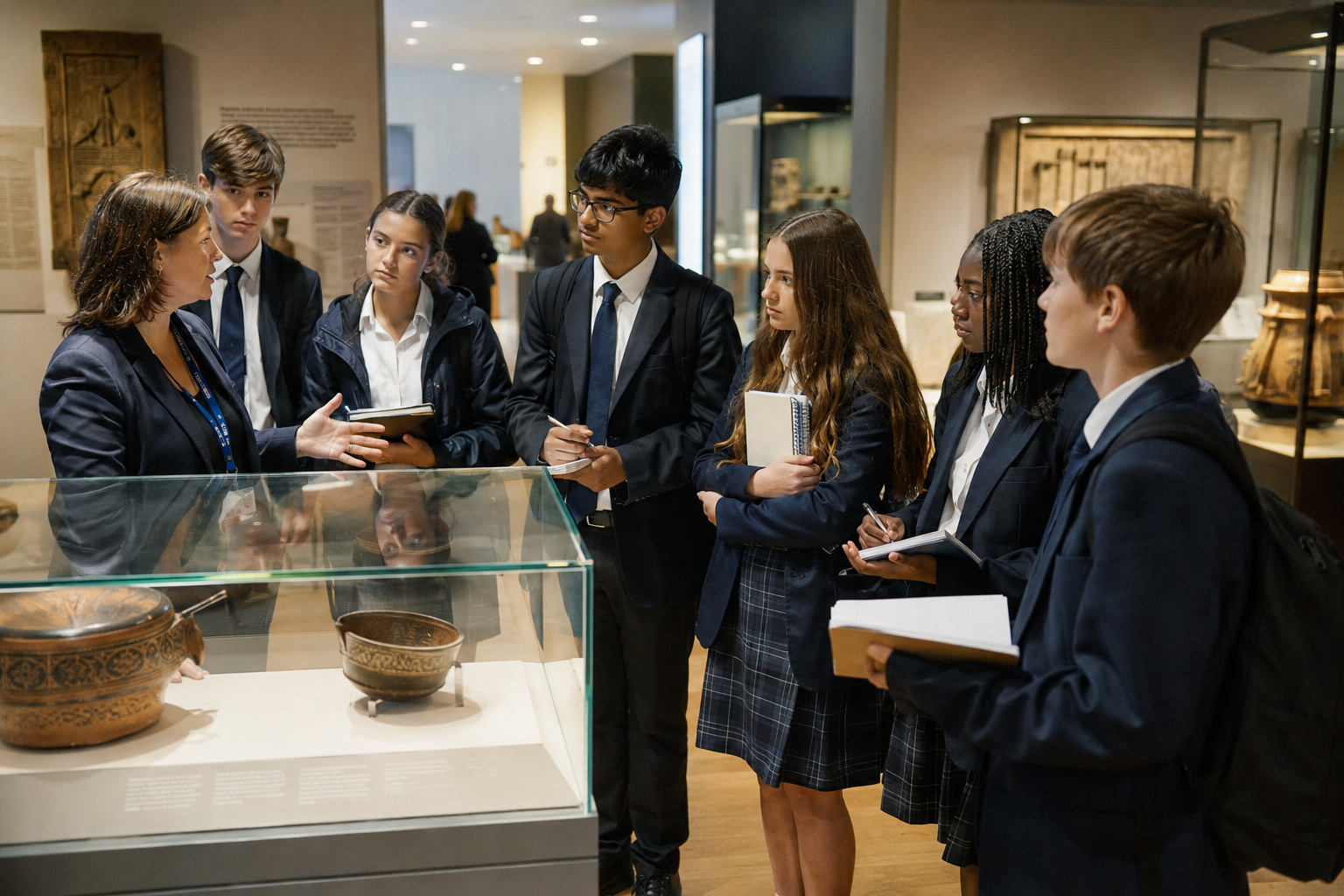
The Science Museum is one of the most useful London attractions for STEM school trips. Its group booking information covers formal education groups, free general admission tickets and learning resources for classroom or museum use.
Its location beside the Natural History Museum makes South Kensington a practical full-day option. The mistake is overloading the day. Two major museums can work, but only with clear priorities and enough time for food, toilets and movement.
4. Tower of London school visits
The Tower of London is ideal for medieval history, monarchy, power, imprisonment and public history. Historic Royal Palaces provides school visit planning, booking information, admission guidance, school sessions and learning resources.
This is a high-value educational stop, but it needs time. The site is large, outdoor movement is involved and busy periods can affect pace. It is better as a planned anchor visit than a rushed add-on.
5. Imperial War Museum London school trips
Imperial War Museum London supports history, citizenship, politics, remembrance and conflict studies. Its school visit programme includes free self-guided visits, paid learning sessions, downloadable resources and exhibitions linked to the history curriculum.
Because some subject matter is sensitive, teachers should prepare students before arrival. This is not just a museum stop. It works best when linked to classroom learning, reflection and age-appropriate discussion.
6. UK Parliament Education Centre school visit
UK Parliament offers free education visits that can include a Palace of Westminster tour and a curriculum-informed workshop in the Education Centre. These visits are designed for schools, colleges, home educators and SEND groups.
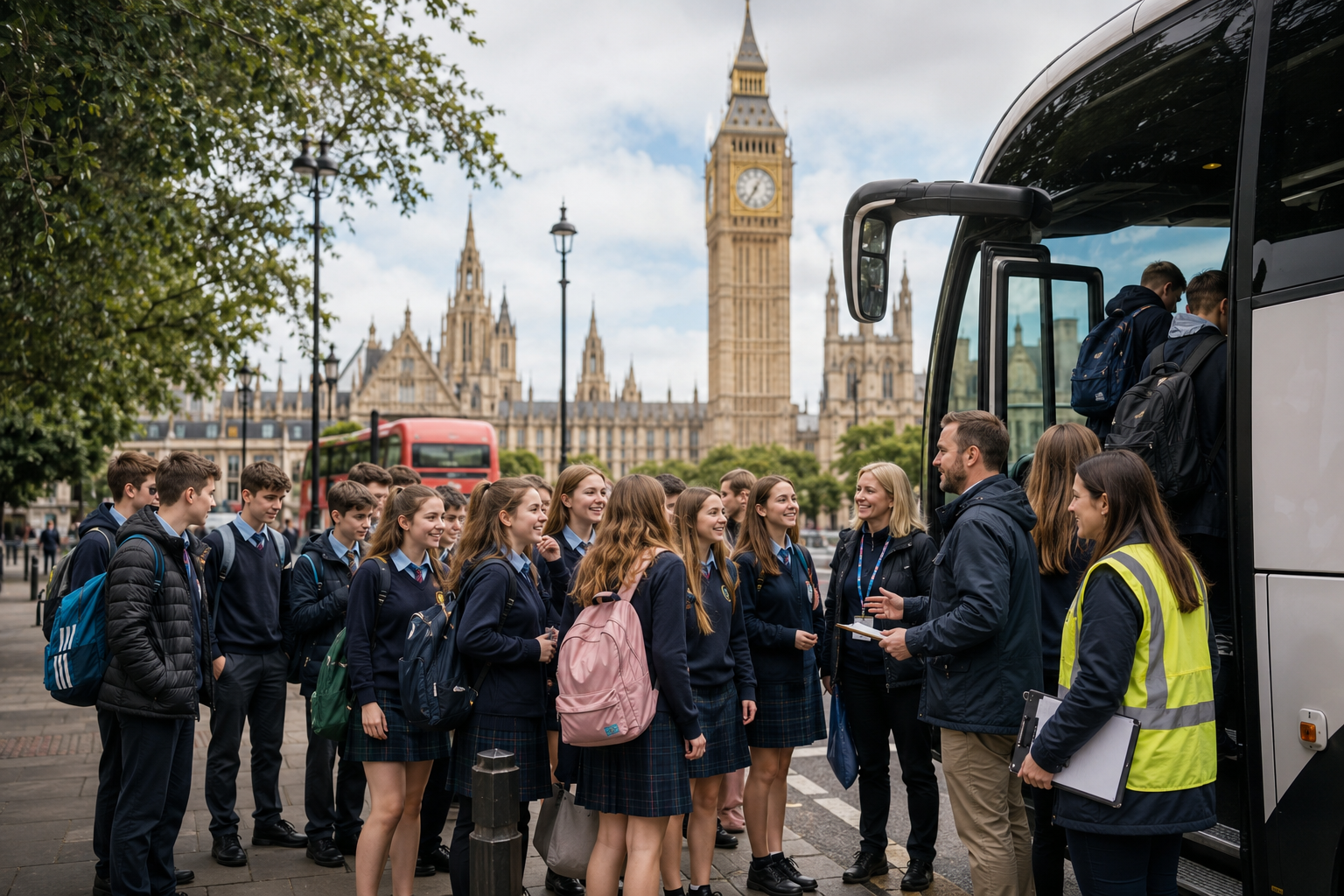
For Irish school groups studying politics, history or citizenship, this is one of London’s most distinctive learning experiences. Security and punctuality are important, so the itinerary should allow calm arrival rather than a last-minute dash.
7. Shakespeare’s Globe school visits
Shakespeare’s Globe is a valuable stop for English, drama and performance studies. Its school visit information includes performance options, workshops and group arrangements, with specific school ticketing structures for 2026 visits.
The Globe works best when tied to a text students are studying. A performance, workshop or guided group experience gives stronger value than simply seeing the building from the outside.
8. London Transport Museum school groups
London Transport Museum in Covent Garden suits geography, design, engineering, social history and urban planning. Its schools information highlights London’s transport heritage and STEAM learning, while its planning page states that all school visits, including self-guided visits, must be booked in advance. Booked school visits include an allocated lunch space and time slot.
This makes it a practical choice for younger groups or mixed-interest itineraries, especially when combined with Covent Garden or central London.
9. National Gallery school visits
The National Gallery is a strong educational attraction for art, history, visual literacy and critical thinking. Its secondary schools programme supports confidence, communication, creativity and critical thinking through tours, workshops and learning programmes.
Irish schools should check overseas school booking costs before finalising plans, as the Gallery’s information distinguishes between UK school access and overseas school bookings.
10. Royal Museums Greenwich school visits
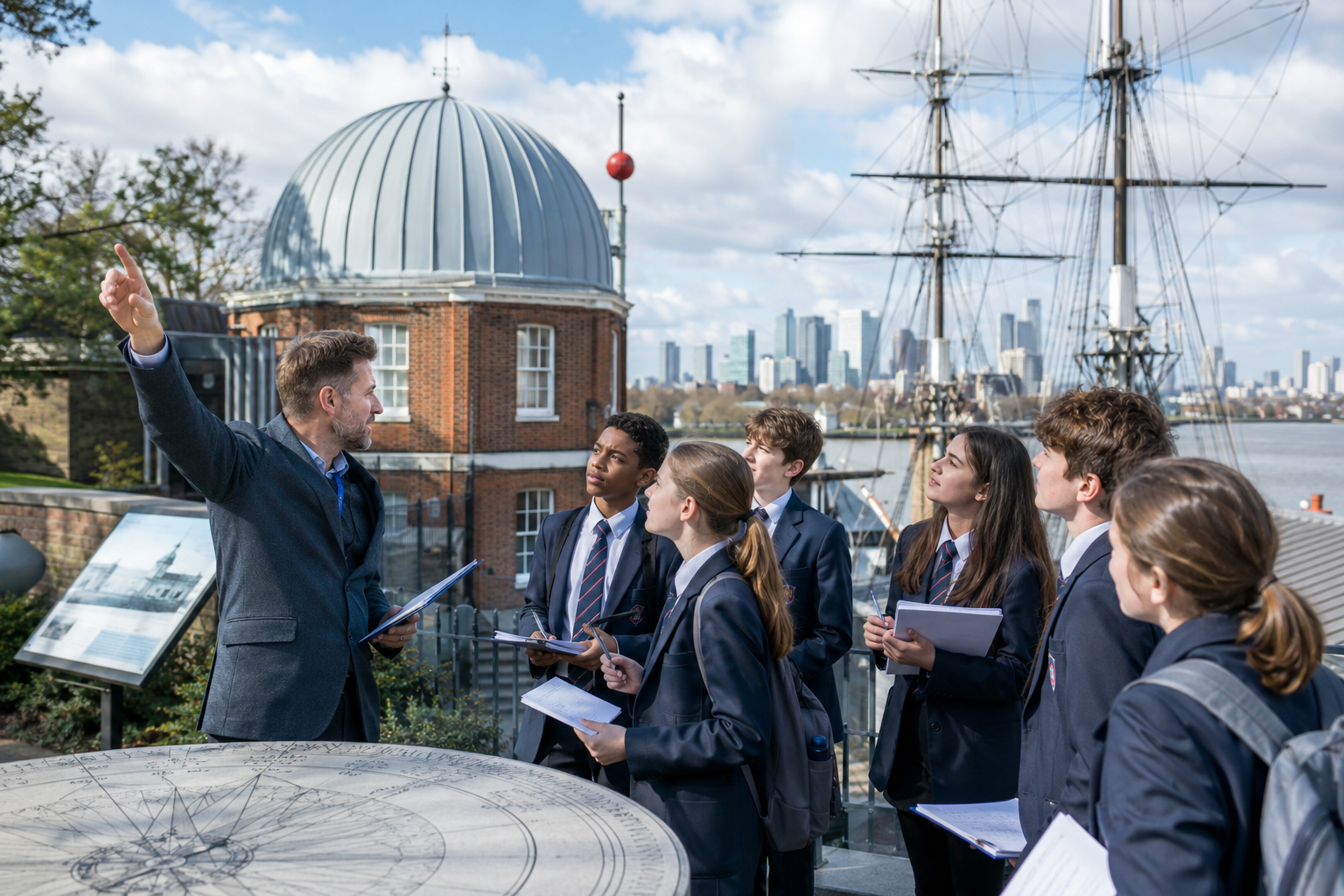
Royal Museums Greenwich is excellent for astronomy, maritime history, navigation, exploration and geography. Its schools programme uses collections across sites such as the Royal Observatory, National Maritime Museum, Cutty Sark and Queen’s House to support enquiry, discussion and creativity.
Greenwich needs more journey planning than central London attractions, so it is best treated as a planned half-day or full-day cluster rather than a spare-hour addition.
How should Irish schools plan a London school trip itinerary?
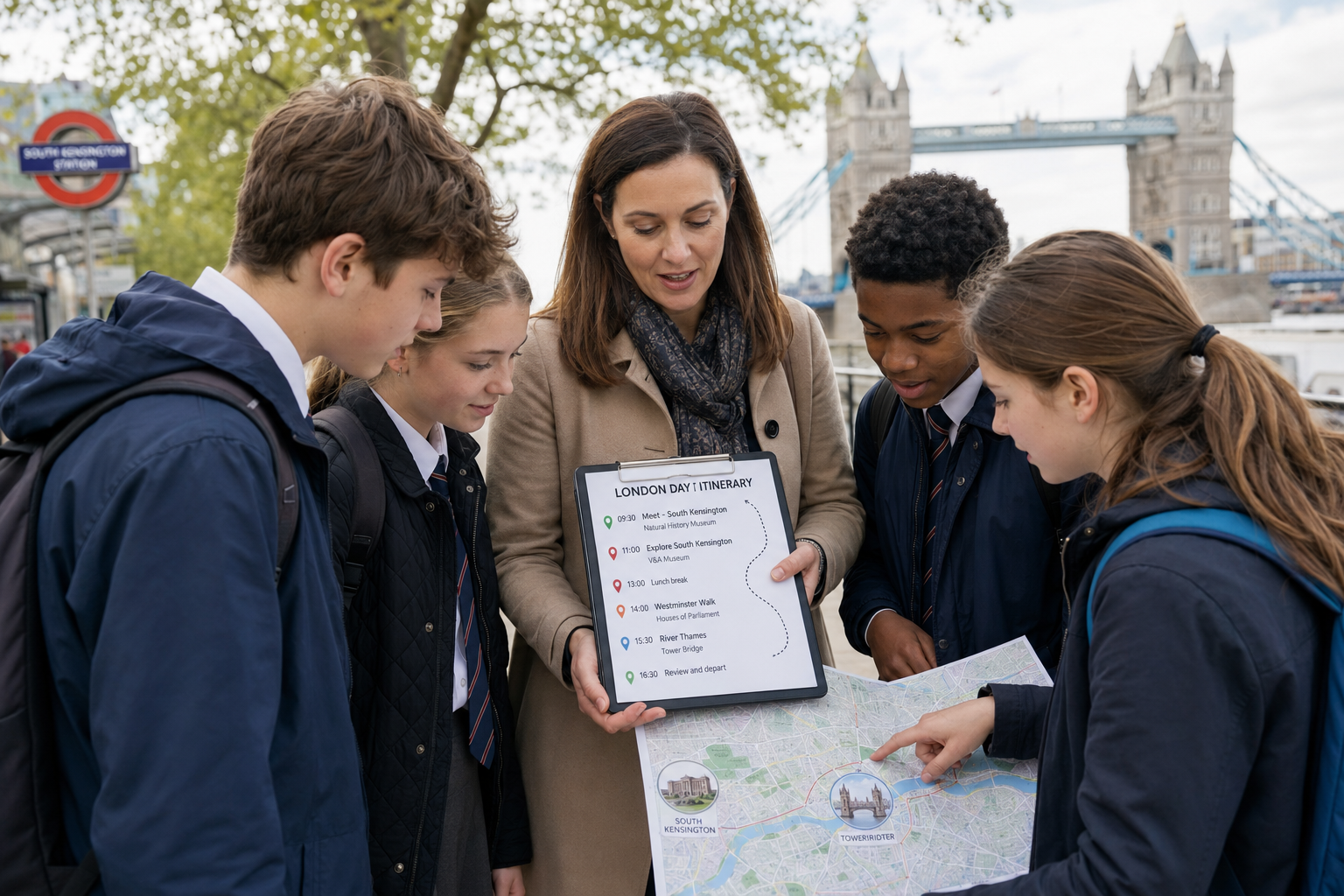
The strongest London school trip itineraries are built around clusters. South Kensington works for science. Westminster works for politics and civic history. Tower Bridge and the City suit medieval and riverside history. Covent Garden and Trafalgar Square work well for art, transport and theatre.
A common mistake is planning by name recognition. Three famous attractions across three different areas can create a weaker day than two well-matched attractions in one district. Walking distance, coach access, security checks, toilets, lunch and student fatigue all affect the success of the visit. These practical decisions also influence the real cost of a European school trip from Ireland, particularly when attraction bookings, accommodation and local transport are considered together.
For schools comparing DIY planning with organised travel, the question is not whether teachers can research London. They can. The question is whether the transport, accommodation, attraction bookings and daily timing all work together. Celtic Horizon Tours helps reduce that friction, especially for larger Irish school groups where one delayed transfer can affect the rest of the day.
A London school trip should feel structured, safe and worthwhile, not crowded with rushed stops. Celtic Horizon Tours can help Irish schools build a practical educational itinerary around the age group, subject focus and travel dates, while keeping the complex travel details under control.