Welsh School Tour from Ireland: Why More Schools Are Choosing Wales in 2026
Key Takeaways
- Ferry choice should follow the itinerary, not simply the nearest Irish departure port.
- North Wales suits compact heritage programmes; Cardiff supports a broader mix of history, STEM and urban learning.
- Free admission does not remove workshop charges, parking costs, booking deadlines or timed group-entry requirements.
- Castles and underground attractions require honest accessibility planning before deposits are paid.
- Organised coach-and-ferry travel simplifies supervision and keeps the programme workable when schedules change.
Wales is increasingly easy to justify as an alternative to larger British cities because it combines relatively short sea crossings, strong curriculum content and destinations that do not require every day to revolve around major-city congestion.
The practical case is straightforward. A Welsh school tour from Ireland can combine medieval history, industrial heritage, science, language and landscape within two or three nights, provided the ferry route and regional base are chosen together. Schools considering more than one destination can also compare Scotland and Wales for a school tour based on costs, journey times, curriculum value and itinerary structure.
Why a Welsh school tour from Ireland makes sense in 2026
Wales has a distinct national story rather than feeling like a smaller version of another British destination. Pupils can explore Welsh identity through language, castles, mining communities, industry and changing patterns of work, while teachers can connect visits with history, geography, languages, politics, STEM and social studies.
The attraction mix also suits groups. St Fagans presents Welsh life through more than 50 original buildings reconstructed on the museum site, Cardiff Castle offers workshops across several historical periods, and Cadw sites such as Conwy and Caernarfon provide education visits and learning resources.
St Fagans has free general entry, while some Cadw education visits are free for qualifying groups. Workshops, parking and eligibility conditions still need written confirmation before the budget is fixed.
Which ferry route is best for a Wales school trip from Ireland?
Dublin to Holyhead is the logical gateway for Anglesey, Caernarfon, Conwy and Eryri. Stena Line lists a crossing of approximately three hours and fifteen minutes, while Irish Ferries operates conventional and fast-ferry services whose journey times vary by vessel and sailing.
For Cardiff, St Fagans, Big Pit and South Wales, Rosslare is often the stronger departure point. Stena Line operates Rosslare to Fishguard, while Irish Ferries runs Rosslare to Pembroke, with the latter taking just over four hours and normally offering two daily crossings.
Published times can change, so avoid tying a non-refundable attraction slot to the advertised arrival. Compare the complete journey: school-to-port travel, check-in, sailing, coach mileage, driver hours and pupil fatigue. Before confirming passengers, schools should also review the ferry passport requirement from 28 September 2026 and check every traveller’s documents early.
North Wales and South Wales school tours offer different strengths
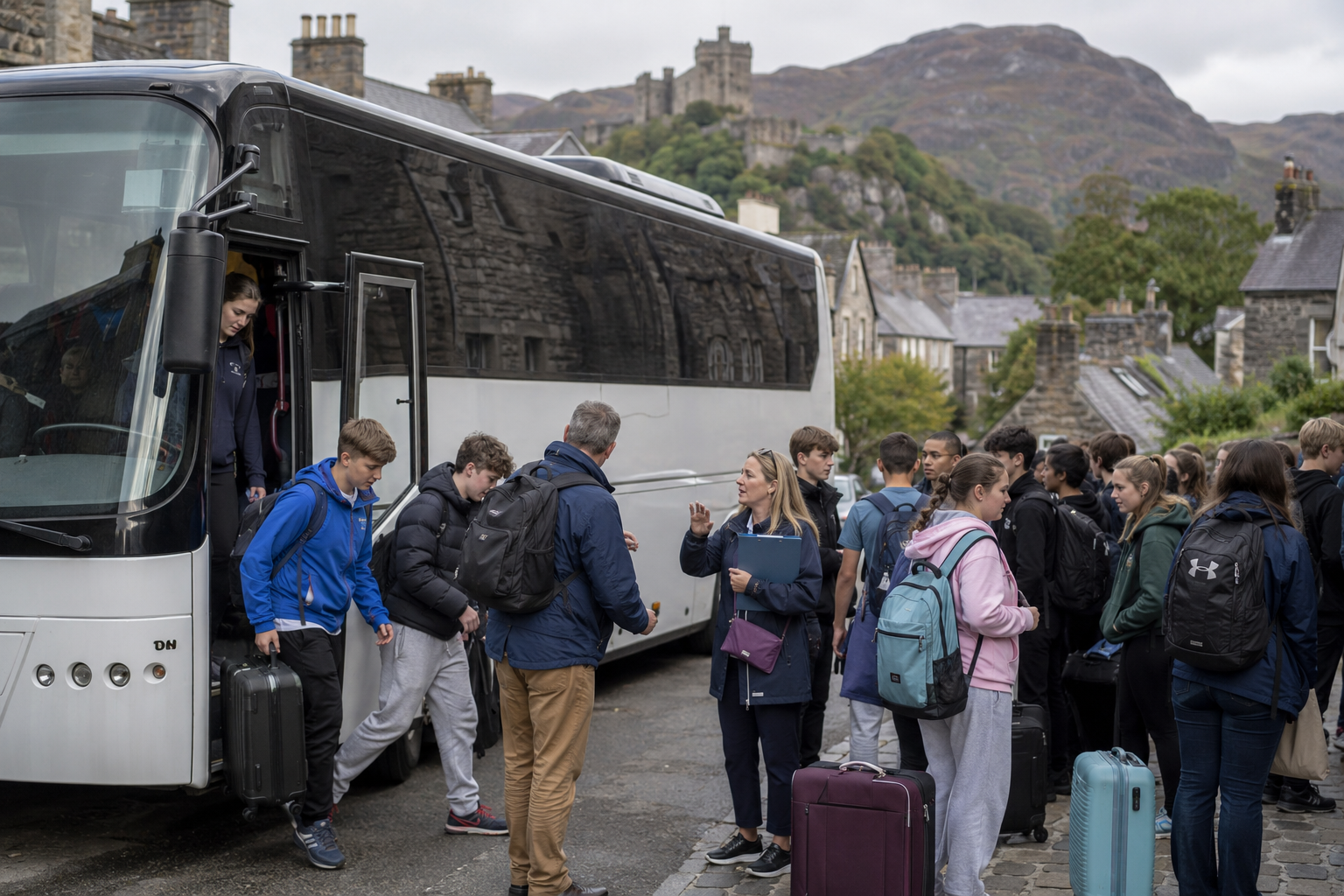
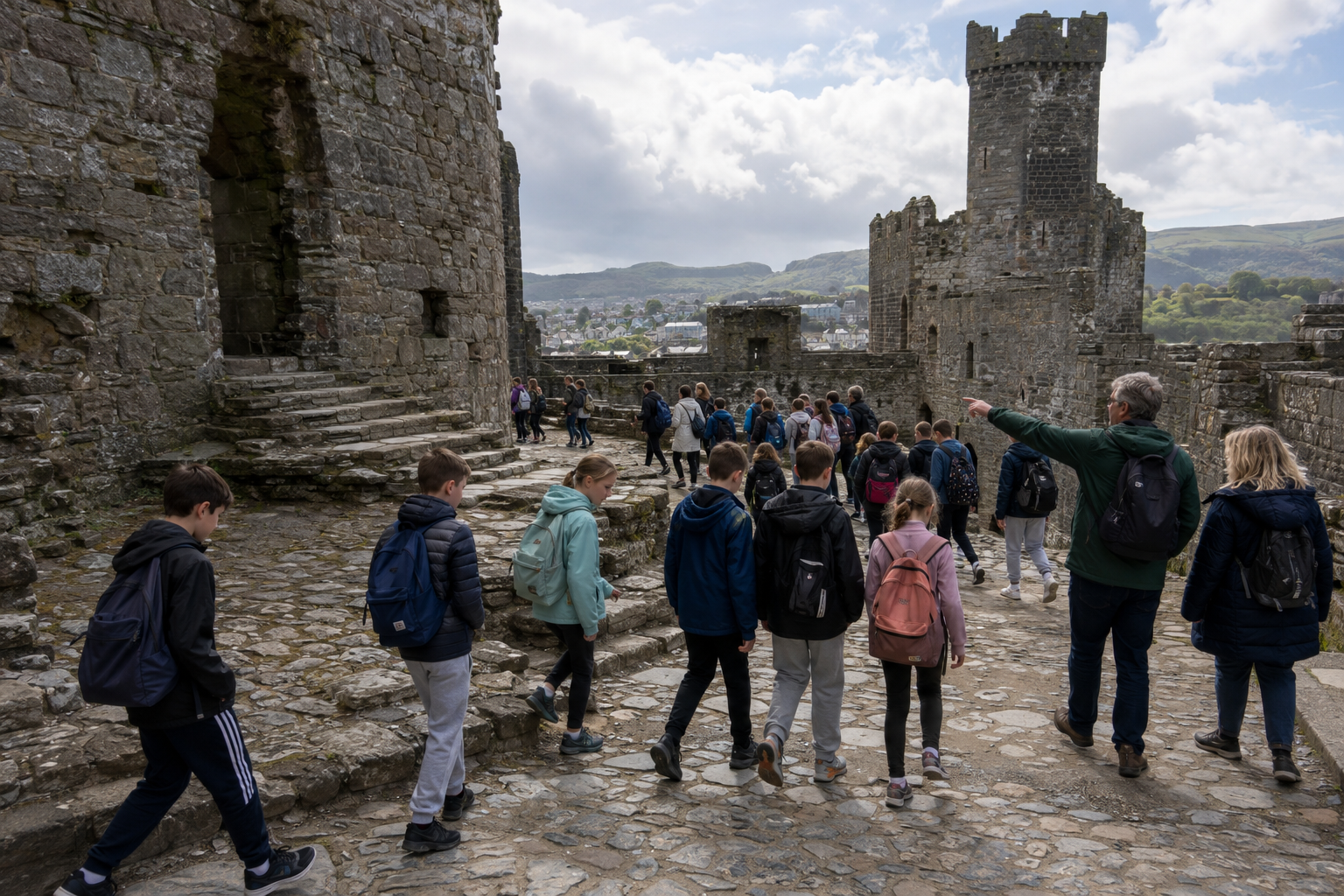
North Wales is strongest for a compact heritage and landscape programme. A practical route can connect Holyhead with Caernarfon Castle, Conwy Castle, the coast and an outdoor or environmental activity. Conwy allows pupils to study medieval defence, settlement and political power in one place, although Cadw warns that uneven ground, gravel and cobbles may challenge some visitors.
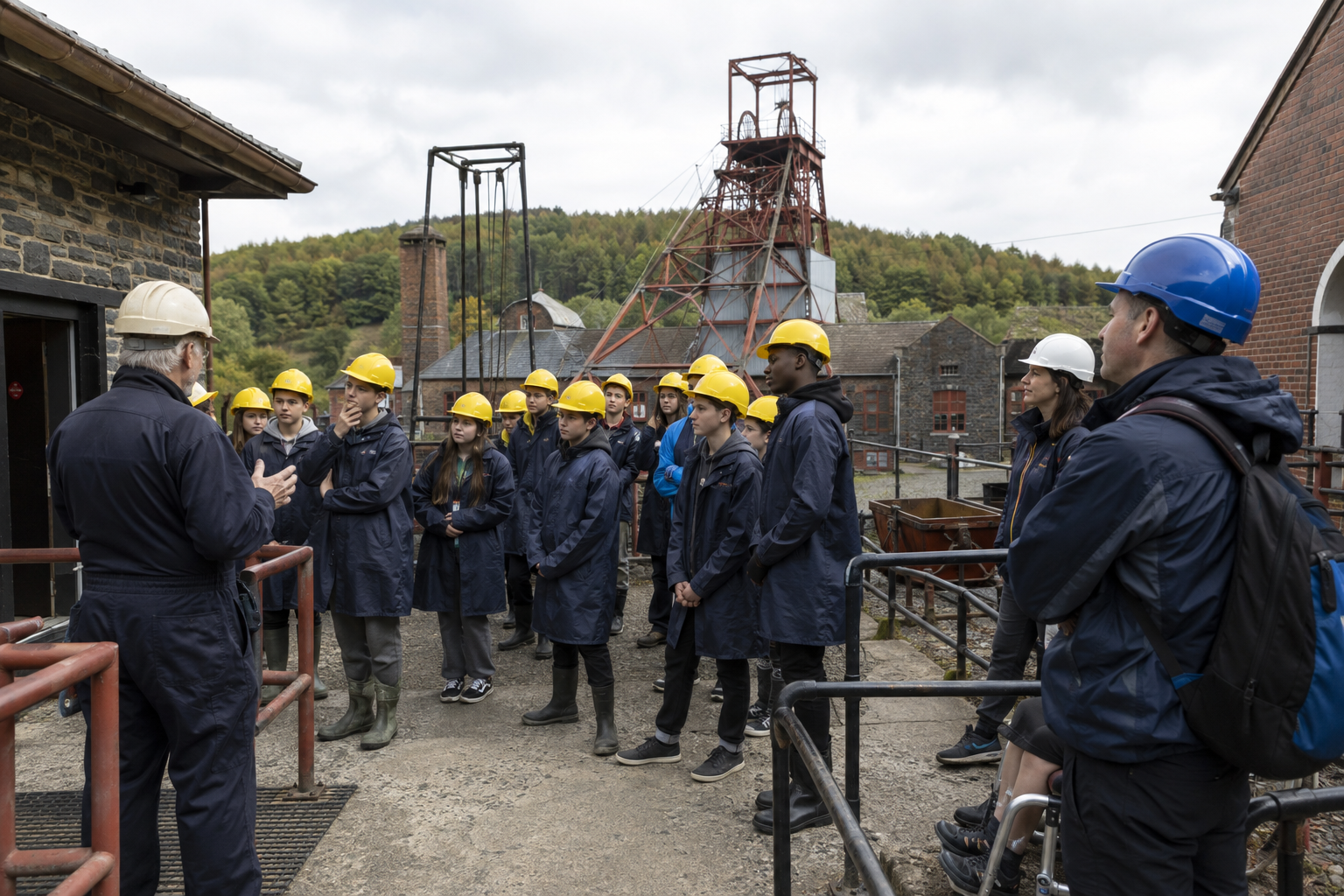
South Wales offers greater subject variety. As our detailed Cardiff school trip guide explains, South Wales offers considerable subject variety alongside practical advantages for Irish groups. Cardiff Castle, St Fagans and Techniquest can cover history, culture and STEM without changing hotels. Big Pit adds industrial and social history through an underground mining experience and above-ground exhibitions. Its school visits must be booked ahead, the museum recommends allowing at least three hours, and daily group numbers are controlled.
This is a major advantage: the programme can feel substantial without requiring a different city or long transfer every day.
What do teachers underestimate about a Welsh school tour?
The first issue is scale. St Fagans is not a one-hour stop, and schools must book at least two weeks ahead. Cardiff Castle also restricts educational tour sizes, so a full coach may need to divide into smaller groups before arrival.
The second is access. Historic sites include steps, slopes, cobbles and exposed sections, while an underground mine visit will not suit every pupil. Request formal access guidance, discuss additional needs directly with the attraction and arrange an equivalent alternative where necessary. Cadw encourages pre-visit familiarisation to support risk assessment.
Waterproof layers, sensible footwear and a clear wet-weather sequence matter more than adding another attraction.
Finally, free entry can hide other costs. Coach parking, workshops, meals and additional driver hours can change the final price. Cardiff’s official visitor information notes that coach parking is generally first come, first served rather than pre-bookable.
A practical two-night Welsh school tour itinerary
A North Wales programme can begin with an afternoon arrival in Holyhead and an early hotel meal. The full day can combine Caernarfon or Conwy with an outdoor session, leaving the final morning for a shorter visit.
A South Wales programme usually works better when the first day remains light after Rosslare. Day two can pair Cardiff Castle with Cardiff Bay or Techniquest, while day three can focus on St Fagans or Big Pit before the return sailing. Trying to fit Cardiff, Big Pit and a major castle into one day creates too much coach movement and too little learning time.
Packed lunches help at large sites, while one pre-booked group meal can introduce Welsh flavours without sending pupils into busy venues independently.
Schools can ask Celtic Horizon Tours to compare ferry, coach and hotel combinations before choosing attractions. That sequence prevents an appealing itinerary from becoming inefficient or expensive once real timings are applied.
DIY planning versus an organised Welsh school tour
Independent planning is possible, but each separate booking affects the others. A changed sailing may alter driver hours, hotel arrival, dinner service and the first attraction slot.
An organised tour is most valuable when it removes these dependencies from the teacher’s workload. Celtic Horizon Tours can coordinate coach-and-ferry travel, group accommodation and workable visit timing, while the school retains control of educational objectives, pupil information and safeguarding decisions.
It is often the simpler option when staff time is limited or several suppliers must work around one sailing schedule.
Accessibility and supervision on a Wales school trip
Accessibility should shape the attraction list from the start. Cardiff Castle has a fully accessible education centre and adaptable activities, but access varies elsewhere across the historic site. Conwy Castle includes uneven ground and elevated areas. Big Pit requires a detailed discussion about the underground tour, additional needs and alternatives.
A dedicated coach also supports supervision by keeping bags and meals together and creating consistent headcount points. Pupils should still be placed in named groups with assigned adults.
Plan the Welsh school tour route before the attraction list
A successful Welsh school tour is shaped less by the number of stops than by how well the ferry, coach, hotel and learning visits fit together. Wales offers genuine choice, from North Wales castles and landscapes to Cardiff’s museums, STEM experiences and industrial heritage.
Celtic Horizon Tours can turn those elements into one workable group journey, reducing separate administration and helping the school get the route, timings and accommodation right the first time.