Coach vs Flight for a School Tour from Ireland: Which Is Cheaper, Safer and Less Stressful?
Key Takeaways
- A low airfare can become expensive once transfers, baggage and group-booking conditions are included.
- Coach and ferry usually simplify supervision because students remain together for more of the journey.
- Flying has an exceptional safety record, while coach is the safest form of road transport in Europe.
- Coach often suits Britain best; flying becomes stronger as the destination moves deeper into Europe.
- From 28 September 2026, passport rules change on key Republic of Ireland to Britain ferry routes.
A school tour is rarely a simple choice between a flight fare and a coach quote. For 30, 40 or 50 students, the real question is how much the complete journey costs, how easily teachers can supervise it and how many separate stages have to work on time.
A flight may be short, yet the group still needs an airport transfer, bag drop, security, boarding and transport after landing. Coach and ferry can take longer, but one vehicle may collect students at school and stay with them through to the destination. That continuity is often where the value lies.
Is coach or flight cheaper for a school tour from Ireland?
For Britain, coach and ferry can be extremely competitive because the cost is shared across the group and the same vehicle can cover the Irish transfer, ferry crossing and destination transport. With flying, the headline fare is only one part of the calculation.
Schools should compare like with like: airport transfers, baggage, seats where needed, group-booking conditions and the coach required after landing. For a destination-specific comparison, read our blog about travelling from Ireland to London with a school group by ferry, flight or coach. Ryanair treats bookings of 15 or more passengers as groups and requires full payment when the booking is confirmed. Aer Lingus also has dedicated group arrangements, with passenger names required before travel.
The cheapest-looking option can therefore change once every transport stage is included. If a school wants a clean comparison, Celtic Horizon Tours can price the complete coach-and-ferry journey against a flight-led option rather than comparing two incomplete figures.
Coach and ferry school trips to the UK reduce transport handovers
The strongest argument for coach is usually continuity rather than price alone. Students load their luggage once, teachers keep the group together, and the same coach can normally continue from the ferry port to the hotel and planned visits.
Ferry operators are set up for organised groups. Stena Line accepts school-group bookings and requires passenger information in advance, while group fares are available from 10 passengers on Ireland-Britain services.
This can be particularly useful for sports groups carrying kit bags or schools leaving from outside Dublin, where flying may require a separate airport coach before the trip has properly begun.
Flying with a school group from Dublin: time, baggage and transfers
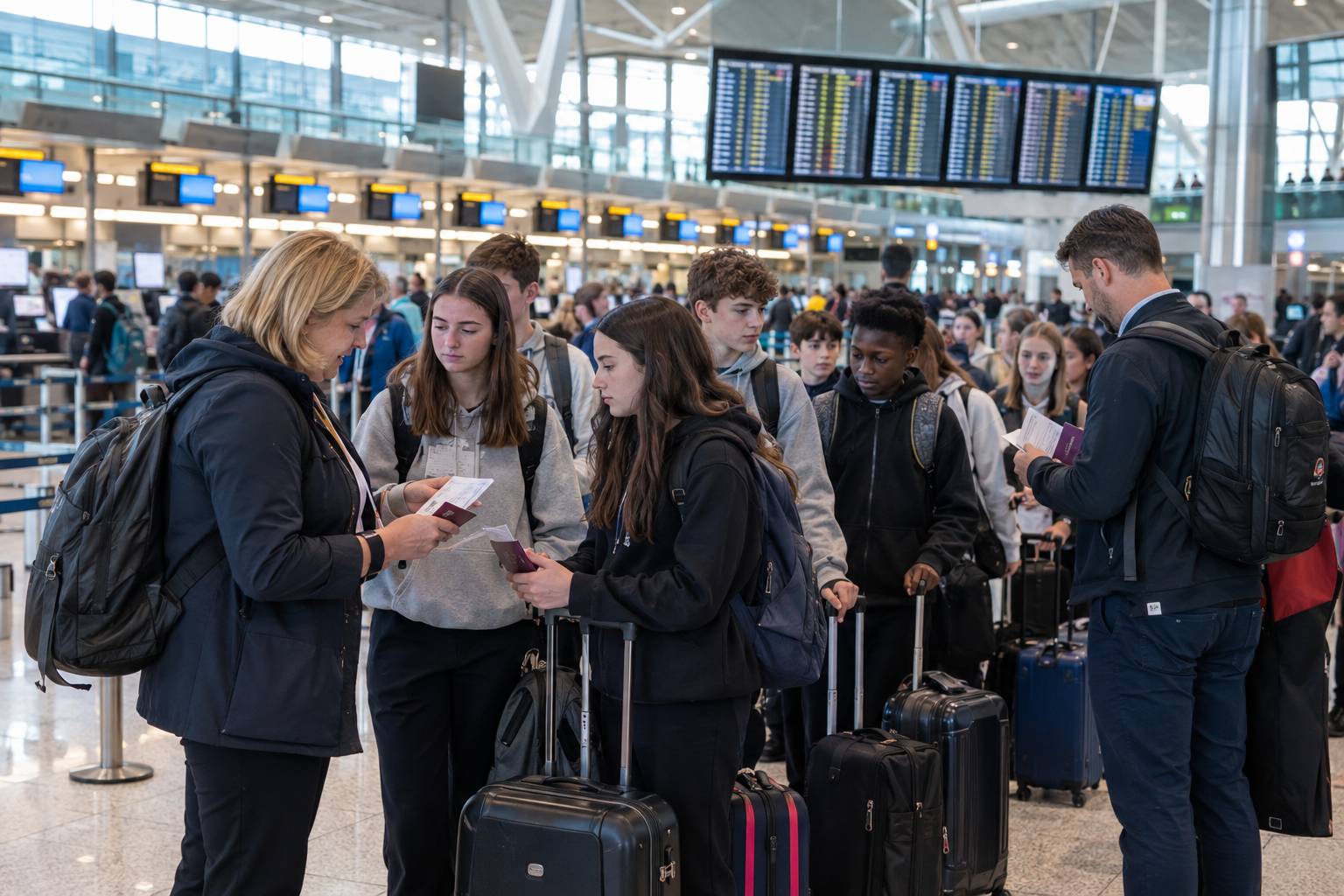
Flying becomes more attractive as distance increases, but teachers should compare total elapsed time rather than flight duration. Dublin Airport recommends arriving two hours before a short-haul flight and allowing extra time when checking bags or travelling in a large group.
Baggage is another important cost. Aer Lingus offers different checked-bag allowances on European fares, while Ryanair charges separately for checked bags according to weight, route and booking conditions.
For Paris, Amsterdam, Barcelona or other destinations well beyond Britain, those airport stages are often worth accepting because the time saving is substantial. For destinations reached naturally through Holyhead, Fishguard or another practical ferry corridor, flying may save less time than expected once both airport transfers are added.
Which is safer for a school tour, coach or flight?
Commercial aviation has an exceptionally strong safety record. EASA describes aviation as the safest mode of transportation and continues to report very low fatal-accident rates in European commercial air transport.
Coach travel also compares very favourably. The European Commission describes bus and coach as the safest mode of road travel. In Ireland, buses used for the organised transport of children must have appropriate seat belts, and the Road Safety Authority states that passengers should wear them while the vehicle is moving.
For teachers, however, safety also includes supervision. Airports create security queues, gate changes, boarding stages and baggage collection points. Coach travel keeps students within one moving group for longer. That does not make flying unsafe, but it can make supervision more demanding. Parents looking beyond transport safety can also read our blog about keeping students safe on a school tour abroad.
School trip UK passport requirements from Ireland in 2026-27
Documentation is becoming more important for coach-and-ferry groups. From Monday 28 September 2026, Stena Line says all passengers travelling through Dublin, Holyhead, Fishguard or Rosslare on its affected routes must present a valid passport at check-in, regardless of age or nationality.
For 2026-27 school tours, teachers should therefore check every student’s passport early rather than assuming ferry travel has lighter identification requirements than flying. Requirements differ by operator and route and can change, so the relevant ferry company and official destination-entry guidance should always be checked again before departure.
This is exactly the kind of detail that can create avoidable stress when several bookings are managed separately. An organised tour keeps the transport, passenger information and accommodation timings within one plan.
Coach vs flight for a school tour from Ireland: which route suits which trip?
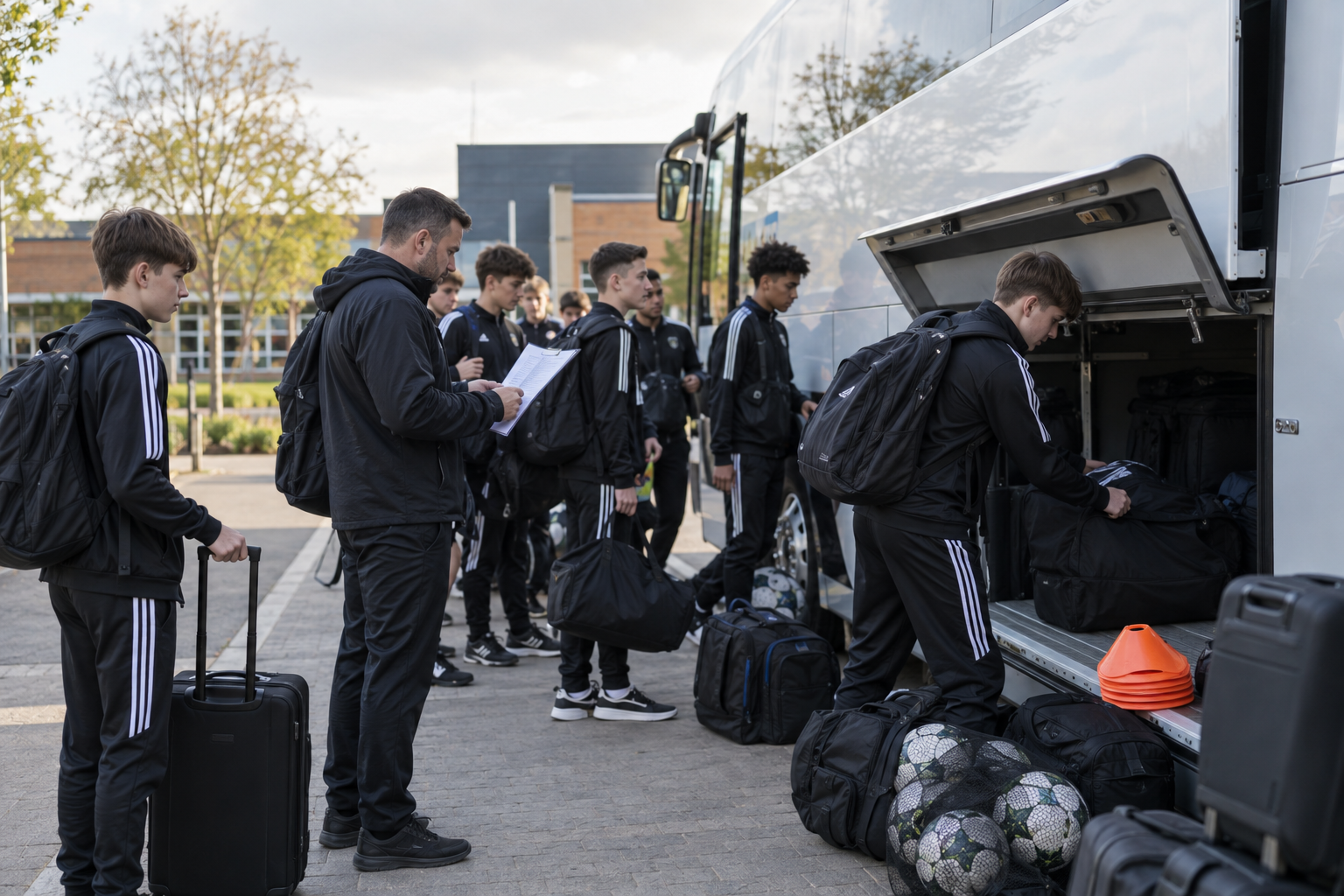
For most school groups travelling to Wales, north-west England, the Midlands or other destinations that work naturally with an Irish Sea crossing, coach and ferry often provide the simplest combination of cost control and supervision. The journey may be longer, but there are fewer handovers and the coach remains useful after arrival.
Flying usually makes more sense when road time would consume too much of the itinerary. It can also be the better choice for smaller groups, light luggage and destinations with straightforward airport transfers.
The decision should therefore be based on four figures: total transport cost, door-to-door journey time, luggage requirements and the number of separate movements teachers must supervise. Schools at an earlier stage can read our blog on how to plan a TY trip around budgets, educational aims and the needs of students and parents.
For schools that want those variables compared before committing, Celtic Horizon Tours can build the transport around the actual destination and group rather than defaulting to coach or flight. The goal is simple: fewer moving parts, realistic costs and a journey teachers can manage confidently.