How to Write a School Tour Risk Assessment: A Simple Template for Irish Teachers
Key Takeaways
- Include collection points, meal stops and transfers in your assessment, as well as the main activities.
- Give every outstanding safety action a named owner and a completion deadline.
- Base supervision on the students, activities and setting, rather than copying staffing arrangements from a previous trip.
- Request confirmed transport and venue details before completing the assessment, so your precautions reflect actual arrangements.
- Use operator support to simplify logistics while keeping school approval and student supervision clearly assigned.
A school tour risk assessment should explain what could cause harm, who might be affected and how you will reduce the risk. Its value lies in helping accompanying staff make practical decisions throughout the journey, from boarding the coach to handing students back to parents.
Begin with your itinerary and the needs of your particular group, then organise the information using the template below. A clear assessment should make responsibilities easier to understand and unresolved issues easier to spot.
What should a school tour risk assessment include?
The Health and Safety Authority’s school guidance says written risk assessments should cover off-site activities, including school tours, field trips and sports events, within the school’s safety statement. It also recommends that the teacher leading a trip reviews the assessment and updates it where necessary.
For each stage, identify the hazard, possible consequences, people affected and precautions required. Separate arrangements already confirmed from actions still outstanding, because requesting information about an accessible entrance does not establish that suitable access is available.
Keep the assessment alongside your approval documents. For post-primary schools, Department of Education Circular M20/04 addresses educational tours, board approval, adequate insurance and written parental approval. Its planning appendix has a different purpose from a detailed assessment of hazards.
Primary schools should follow the relevant HSA resources and their own approval procedures, rather than treating a post-primary circular as universal.
Build the school tour risk assessment around the journey
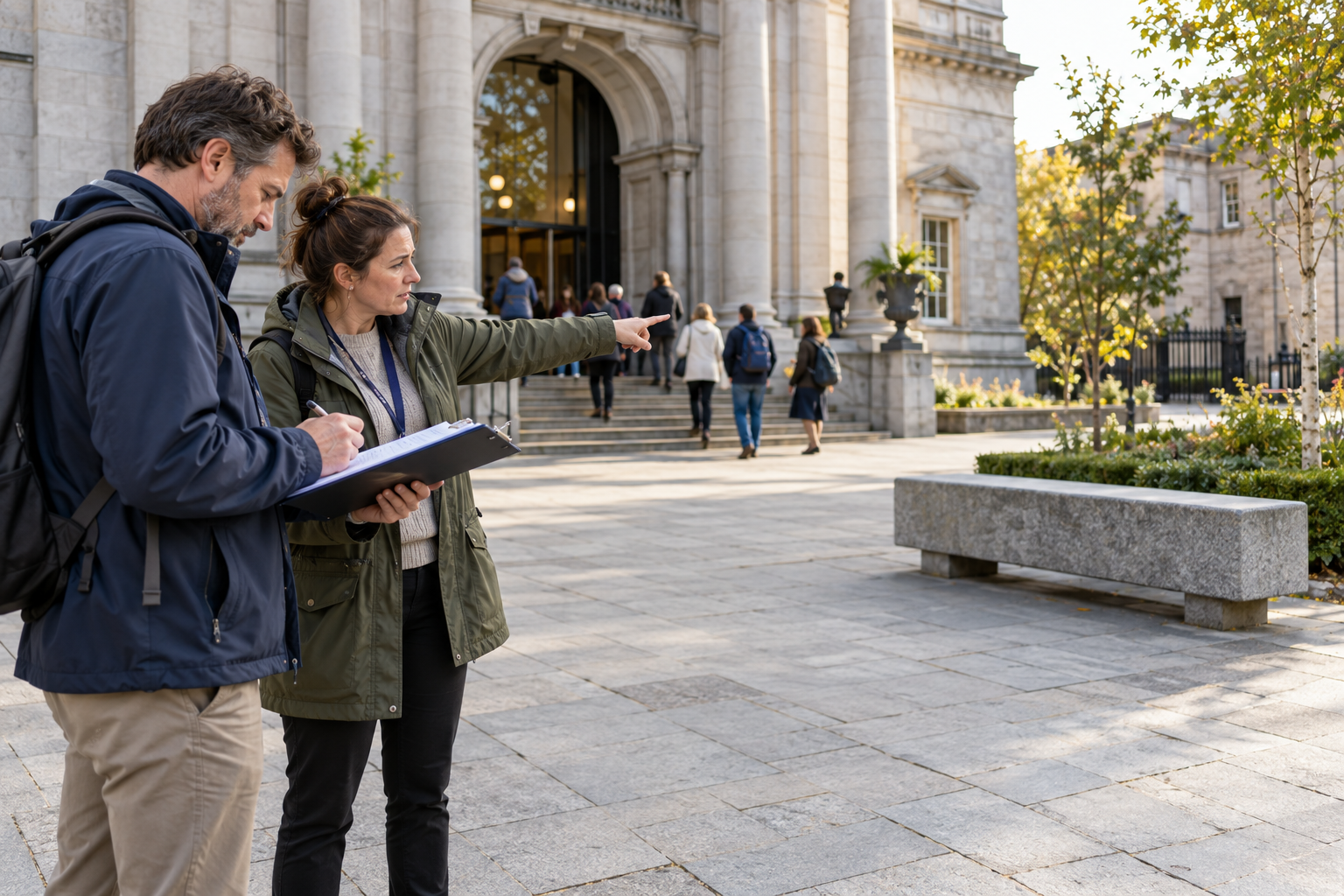
Work through collection, transport, arrival, activities, meals, accommodation where relevant, and return. Whether your coach leaves from Dublin, Cork or a rural school, consider where students will wait and how they will board.
Pay attention to transitions between activities. Who supervises students while luggage is unloaded? Where will the group wait if admission is delayed? Does reaching the entrance involve crossing traffic?
Obtain current information directly from venues about group entrances, accessibility, activity restrictions and emergency arrangements. Visitor reviews may suggest questions, but cannot confirm whether a particular arrangement suits your students.
Before finalising a demanding itinerary, share your proposed route with Celtic Horizon Tours and ask which timings or transfers need adjustment. Its school tour service includes itinerary planning and documents before departure, providing clearer information for your assessment.
A simple school trip risk assessment template
Use the following structure within your school’s existing system. This is a suggested format for adaptation; the HSA provides its own school excursion assessments and blank templates for additional hazards.
Trip overview
Record the destination, travel dates, educational purpose, student numbers and ages, accompanying adults, transport, accommodation and itinerary version.
Assessment and approval
Identify the assessor, assessment date, school reviewer, approval record, supporting documents and planned review date.
Complete one entry for each hazard
- Stage and location: Identify the specific journey section or activity.
- Hazard and possible harm: Explain what could go wrong and the consequences.
- People affected: Identify students, staff and anyone else exposed.
- Current risk: Apply your school’s agreed assessment method.
- Confirmed controls: Describe precautions already checked and arranged.
- Further action: Record missing information or additional precautions.
- Responsible person and deadline: Name who will complete each action and when.
- Remaining risk: Reassess once the controls are implemented.
- Completion record: Note the completion date, supporting evidence and reviewer’s decision.
For example, coach arrival outside a museum could expose students to moving traffic. Suggested controls might include an agreed unloading point, students remaining seated until instructed, and named adults supervising movement to the entrance.
If the unloading location remains unconfirmed, record that as an outstanding action for the trip leader, with a deadline before itinerary approval. Review the risk after confirmation and change the arrangements if concerns remain.
Avoid automatically marking an activity “low risk” because it has been booked.
School trip supervision, student needs and coach safety
Choose staffing through your school’s policy and assessment, considering student ages, additional needs, activity demands and the setting. Explain how supervision will work when students use toilets, move between locations or divide into smaller groups.
The HSA excursion template highlights supervisory adults, headcounts, charged phones, separation procedures, medical information and briefings for adults assisting with supervision.
Turn these into specific arrangements by allocating groups to named adults and establishing check points. Consider how the remaining students would be supervised if one adult needed to accompany an unwell student.
For coach travel, confirm suitable seating and restraints with the operator. The RSA states that vehicles used for organised transport of children must have appropriate seat belts for the number carried. Record who will manage boarding and check belt use.
Discuss mobility, sensory, dietary and medical requirements early enough to adapt the itinerary. Keep individual medical details in controlled records, with relevant information available to authorised staff, recognising that health information receives additional protection as special category personal data.
When should you review the school trip emergency plan?
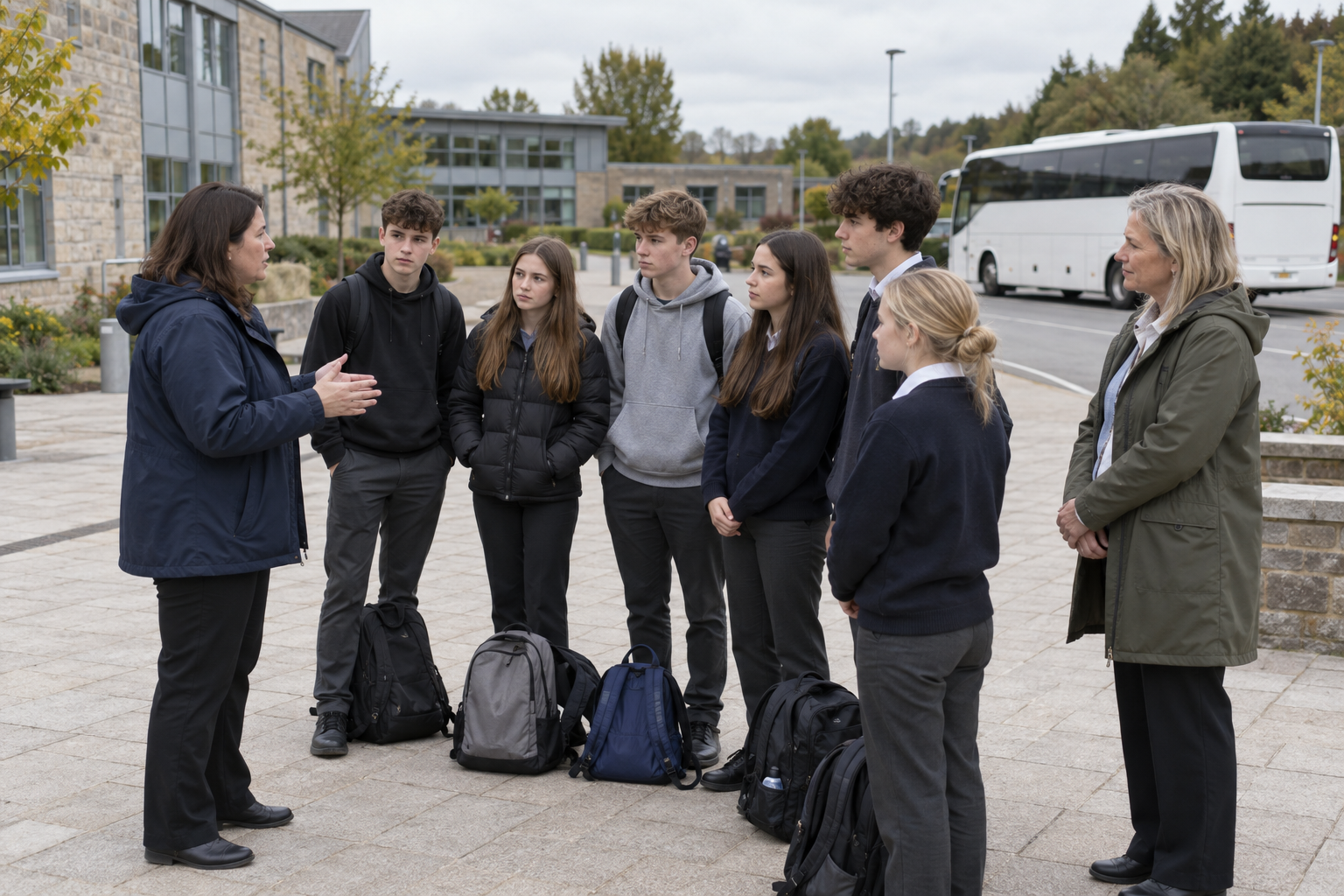
Review the assessment before departure and whenever staffing, student needs, arrangements or conditions materially change. During the trip, respond to emerging hazards rather than continuing solely because the original itinerary was approved, consistent with HSA guidance on assessing new risks.
Prepare responses for separation, illness, injury, transport disruption and unsuitable conditions. Record who contacts emergency services, who supervises the remaining group and who updates the school and parents.
For overnight stays, address room allocation, supervision, emergency exits and evacuation meeting points. For overseas travel, add destination-specific emergency contacts and arrangements for accessing assistance.
Ask Celtic Horizon Tours to explain the support arrangements for your proposed itinerary, then incorporate the agreed contacts and procedures into your school’s emergency plan.
After returning, record incidents, near misses and changes that would improve a repeat visit.
Send Celtic Horizon Tours your destination, dates, group size and access requirements to develop an itinerary with clear timings and practical support, giving your school a stronger foundation for preparation.