First-Time School Trip Organiser? Here’s Everything You Need to Know Before You Book
Key Takeaways
- Most first-time organisers underestimate how early flights, ferries and group accommodation need to be secured.
- Parent confidence often depends more on communication and safety clarity than the destination itself.
- Cheap quotes can become expensive once baggage, meals, transfers and supervision needs are added.
- A strong itinerary balances learning outcomes, downtime and realistic travel timings.
- Organised school tour providers usually save teachers time where stress is highest: logistics, risk planning and coordination.
First-Time School Trip Organiser? Here’s Everything You Need to Know Before You Book
Organising your first school trip can feel exciting until the practical questions begin. Where should you go? How much will it cost? How many teachers are needed? What paperwork is required? What if flights change? What if parents are worried?
That is the point where many teachers realise a school trip is not simply a holiday booking for a larger group. It is a moving project involving safety, communication, budgeting, transport, behaviour expectations and educational value.
The good news is that first-time organisers do not need to know everything on day one. With the right planning structure, and the right support, the process becomes far more manageable.
For many Irish schools, European school tours offer the best mix of value, learning and accessibility, especially when travel can be tailored around curriculum goals, year groups and budget realities.
Why European school tours are popular for Irish schools
European destinations give schools something difficult to replicate at home: real-world learning through travel. Students hear languages being spoken naturally, see history in its original setting, navigate unfamiliar environments and build confidence outside the classroom.
Popular destinations often include:
France for Paris culture, art, history and language learning
Spain for Barcelona architecture, sport, beaches and Spanish immersion
Italy for Rome, Florence, Pompeii and classical history
Germany for Berlin history, science museums and Christmas markets
For first-time organisers, these destinations also tend to have strong group infrastructure, reliable transport links and proven educational itineraries.
When should you start planning a school trip?
This is one of the most common mistakes first-time organisers make. Many begin after internal approval, only to find prices have risen or availability has narrowed. In 2026, you must also account for longer processing times at border control due to the new EU Entry/Exit System (EES).
9 to 12 months ahead: Ideal for larger groups or peak travel dates. This gives you time to verify the visa/biometric requirements for any non-Irish nationals in your group.
6 to 9 months ahead: Can still work with flexibility.
Under 6 months: May limit flight choice and increase costs significantly.
Early planning improves cost control and ensures your itinerary allows for the mandatory biometric registration (facial scans and fingerprints) now required for non-EU/EEA passengers entering the Schengen Area.
What does a first school trip organiser actually need to manage?

A successful trip is usually built on six areas:
1. Destination fit
Choose somewhere appropriate for age group, subject focus and group energy levels.
2. Budget control
Headline prices rarely tell the full story. Consider baggage, meals, attractions, coach transfers and contingency funds.
3. Safety planning
Accommodation quality, supervision ratios, emergency contacts and risk assessments matter more than glossy photos.
4. Parent communication
Parents want clarity: itinerary, accommodation standards, supervision, payment schedule and contact process.
5. Realistic itinerary design
Trying to fit too much into each day often creates tired students and stressed staff.
6. Admin workload
Permission forms, rooming lists, passport checks, payments and updates can become the biggest burden.
This is where many schools decide expert tour support is worth more than trying to manage every moving part alone.
How much does a European school trip cost?
Costs vary depending on destination, season, and group size. However, in 2026, several new “invisible” costs must be budgeted for:
- City & Tourist Taxes: Many cities have sharply increased levies. For example, Paris and Rome now have tiered taxes that can range from €2.60 to over €10 per person, per night depending on the accommodation type.
- ETIAS Fees: If your trip is scheduled for late 2026, non-EU/EEA students may require an ETIAS authorisation (approx. €20 for those over 18, though currently free for minors).
- Baggage & Transfers: Always confirm if the “headline” price includes local airport transfers, which have risen due to fuel and inflation.
How do you choose the right itinerary?
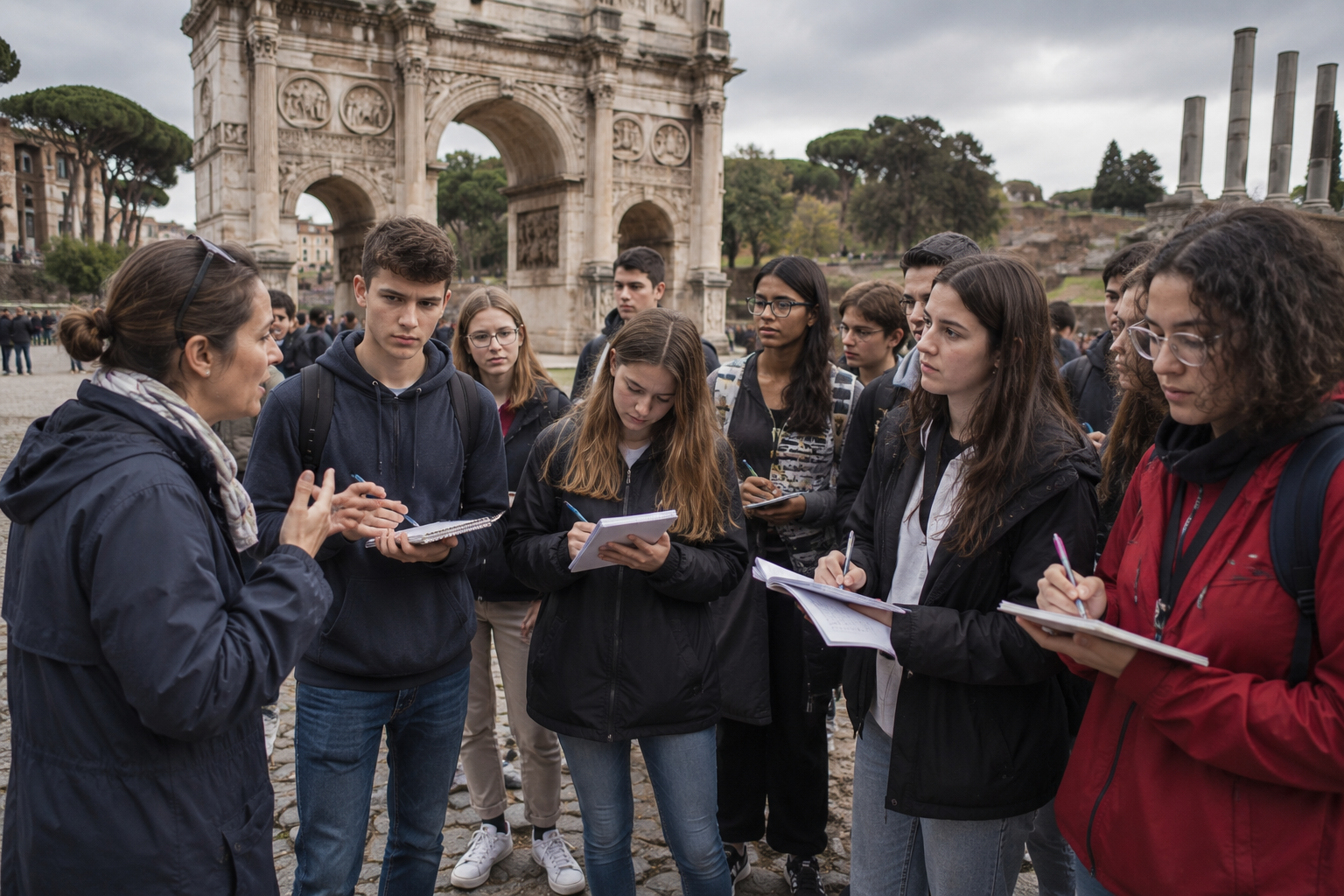
The best itinerary is not the busiest one.
A strong student trip usually balances:
- One anchor attraction each day
- Educational relevance
- Walking distances that suit the group
- Meal timing
- Downtime
- Backup options for weather or delays
For example, a first-time organiser may assume five attractions in a day shows value. In reality, two well-paced experiences with time to reset often produce a better trip.
What paperwork should first-time organisers expect?
Requirements vary by school policy, but 2026 has introduced stricter documentation rules:
- Passport-Only Policy: As of February 25, 2026, Aer Lingus and other major carriers require a valid passport or Irish Passport Card for all travel to the UK. Drivers’ licenses or other photo IDs are no longer accepted.
- Digital Entry Authorisations: Check if any students require a UK ETA (for trips to Britain) or an EU ETIAS (for late 2026 European travel).
- Parental Consent & Medicals: Standard forms remain essential, but ensure they are updated to include consent for digital/biometric border processing where applicable.
- Rooming Lists & Insurance: Essential for safety and coordination.
Travel rules are more digital than ever, checking current entry requirements 3 months before departure is now a critical step in your timeline.
How can teachers reduce stress before departure?
The easiest way to reduce pressure is to avoid carrying every task yourself.
Useful approaches include:
- Set deadlines earlier than needed
- Use one central document for passenger information
- Communicate in scheduled updates, not daily messages
- Keep itinerary realistic
- Delegate internal support where possible
- Use an experienced operator for bookings and logistics
If you would rather focus on students than supplier emails, Celtic Horizon Tours can help structure the entire trip from planning to return.
Ready to start planing?
A first school trip can feel daunting because responsibility matters. That is normal. But with early planning, sensible expectations and experienced support, it can become one of the most rewarding projects a teacher runs.
If you are considering a European school tour and want help getting it right first time, Celtic Horizon Tours can build a custom itinerary around your group size, curriculum and budget, while taking the administrative strain off your desk.
Speak with Celtic Horizon Tours about a tailored European school trip that saves time, reduces stress and gives students a trip worth remembering.