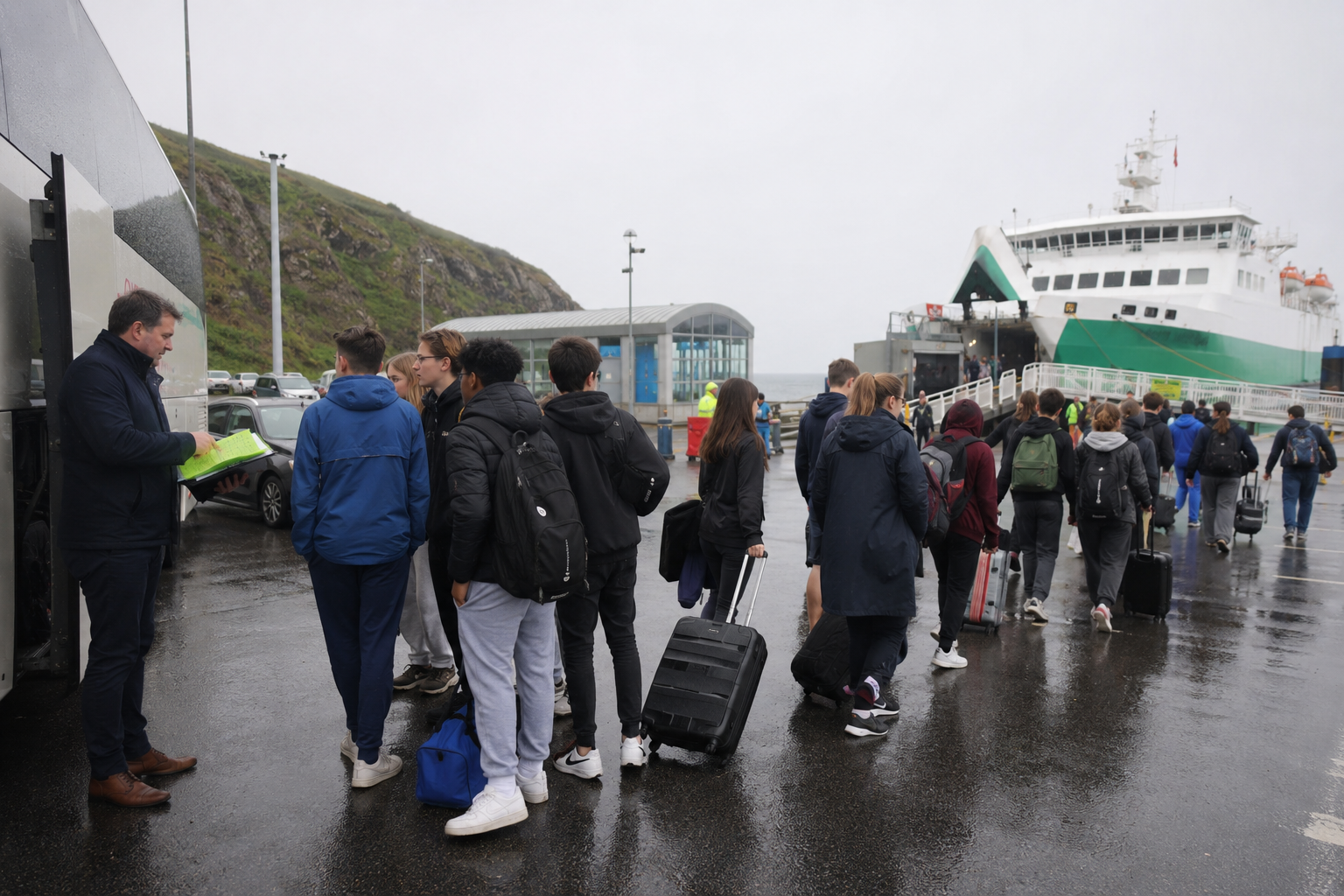
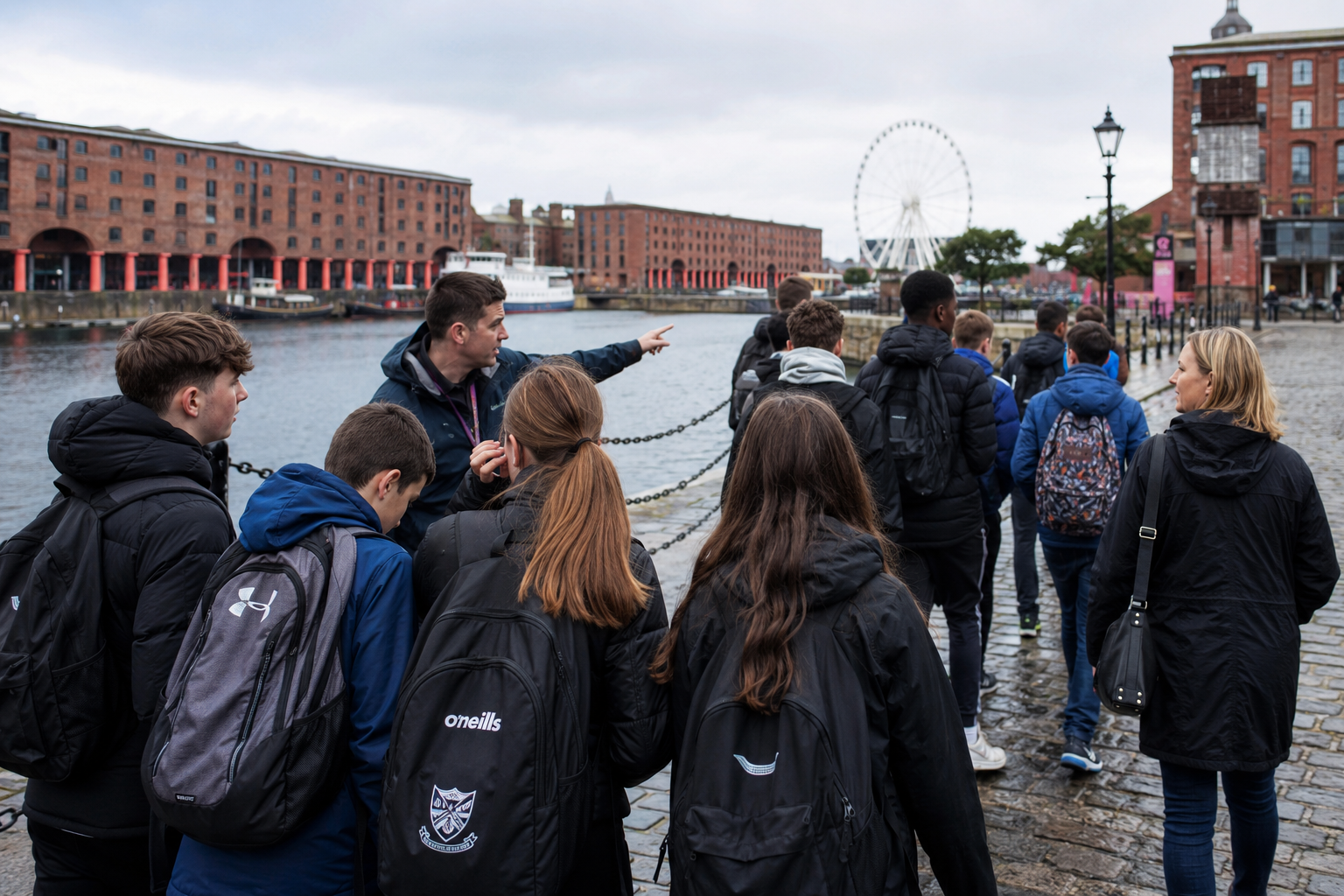
No-Visa UK School Trip to Liverpool & Manchester
Key Takeaways
- Irish citizens do not need a UK visa, but passports or passport cards are still the safest school-trip document.
- Mixed-nationality groups need early checks, because some students may require an ETA or visa.
- Liverpool and Manchester work well together because football, museums, music and STEM can fit one route.
- Free museums still require advance group booking, arrival planning and realistic supervision time.
- Organised travel helps most where ferries, coaches, hotel rooms, attraction slots and documents overlap.
Why Liverpool and Manchester suit a no-visa school trip from Ireland
For Irish teachers, the appeal of Liverpool and Manchester in 2026 is not only football, music or museums. It is the relative simplicity of taking a school group to the UK compared with many mainland European destinations. Irish citizens do not require a visa to enter the UK, and the Common Travel Area continues to allow British and Irish citizens to move freely between both countries. That makes a UK school trip easier to explain to parents, easier to approve internally and often easier to organise around a short school calendar window. Schools should still address the main questions parents have about school-tour safety, including supervision, transport, accommodation, communication and emergency procedures.
That does not mean documents can be left until the last minute. From 25 February 2026, Aer Lingus requires all passengers flying between Ireland and the UK to carry a passport or Irish passport card, while Ryanair states that passengers travelling into the UK must have a valid passport for arrival and departure. Ferry operators may accept a wider range of identification for British and Irish citizens, but schools should still check the carrier rules before collecting deposits.
What travel documents do Irish school groups need for the UK in 2026?
The safest planning rule is simple: ask every student and accompanying adult to have a valid passport or Irish passport card before travel is confirmed. This avoids problems when a group changes from ferry to flight, when an airline tightens checks, or when a student’s nationality creates a different entry requirement.
Teachers also need to identify non-Irish and non-British passport holders early. The UK’s Electronic Travel Authorisation applies to many visitors who do not need a visa, while others may require a visa depending on nationality and status. This is where a “no-visa school trip” can become more complicated than the headline suggests, because the group may be Irish-based without every traveller being an Irish citizen.
If your school is at the early approval stage, Celtic Horizon Tours can help turn the document question into a practical checklist for parents, deposits and final rooming lists, rather than leaving one teacher to interpret every case alone.
Liverpool and Manchester school trip highlights for culture, football and STEM
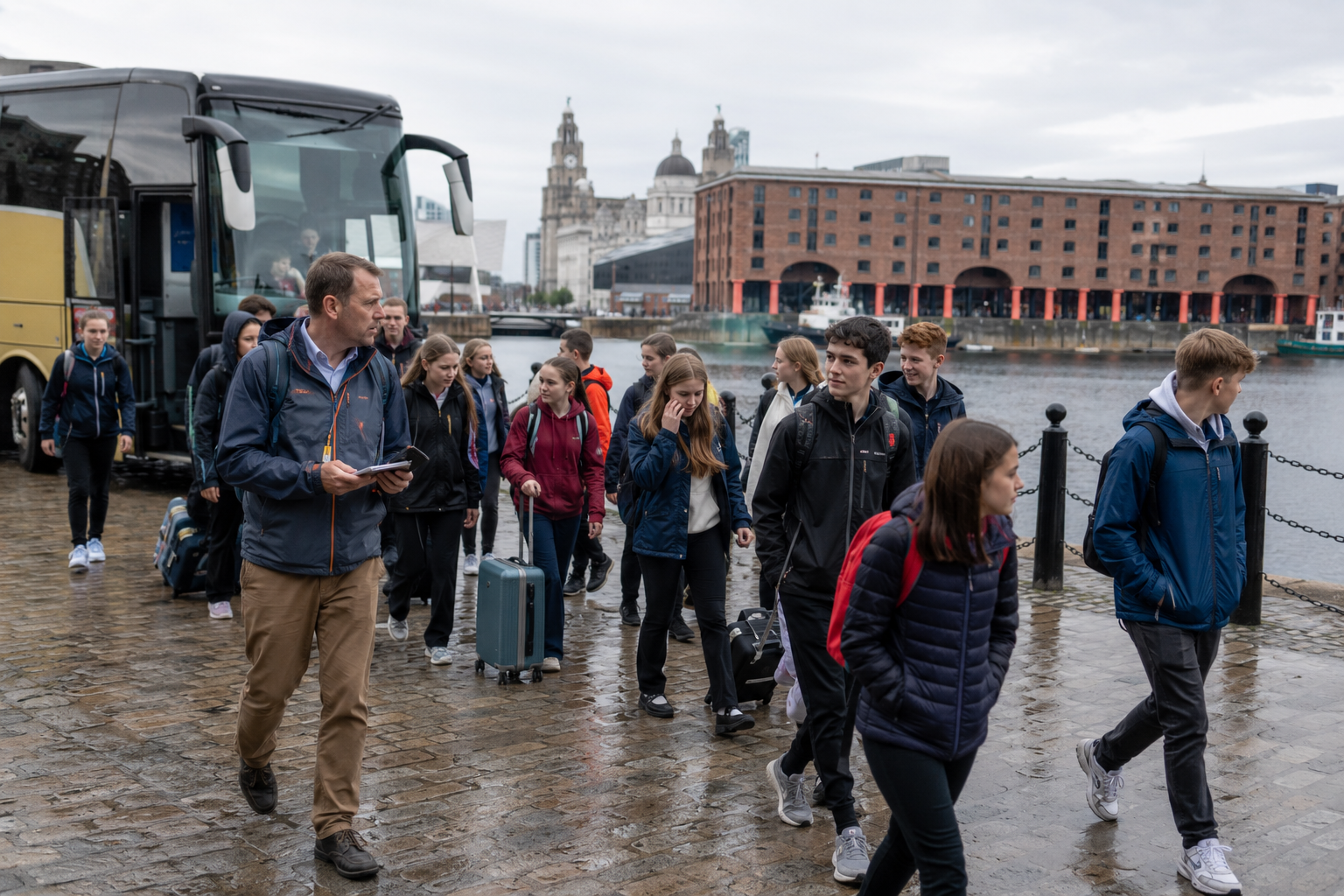
Liverpool gives a school group a strong mix of identity, social history, waterfront geography, music and sport. National Museums Liverpool confirms that self-led school visits to the Museum of Liverpool are free but must be booked in advance, which makes it useful for groups balancing educational value with cost control.
Football is usually the emotional hook. Liverpool FC describes the Anfield Stadium Tour as an interactive behind-the-scenes experience, while Manchester United’s Old Trafford Museum and Stadium Tour includes areas such as the seating bowl, dressing room, players’ tunnel, pitchside dug-outs and press/media room. For students, these visits work because they combine sport, media, business, local identity and group excitement in one controlled attraction.
Manchester adds a different educational layer. The Science and Industry Museum welcomes schools and groups, offers free admission tickets, and requires group visits to be booked in advance, with booking availability currently shown through to March 2027.
DIY vs organised school trip from Ireland to the UK
A DIY trip can work when the group is small, the staff have experience, and the itinerary is simple. Teachers can book flights or ferry space, reserve accommodation, contact museums, arrange stadium tours and manage payments directly. They must also check the appropriate insurance for an overseas school tour, including medical cover, cancellations, travel disruption and activities included in the itinerary. The challenge is that each small task depends on the next one being correct.
The pressure usually appears in the gaps. A ferry time changes, a hotel wants a rooming list earlier than expected, an attraction can only take the group at 10.30, a coach needs a compliant set-down point, or one student’s travel document does not match the rest of the group. Liverpool and Manchester are not difficult destinations, but school-group travel becomes difficult when timings, documents, supervision and supplier rules are handled separately.
This is where organised travel earns its place. Celtic Horizon Tours is not needed because teachers cannot plan. It is useful because teachers have limited time, limited backup and a duty of care that does not pause when a booking system changes.
How should teachers plan the day flow between Liverpool and Manchester?
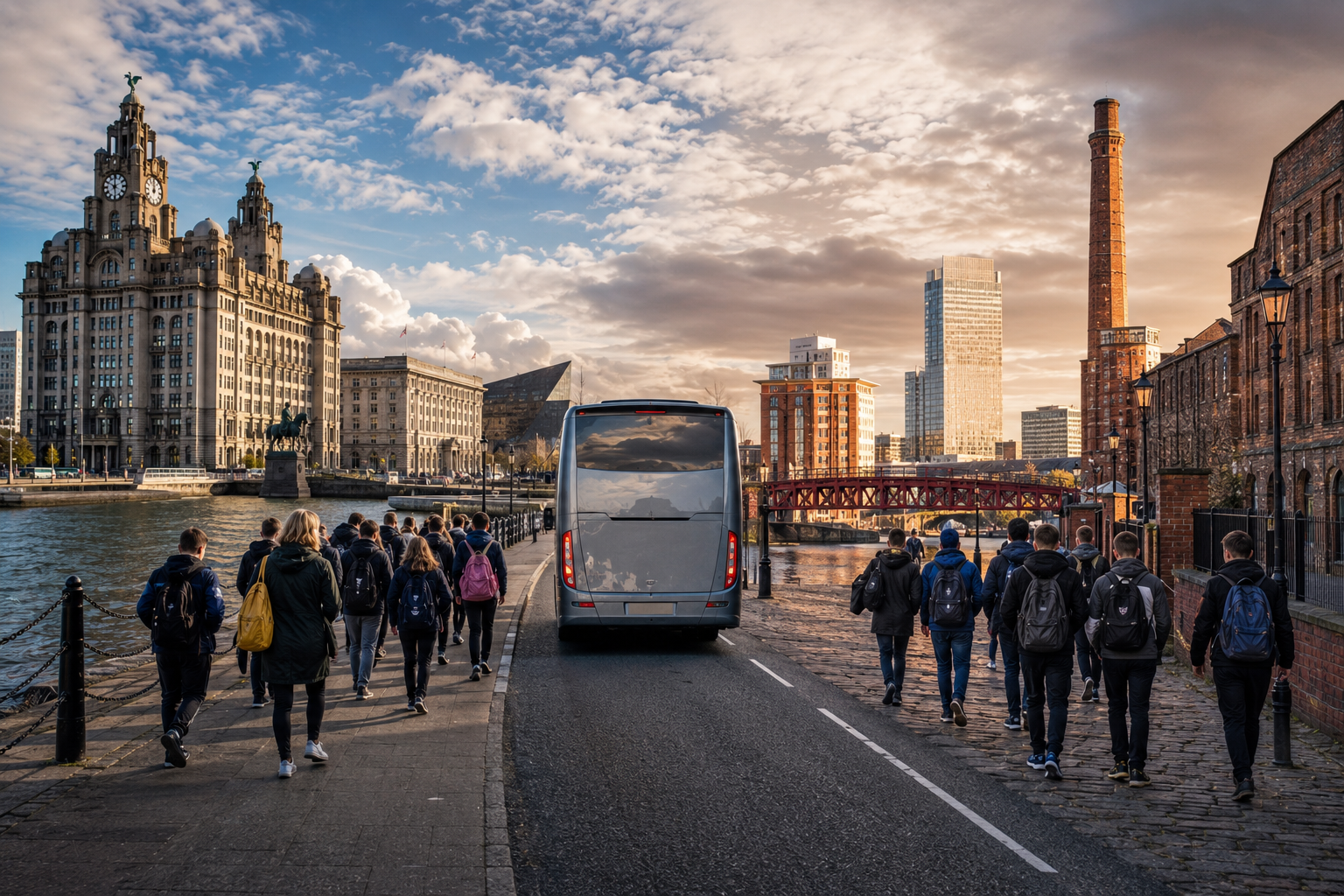
A practical itinerary normally works best when it avoids overloading the first day. If the group travels by ferry and coach, keep the arrival day simple: hotel check-in, food, a short city orientation and one manageable evening activity. Teachers can also compare ferry, flight and coach travel for a UK school trip before deciding which option best supports the group’s luggage, supervision needs and arrival schedule. If the group flies, allow time for airport movement, baggage, coach loading and traffic before confirming any paid attraction slot.
Liverpool and Manchester are close enough to combine, but the transfer still needs planning. National Rail provides journey planning between Liverpool Lime Street and Manchester Piccadilly, and coach groups need realistic allowances for road conditions, parking and set-down arrangements.
A strong two-city school trip might use Liverpool for waterfront history, The Beatles, Anfield and museums, then Manchester for Old Trafford, the Science and Industry Museum, shopping or another cultural stop. Food planning matters too. Groups need predictable meal times, dietary information collected in advance and locations that can handle students quickly without losing the evening.
Accessibility, food and local experience notes for Liverpool and Manchester school trips
Accessibility should be checked attraction by attraction rather than assumed. Stadiums, older museum buildings, waterfront areas and city-centre walking routes can all be manageable, but schools need to confirm lifts, step-free access, toilets, seating points and coach drop-off locations before publishing the itinerary.
Weather is another underestimated issue. A school group standing outside a stadium, pier, ferry terminal or coach bay in February will remember the delay more than the destination. Build in shelter, waterproofs and realistic margins between stops.
Food should be planned around the route, not added afterwards. The best school itineraries avoid long gaps between meals, avoid giving students too much unsupervised time in crowded shopping areas, and use evening meals as a way to reset the group before the next day.
Where Celtic Horizon Tours fits into a UK school trip
Celtic Horizon Tours works with schools and clubs on tailored educational and activity-led tours, including UK school tours and football-focused school tours. The useful part is not simply booking the trip. It is aligning the route, accommodation, attraction access, coach movement, group size, school policies and budget before parents are asked to commit.
For a Liverpool and Manchester school trip, that can mean building a realistic two-city itinerary, checking supplier requirements, coordinating ferry or flight logic, and helping teachers avoid the common mistake of creating a trip that looks exciting on paper but feels rushed on the ground.
Planning a no-visa UK school trip should feel clear, not risky. If Liverpool and Manchester are on your shortlist for 2026, Celtic Horizon Tours can help you build a practical route, confirm the key logistics and get the trip right the first time.