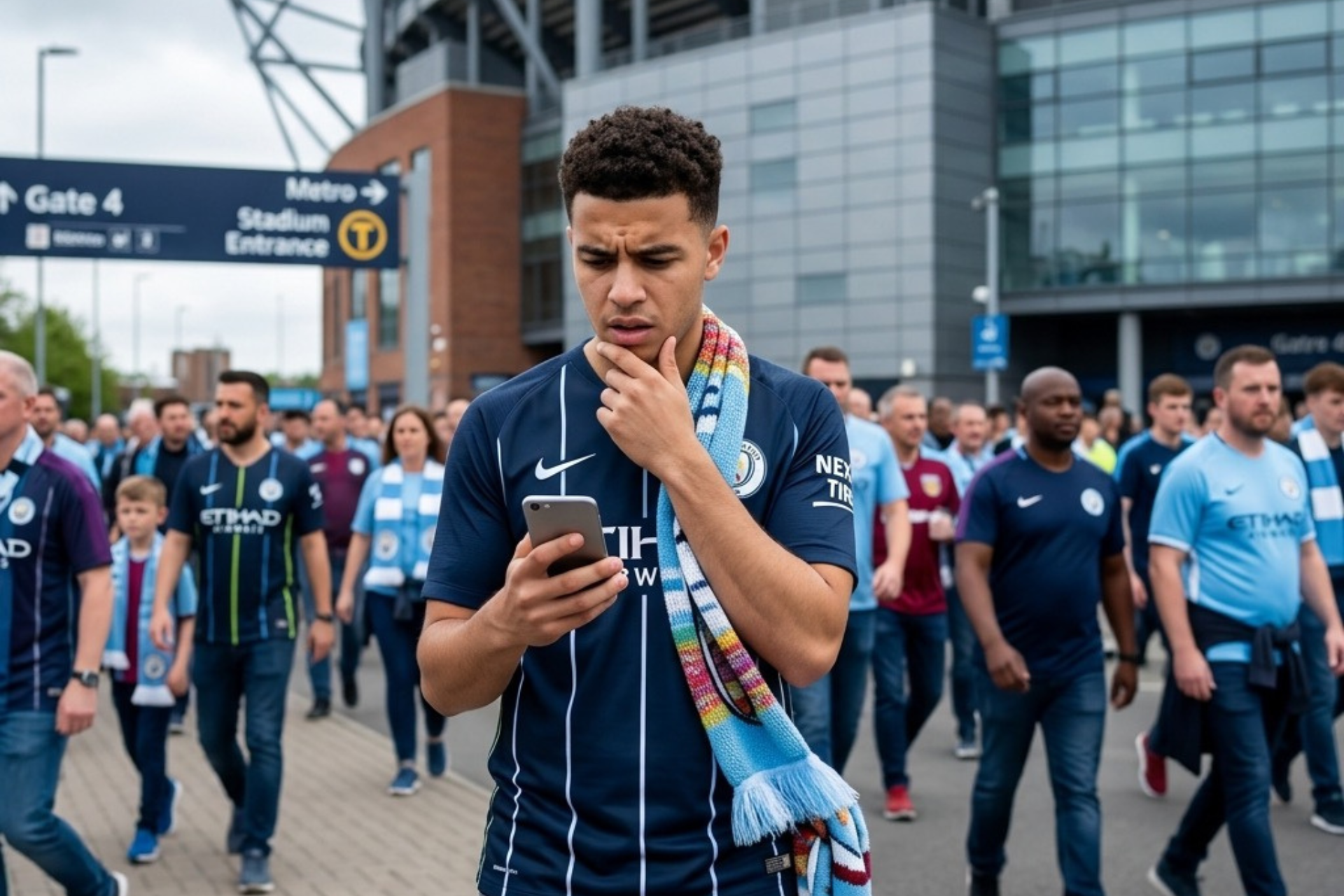
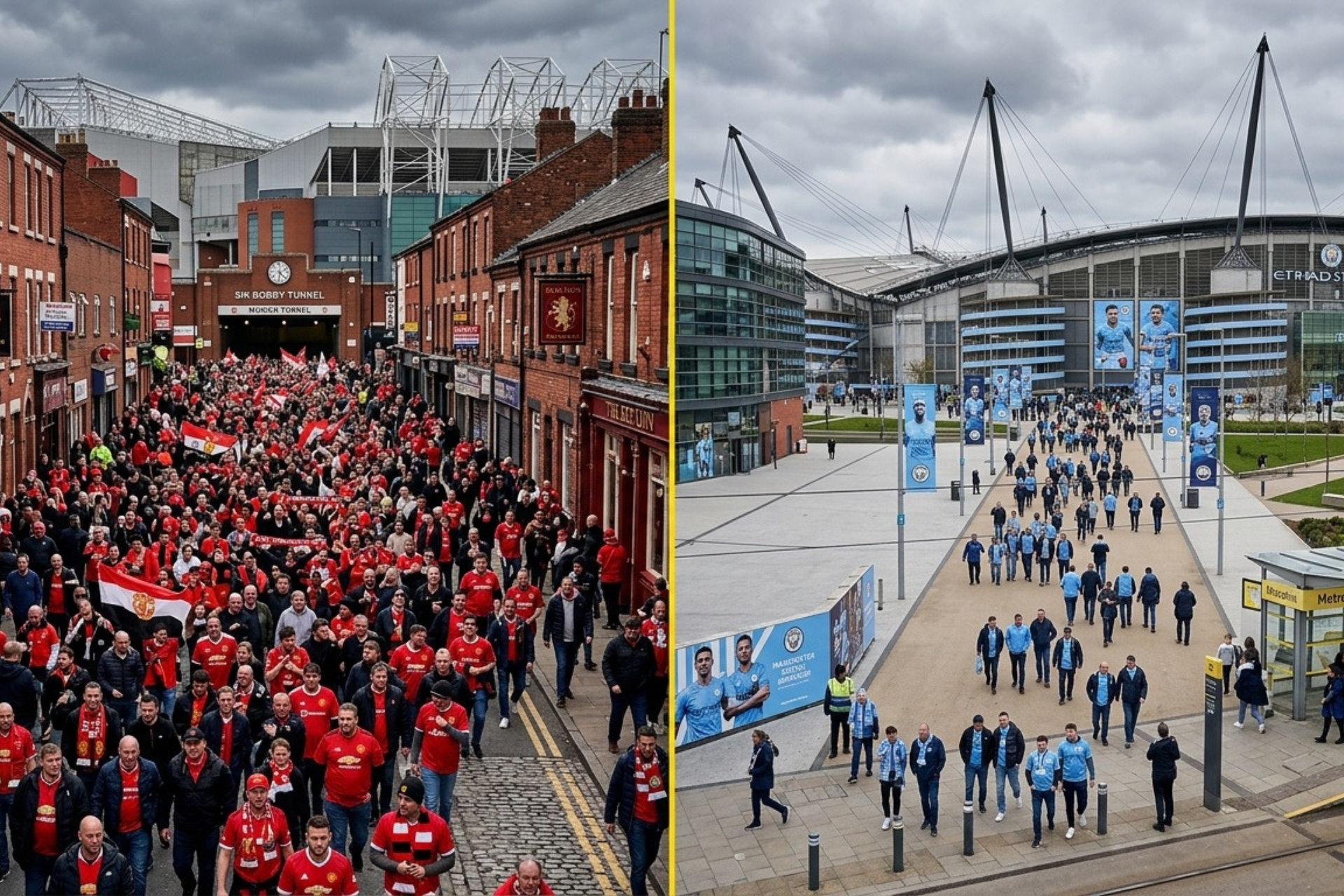
Old Trafford vs Etihad Matchday: What Actually Feels Different?
Key Takeaways
- Old Trafford usually wins on tradition and atmosphere, while the Etihad often feels easier for first-time visitors to navigate.
- Most matchday stress comes from timing errors, not distance, because crowd movement changes every simple route into a slower one.
- Staying near the right transport link can matter more than staying physically closer to either stadium.
- Irish fans on short trips often value certainty over romance once tickets, hotels, and kick-off timing start interacting.
- The better stadium is usually the one that fits your planning style, not the louder name on paper.
For anyone planning a football trip to Manchester, the question comes up early.
Do you choose Old Trafford or the Etihad?
The decision looks simple. Two stadiums, same city, similar travel distance from Ireland. But, the matchday experience is very different, and those differences shape everything from how you travel to how early you arrive.
What is the difference between Old Trafford and Etihad matchdays?
The short answer is atmosphere versus organisation.
Old Trafford is embedded in decades of routine. The area fills gradually, pubs are busy long before kick-off, and the walk to the stadium feels like part of the ritual.
The Etihad sits in a more open, modern setting. The build-up is quieter, more structured, and driven by transport routes rather than foot traffic.
Neither is better. They simply require a different approach.
Old Trafford matchday: what to expect
Old Trafford sits slightly outside the city centre but feels closely connected to it. On matchday, fans move in waves from pubs, trams, and walking routes.
You will notice three things immediately.
First, the area gets busy early. Many fans arrive two to three hours before kick-off, especially for bigger fixtures.
Second, the approach to the stadium is dense. Streets narrow, queues form gradually, and the final 15 minutes before entry can feel compressed if you mistime it.
Third, entry is strict. In 2026, Manchester United uses digital ticketing systems that do not allow for improvisation. Screenshots, forwarded tickets, or incorrect formats are a common reason people are delayed or turned away.
The result is a matchday that rewards early planning and punishes last-minute decisions.
Etihad Stadium matchday: what changes?
The Etihad is built in a more open part of Manchester, which changes the entire flow of the day.
Instead of a gradual build through surrounding streets, most fans arrive via the Metrolink tram system, particularly from Manchester Piccadilly.
That creates a different rhythm.
Arrival tends to happen in shorter bursts tied to tram schedules. The space around the stadium is wider, so it rarely feels as congested as Old Trafford, even when attendance is high.
Entry is still controlled, but the process is generally more spread out. You are less likely to encounter the same density of queues right at the turnstiles, although timing still matters.
For first-time visitors, the Etihad often feels easier to navigate, but slightly less intense in the build-up.
How do you get to Old Trafford vs Etihad Stadium?
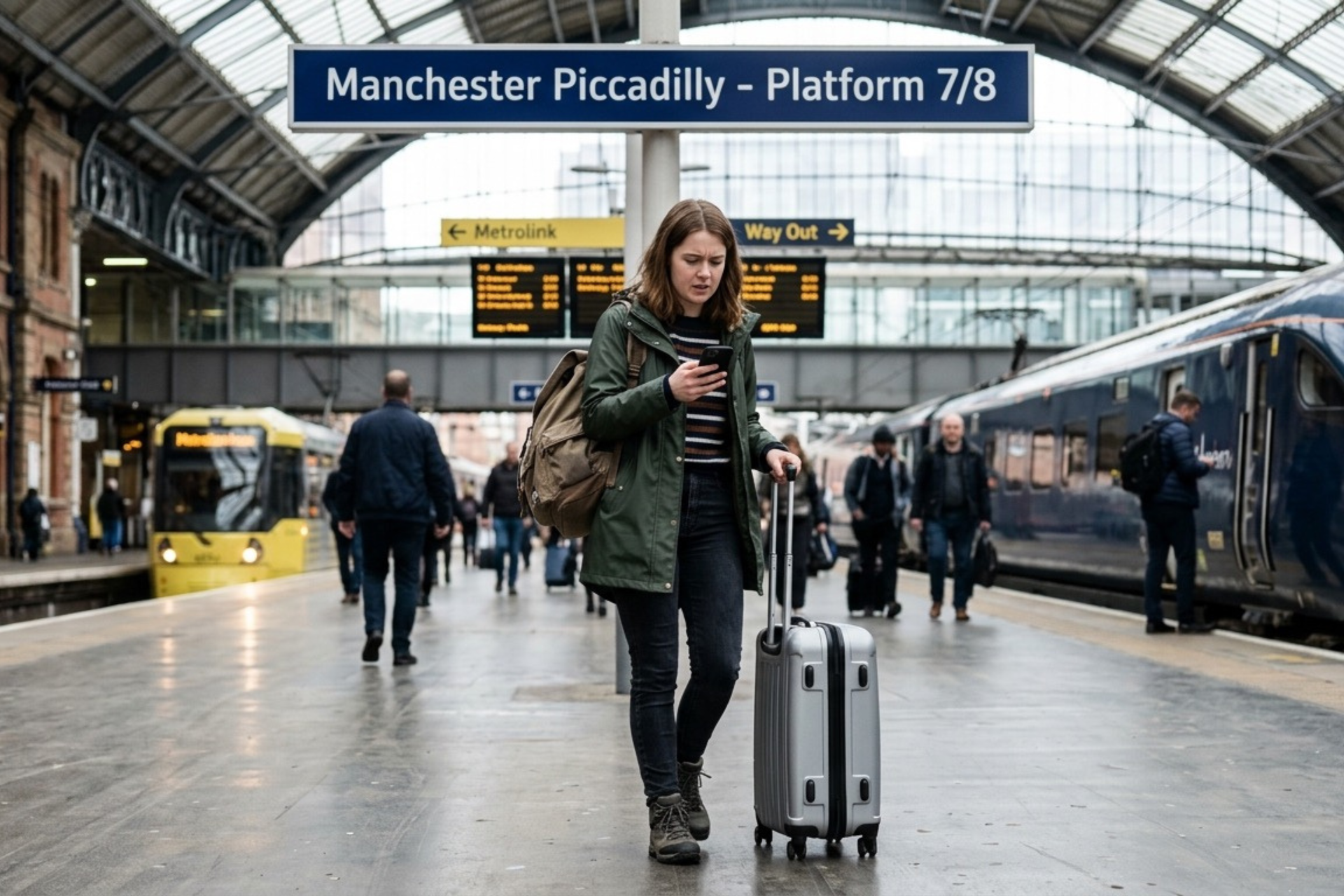
This is where planning differences become practical.
If you are still deciding how to travel over from Ireland, the choice between flying and coach travel changes how your entire trip feels, particularly for Etihad fixtures where timing around Manchester Piccadilly matters more. A detailed breakdown of both options is covered in Manchester City tickets: flying vs coach for a Man City match trip, including what most first-time travellers underestimate.
Getting to Old Trafford
Old Trafford is typically reached via tram from Manchester city centre to Old Trafford or Wharfside stops, followed by a short walk.
Many fans also choose to walk from central areas, which takes around 35 to 45 minutes depending on pace and crowd levels.
The key factor is congestion. The closer you get to kick-off, the slower everything becomes.
Getting to Etihad Stadium
The Etihad is directly connected to Manchester Piccadilly via the Metrolink to Etihad Campus.
The journey is short, but queues form at peak times, particularly after the match when everyone leaves at once.
If you are staying near the airport, the route usually involves a train to Piccadilly followed by the tram, which is straightforward once you understand the connection.
For both stadiums, transport works well, but only if you allow time for crowd movement rather than relying on timetable estimates alone.
Which stadium has the better atmosphere?
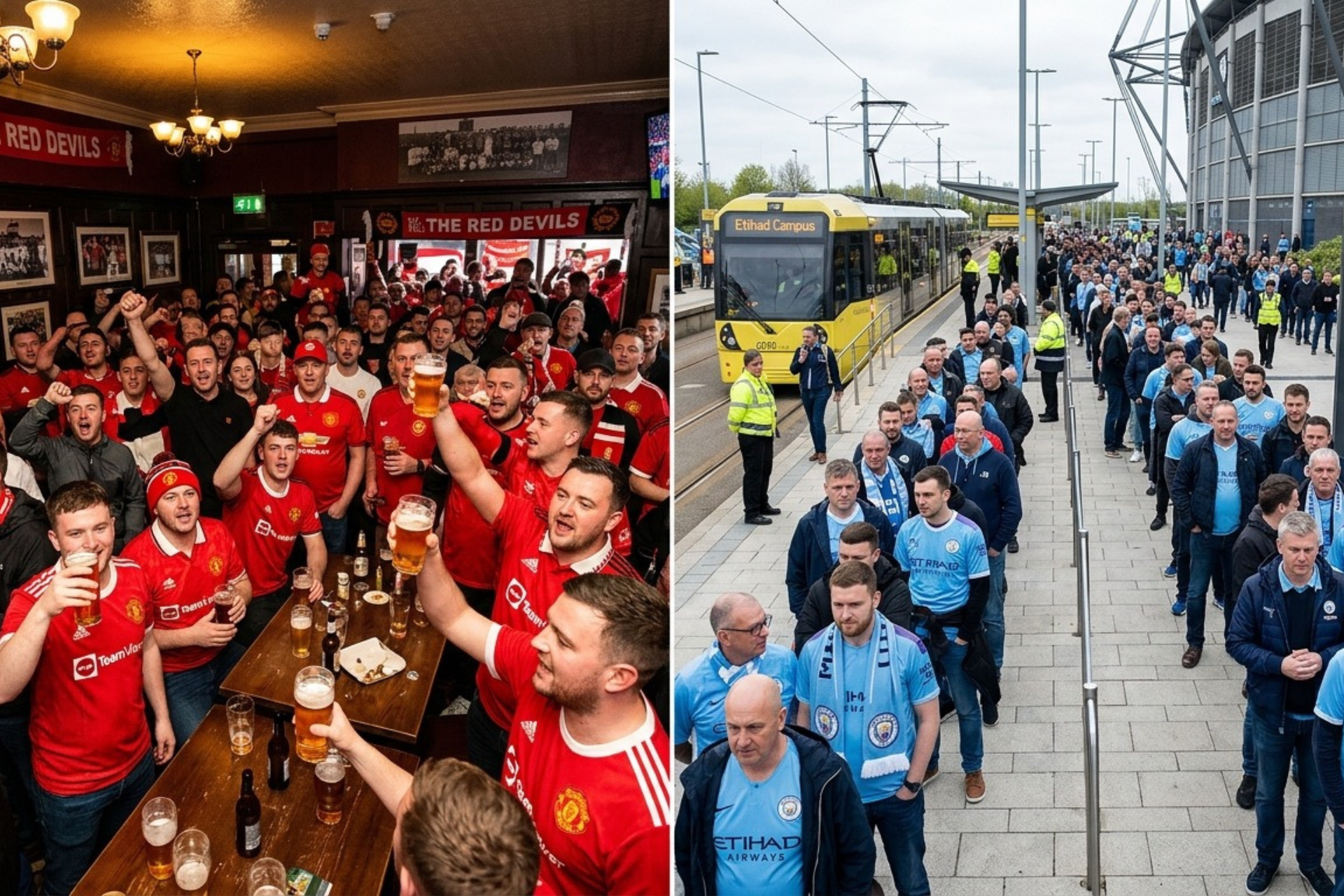
This depends on what you are expecting.
Old Trafford offers a more traditional build-up. The walk, the density of fans, and the sense of occasion build gradually as you approach the ground.
The Etihad is more controlled. The stadium itself can be loud, especially for bigger fixtures, but the pre-match environment is quieter and more structured.
For many Irish fans travelling over for the first time, Old Trafford feels closer to what they imagined. The Etihad often feels easier to manage.
What are the biggest matchday mistakes at both stadiums?
Most problems are not dramatic. They are small planning errors.
At Old Trafford, the common issues are arriving too late and underestimating queue times.
At the Etihad, the typical mistake is relying on a single tram departure and leaving no margin for delays.
Across both stadiums, ticket issues remain the biggest risk. Unofficial resale tickets, incorrect digital formats, or last-minute transfers can all lead to problems at entry points.
This is where many independent trips start to feel uncertain. You can plan everything correctly and still run into friction if one detail is off.
Where does accommodation location matter most?
For Old Trafford, staying in the city centre gives you flexibility. You can walk, take a tram, or adjust your timing depending on the crowd.
For the Etihad, proximity to a tram line or Manchester Piccadilly matters more than distance on a map. The transport connection defines your experience more than the physical location.
For airport-based hotels, such as those near Manchester Airport, the connection into Piccadilly becomes the key part of the journey, particularly for Etihad fixtures.
How do packages change the experience for Irish fans?
When you look at both matchdays side by side, the pattern becomes clear.
The difficulty is not understanding what to do. It is managing timing, tickets, and travel connections without margin for error.
For Irish fans travelling for a single fixture, especially with limited time, that margin matters.
A structured package simplifies the parts that tend to go wrong. Your ticket is valid, your hotel is aligned with the fixture, and your timing is built around how matchdays work rather than how they appear on paper.
For example, a fixture such as Manchester City v Liverpool (WSL) with a hotel stay near the airport removes the uncertainty around where to stay and how to connect into the city on matchday.
You still experience the stadium on your own terms, but the critical logistics are already handled.
If you are comparing these two matchdays, you are already doing the right thing by planning ahead.
The difference between a smooth trip and a stressful one usually comes down to small details that are easy to miss when organising everything independently.
For many Irish fans, having the ticket, hotel, and timing aligned from the start removes that uncertainty and lets you focus on the match itself, which is the reason you are travelling in the first place.