TY Trip to Paris vs Rome: Which European City Is Better for Irish Transition Year Students?
Key Takeaways
- Choose Paris for a trip centred on French language, art and museums; choose Rome for ancient history and archaeology.
- Free or reduced student admission does not necessarily remove the need to reserve a school group slot.
- Compare airport transfers, local travel and meals alongside flights and accommodation before judging the cost per pupil.
- Check each pupil’s travel documents early, particularly when the group includes different nationalities.
- A manageable itinerary with reliable meeting points usually serves a TY group better than an extra landmark.
Paris and Rome can both support an excellent Transition Year trip, but they ask different things of the timetable. Paris offers clear opportunities to connect language learning with art and everyday city life. Rome places ancient sites alongside later art and religious history. The better choice depends on what students should learn, how much time the school has and how comfortably the group can move between visits. Schools considering additional destinations can also read our blog on the best Transition Year tours from Ireland
Which city offers more for a TY group?
Paris is a strong fit when the school wants students to use some French beyond the classroom and examine art or urban culture. For another European comparison, read our blog comparing Paris and Barcelona for a school trip. The Louvre offers school group visits, while the Eiffel Tower can give students a recognisable starting point for exploring the city. A short visit works best when teachers select a few purposeful activities instead of treating every major sight as essential.
Rome makes a different case. At the Colosseum and Roman Forum, students can connect material remains with subjects they have encountered in history, languages, art or religion. The Vatican Museums also offer educational activities that schools can relate to their syllabus. These are substantial visits, so teachers should allow time for discussion and breaks rather than placing both into an already crowded day.
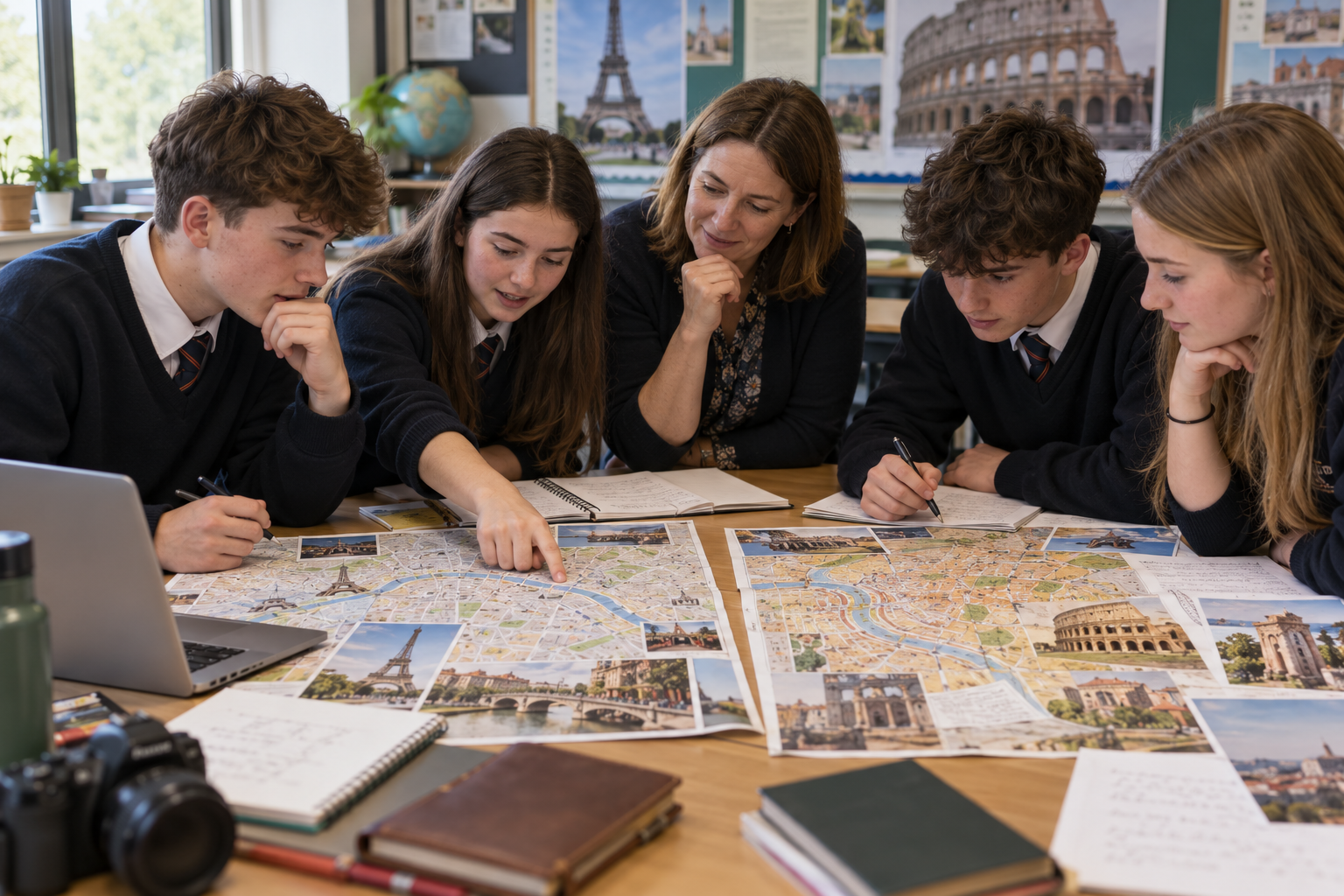
Neither city needs to become a sequence of lectures. A useful TY task might ask pupils to compare a historic site with the surrounding modern neighbourhood, practise ordering food or record how a museum presents its collection. The city provides the material; a modest learning aim gives the trip its shape.
Paris vs Rome TY trip: a workable day in each city
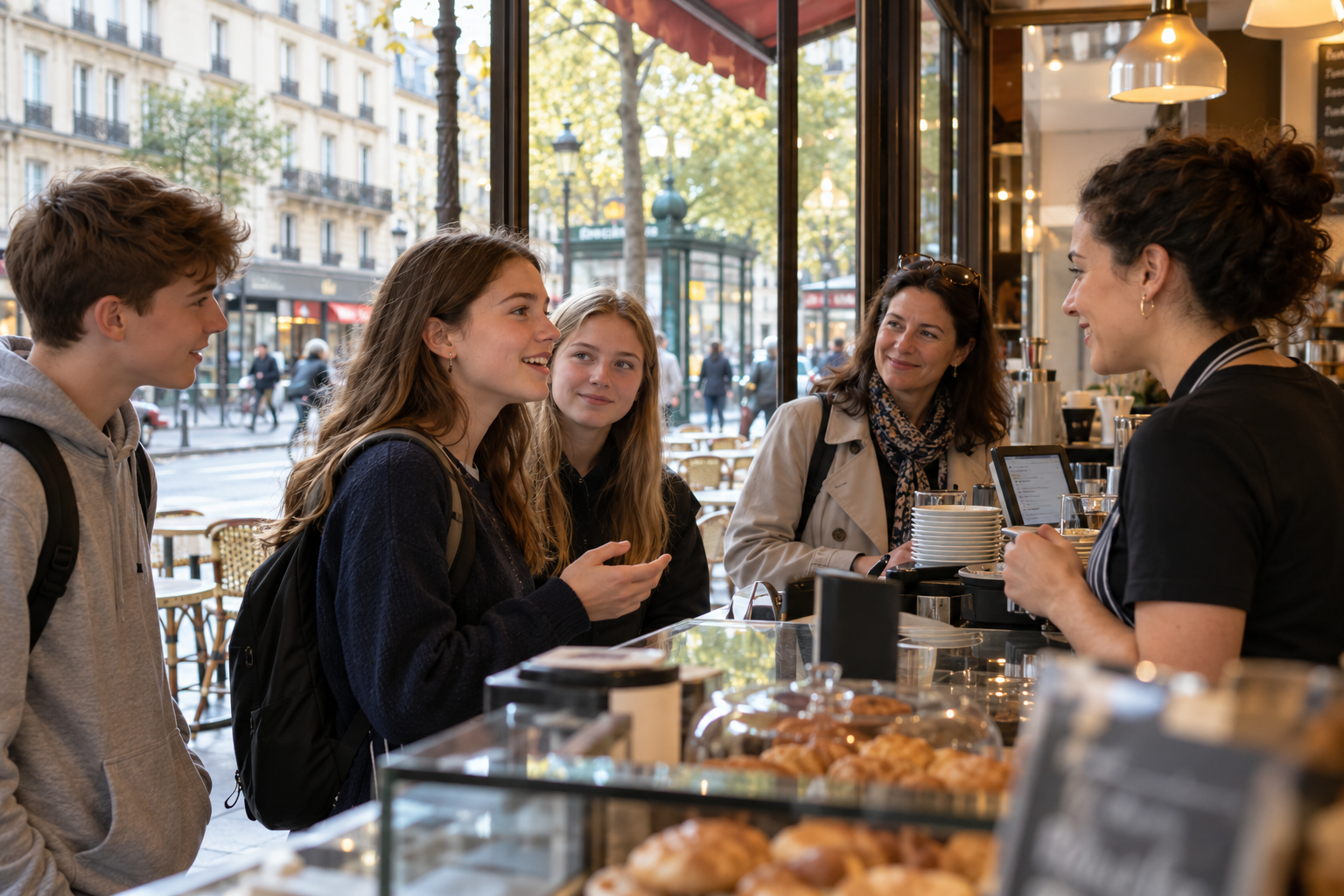
In Paris, one day could pair a pre-booked Louvre visit with time around the Tuileries and a supervised food stop. A second could focus on a different part of the city, with an Eiffel Tower visit only if the group has secured suitable tickets. This leaves space for students to observe and discuss what they have seen without repeatedly moving across the city.
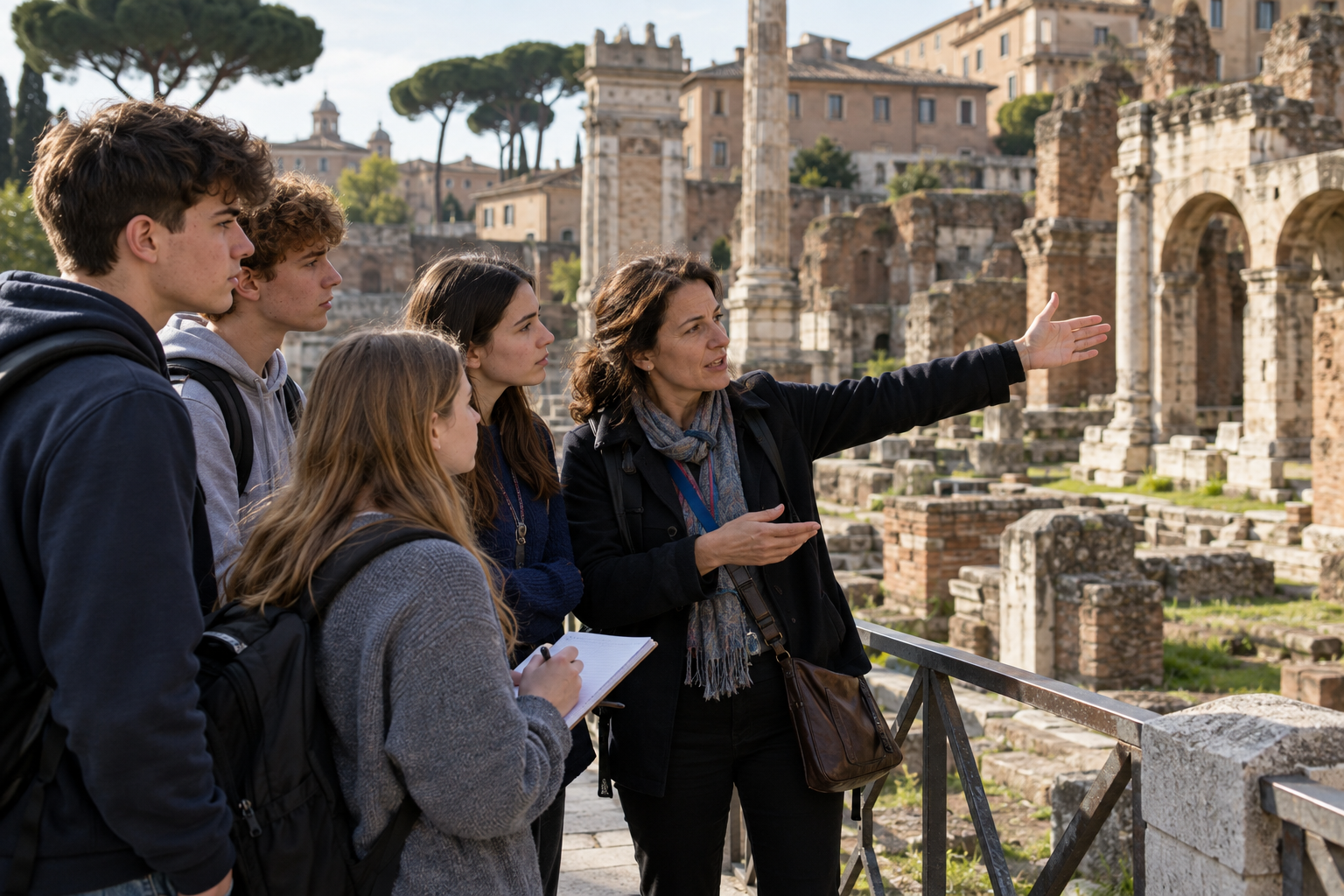
In Rome, a morning around the Colosseum and Forum makes sense as one substantial activity, followed by lunch and a less demanding afternoon. A Vatican Museums visit is better treated as another major block of time. For food, a planned stop can introduce students to local dishes while giving teachers a clear place and time to regroup; Rome’s tourism office describes the city’s longstanding street-food tradition.
These are planning examples, not promises that every site will have space. If you are comparing itineraries, ask Celtic Horizon Tours to show where the group bookings, transfers, meals and realistic breaks fit, so the educational value survives the practical timetable.
Group bookings are the detail schools often underestimate
An attraction’s general admission information may not describe what a school group needs. The Louvre says groups of more than six must reserve in advance, including school groups eligible for free admission. The Colosseum’s school ticketing includes a booked entry time. The Eiffel Tower recommends early account registration for schools and sets separate arrangements for larger groups. Check each venue’s current terms before committing to a daily schedule.
The apparent price advantage of one city can therefore change once the school has confirmed what is actually available. Ask whether a quote includes group admission, accompanying adults, any required booking fees and the transport needed between sites. Do the same for accommodation: its usefulness depends partly on the journey to the first visit and the arrangements for supervising students.
Travel costs and movement on the ground
For a group arriving at Paris Charles de Gaulle, the RER B provides a rail connection into Paris. From Rome Fiumicino, the Leonardo Express connects directly with Roma Termini. Both are useful reference points, but the best group transfer depends on the airport used, luggage, accommodation location and the number of adults available to manage the journey.
Local tickets also need checking rather than assuming that a standard visitor fare suits a school. Paris transport operator RATP publishes reduced-fare conditions for eligible youth and school groups. Rome’s ATAC publishes multi-day tickets, including a 72-hour option. Eligibility, ticket conditions and prices can change, so calculate the actual journeys in the proposed itinerary before choosing.
A fair comparison uses a complete cost per pupil: travel from Ireland, luggage, airport transfers, rooms, local journeys, admissions, meals and the school’s required staffing arrangements. Our blog on European school trip costs from Ireland explains the wider expenses that should be included when comparing quotations. An inexpensive flight is of limited value if its timing removes an activity day or creates a difficult arrival.
Accessibility, documents and student welfare
Ask venues about the specific route your group will use, including entrances, lifts, rest points and accessible toilets. Both Paris’s and Rome’s tourism offices provide accessibility information, but a general city listing cannot confirm that every part of a particular group visit will meet a student’s needs. Check directly when the itinerary is being built.
Travel documents deserve the same early attention. Ireland’s Department of Foreign Affairs advises schools to check whether anyone will travel on a passport other than an Irish one. EU guidance also notes that minors travelling with adults who are not their legal guardians may need additional authorisation; requirements vary by country and circumstance. Confirm each pupil’s position well before tickets become difficult to change.
For either city, teachers need agreed meeting points, a method of contacting students and enough time for headcounts between activities. Celtic Horizon Tours can help bring the travel and visit arrangements into one coherent plan, leaving the school to focus on its educational aims and its own student welfare procedures.
Is Paris or Rome better for your school?
Choose Paris if French language practice and a mix of art, museums and city exploration are the main goals. Choose Rome if the group will gain more from ancient history, archaeology and the layers of culture visible across the city. If the aims are equally strong, decide on confirmed availability and the itinerary’s cost and pace, rather than a list of famous sights.
For a trip that fits your pupils and your school calendar, ask Celtic Horizon Tours for a Paris and Rome comparison based on the same group size, dates and inclusions. That gives you a decision the school can explain clearly to both staff and parents.