
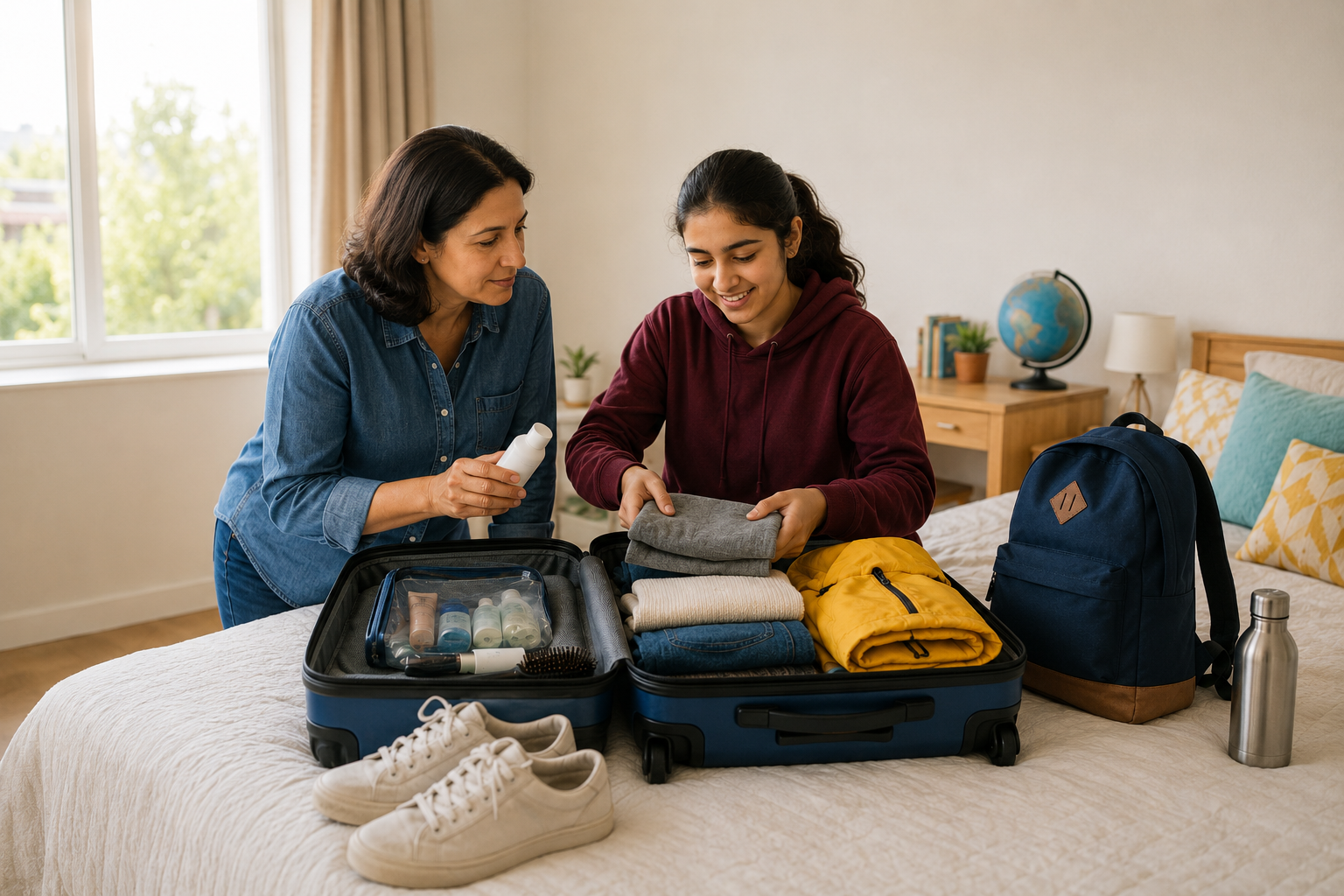
What to Pack for a School Tour Abroad: A Student Checklist That Parents Will Love
Key Takeaways
- Travel documents and medication matter more than packing an extra outfit, so check both well before departure.
- Pack for the actual itinerary and weather, not simply the destination or season.
- Students should keep essential journey items accessible rather than buried in their main luggage.
- Overpacking creates problems when groups change hotels, board coaches or move through ferry terminals and airports.
- A clear school trip packing list removes uncertainty for families and makes departure day considerably easier for teachers.
Packing for a school tour abroad sounds straightforward until several different concerns arrive at once. Students are thinking about clothes and chargers. Parents are thinking about passports, medication, spending money and whether a waterproof jacket has somehow disappeared since last winter. Teachers need the entire group to arrive with the essentials without bringing half the contents of their bedrooms.
A useful school trip packing list therefore needs to do more than count pairs of socks. It should make the journey easier, reduce avoidable problems and reflect how the group will actually travel. Families and teachers who need broader preparation guidance can also read our blog planning a school trip to Europe
What Should Students Pack for a School Trip Abroad?
Start with the itinerary rather than the suitcase.
A three-night city tour involving museums, walking tours and coach transfers requires very different clothing from a sports tour involving training sessions or an outdoor activity programme. Before buying anything new, students and parents should check the school’s itinerary, expected weather, accommodation arrangements and any activity-specific instructions.
A practical student travel checklist will normally include:
- Comfortable everyday clothes appropriate to the length of the trip
- Underwear and socks, plus one sensible spare set
- Pyjamas or sleepwear
- Comfortable, already-worn walking shoes
- Waterproof or lightweight rain jacket
- Warm layer such as a jumper or fleece
- Small day bag
- Toiletries in secure containers
- Refillable water bottle where appropriate
- Phone and charger if permitted by the school
- Plug adaptor where required
- Any activity-specific clothing requested by the school
The phrase already-worn walking shoes is important. A school tour is rarely the best place to discover that new trainers become uncomfortable after several kilometres.
For organised tours, this is one area where a detailed itinerary helps before anyone begins packing. When Celtic Horizon Tours coordinates the route, accommodation and activities, schools have a clearer picture of what pupils will actually be doing each day, which makes the packing instructions considerably easier to prepare.
School Trip Travel Documents Should Be Checked First
Clothes can usually be replaced. Missing travel documents can stop a student travelling altogether.
The Department of Foreign Affairs advises schools travelling abroad to check passport validity and destination-specific requirements well in advance, noting that requirements differ between countries and transport providers. It also recommends checking whether visas are necessary for members of the group.
Students travelling abroad may therefore need:
- Valid passport or other accepted travel document
- Visa or travel authorisation where applicable
- Parental or guardian consent documentation requested by the school
- Travel insurance information
- EHIC or other relevant healthcare documentation
- Emergency contact details
Do not assume every pupil in an Irish school has identical entry requirements. Nationality can affect passport, visa and immigration rules, particularly where a class contains students with different citizenships.
There is also no single EU-wide rule governing parental travel authorisation for minors. Individual countries may require additional documentation when children travel without their legal guardians, and airlines can impose their own requirements.
That is why documents should be checked against the specific destination and transport provider, rather than copied from the paperwork used for last year’s trip. Groups visiting participating European countries should also review the new EU border rules for Irish school trips before finalising passenger documents.
Medication, Health Information and Travel Insurance
Medication needs to be discussed early rather than added to the suitcase on departure morning.
Parents should follow the school’s procedure for declaring medication and medical requirements, including allergies or conditions that teachers need to know about. Students taking regular medicine should bring exactly what has been agreed with the school, with appropriate identification and instructions where required.
The HSE recommends keeping an up-to-date list of medicines because accurate information can help healthcare professionals make safer decisions if treatment is required.
For eligible travellers visiting the EU, EEA or Switzerland, an EHIC can provide access to necessary healthcare free or at reduced cost under the applicable local system. The HSE also makes clear that an EHIC does not replace travel insurance.
Parents should therefore treat healthcare cover and travel insurance as separate parts of the preparation process. Teachers can use our blog insurance for an overseas school tour to understand the cover that should be checked before departure.
What Goes in a Student’s Hand Luggage?
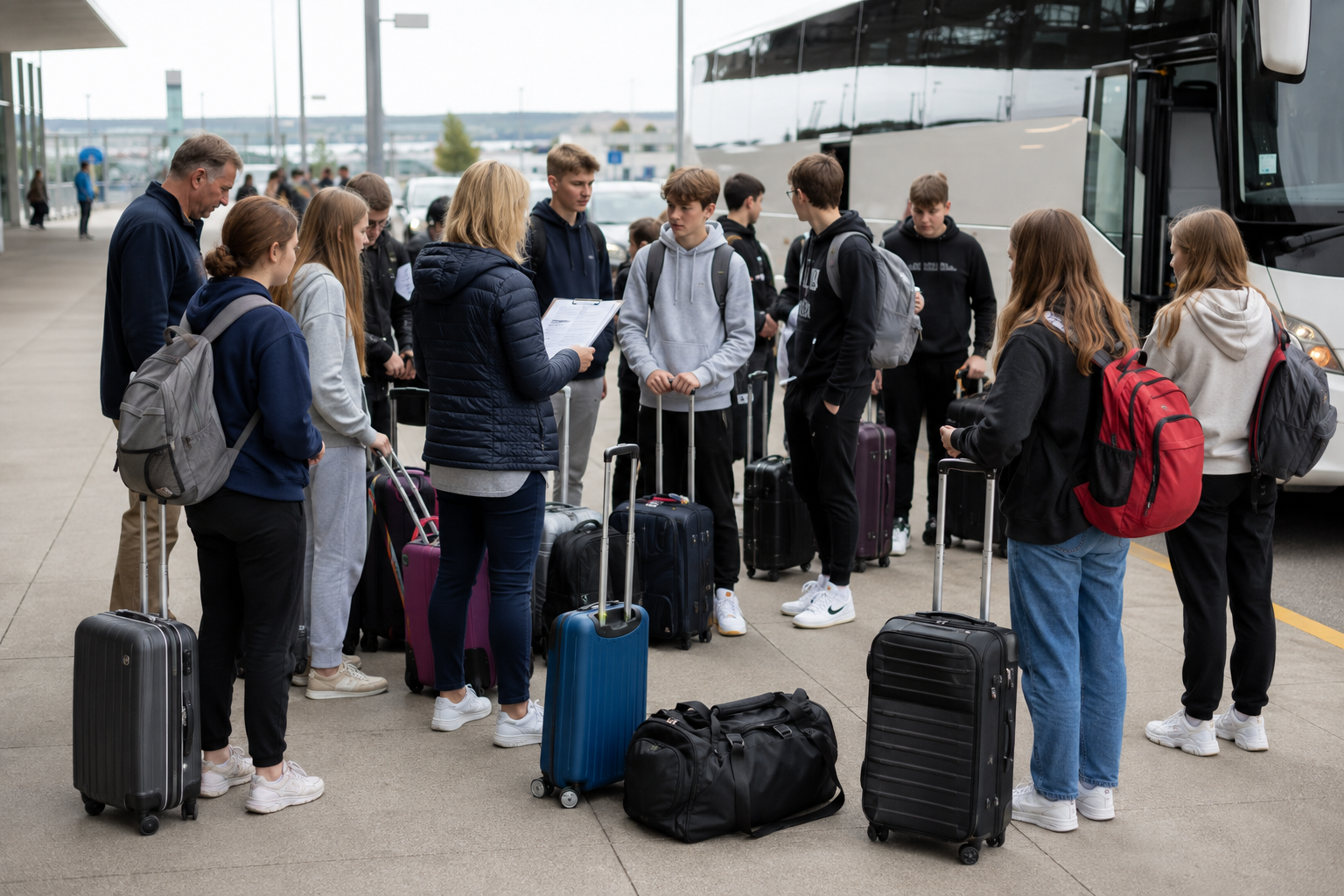
The best rule is simple: pack the things needed during the journey where they can actually be reached.
A student’s school trip hand luggage might include their travel documents if pupils are responsible for holding them, a small amount of spending money, phone if permitted, charger or power bank where allowed, prescribed medication according to school arrangements, water once permitted through the relevant security point, and something to occupy longer ferry, coach or flight sections.
Students should also consider a light layer of clothing. Coaches, ferries and terminals can feel very different from the weather outside.
Airport security rules deserve particular attention because they can vary by airport. For example, Dublin Airport changed its departing-passenger liquid rules after introducing new security scanners, permitting containers of up to two litres in hand luggage. That does not mean students should assume identical rules at their destination airport or on every stage of the journey.
Check both the carrier’s baggage rules and the airports being used shortly before departure.
Pack for Weather, Walking and the Actual School Tour Itinerary
One of the most common packing mistakes is preparing for the destination’s reputation rather than the day’s programme.
A student visiting Edinburgh, Cardiff, London or Manchester may spend substantial periods walking between attractions even when a coach handles the long-distance transport. Comfortable footwear, a waterproof outer layer and clothing that can be layered are usually more useful than several bulky outfits.
Likewise, warmer destinations still require practical planning. Students may need sun protection, a hat and a refillable bottle, while religious sites, formal venues or particular activities may have clothing requirements.
Check forecasts shortly before departure rather than relying on average seasonal weather, and follow any specific advice issued by the school.
The School Trip Packing Mistakes Worth Avoiding
Overpacking is probably the most familiar problem. A suitcase that seems manageable in the bedroom becomes considerably less enjoyable when students need to manoeuvre it through a hotel corridor, terminal or coach loading area.
Another mistake is packing every useful item into the main suitcase. If a passport, rain jacket or required medication is inaccessible when the group needs it, technically having packed it is not particularly helpful.
Students should also avoid relying entirely on their phone for essential information. Batteries fail, phones get misplaced and mobile data does not always behave as expected. Schools may provide emergency contact cards or meeting information, and students should keep these where instructed.
Perhaps most importantly, do not introduce unnecessary last-minute uncertainty. Complete the school trip packing checklist several days before departure, then perform one final check the evening before travelling.
A Final Student Packing Checklist Before Leaving Home
Before the suitcase is closed, ask five questions:
- Do I have the correct travel documents?
- Have my medication and health requirements been handled according to the school’s instructions?
- Can I comfortably carry or move my luggage?
- Do I have suitable clothing and footwear for the itinerary and current forecast?
- Are the things I will need during the journey accessible?
If all five answers are yes, the student is probably better prepared than someone carrying three additional outfits but searching for their passport at check-in.
Celtic Horizon Tours can coordinate the transport, accommodation, activity timings and practical group logistics, giving teachers and families a much clearer framework for preparing students before departure. The objective is not to pack for pupils, but to remove enough uncertainty that everyone knows what the trip will involve and what they genuinely need to bring.