How to Align School Sports Tours with PE and SPHE Curricula?
Key Takeaways
- A sports tour becomes curriculum-linked only when its activities connect with planned learning outcomes.
- PE links are strongest when students evaluate preparation, performance, teamwork and participation.
- SPHE value can come from responsibility, relationships, resilience and managing unfamiliar situations.
- Inclusion and student welfare must be planned before describing a tour as supporting wellbeing.
- Simple reflection activities can demonstrate educational value without turning the tour into another examination.
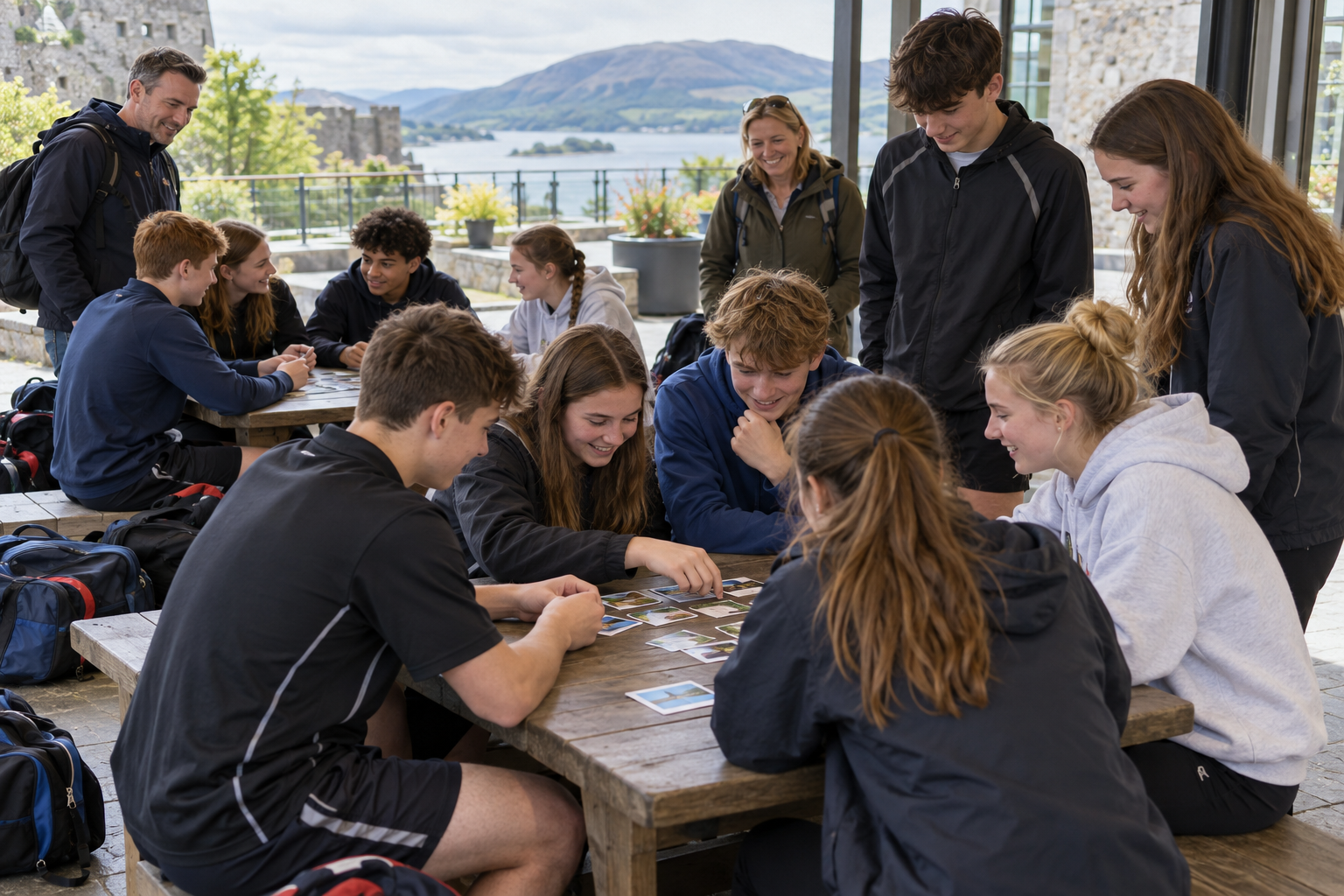
A school sports tour can support Physical Education, Social, Personal and Health Education and a school’s wider wellbeing programme. However, travel does not become curriculum-linked simply because students play matches or spend time with their classmates.
The connection must be planned. Teachers need to identify what students should learn, create suitable opportunities during the tour and decide how that learning will be reviewed afterwards. This makes the educational case clearer when seeking approval from school management or explaining the tour’s value to parents.
What Makes a School Sports Tour Curriculum-Linked?
A curriculum-linked school sports tour starts with learning intentions rather than a destination. The first question should be, “What should students understand or demonstrate through this experience?”
The Junior Cycle curriculum gives schools scope to provide subjects, short courses and other learning experiences suited to students’ needs. This creates room for planned learning outside the classroom, but the connection between the activity and its intended outcome must still be clear.
Useful outcomes might include:
- Contributing effectively to a team
- Responding constructively to setbacks
- Recognising how preparation affects performance
- Showing respect towards teammates and opponents
- Evaluating an individual contribution to a shared objective.
These outcomes can shape the itinerary, student responsibilities and post-tour review. There is no need to present every meal or coach transfer as a lesson. The learning should be genuine rather than added after the itinerary has been agreed. Our blog on why Six Nations rugby trips involve more than the match demonstrates how sporting travel can also include social, cultural and shared group experiences.
PE Curriculum Links Through Performance and Participation
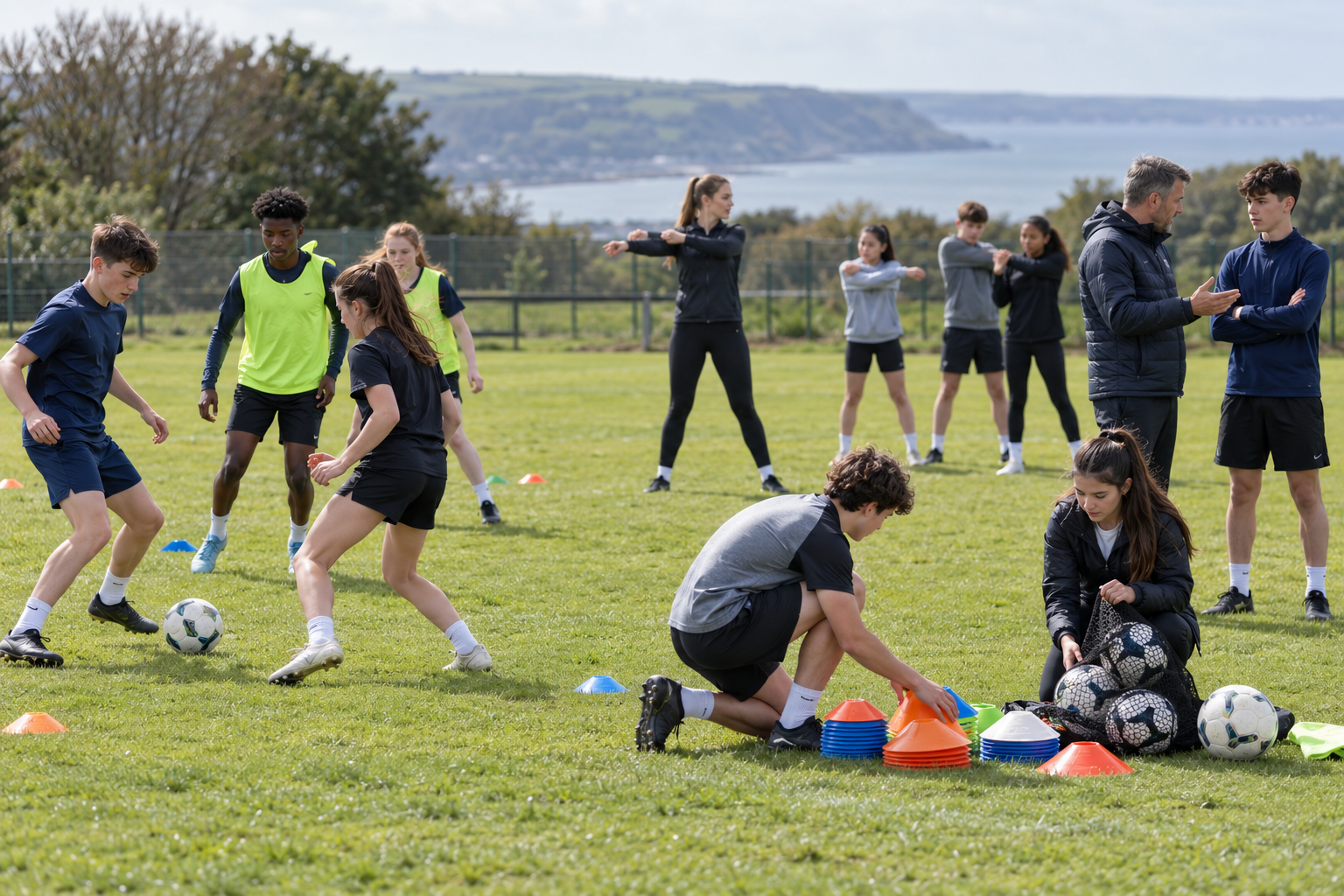
Junior Cycle PE includes physical activity for health and wellbeing, games, and individual and team challenges. Its learning outcomes cover improving performance, responding to different game situations, promoting inclusion, cooperating towards a common goal and reflecting on team effectiveness.
A school sports tour provides practical opportunities to apply these skills. Before travelling, students might set performance or participation goals. During training or fixtures, they can observe how warm-ups, communication, tactical decisions and recovery affect performance. Afterwards, they can evaluate their contribution without reducing the discussion to results.
Students who are not competing throughout the tour can still have meaningful roles. They might lead a warm-up, record observations, support equipment management or review team communication. This prevents the educational value from applying only to the strongest players.
Senior Cycle PE also recognises participation beyond school, responsible social behaviour, teamwork, and playing and non-playing roles within sport.
How Can a Sports Tour Support SPHE?
The strongest SPHE links usually arise through relationships, decision-making, responsibility and emotional wellbeing rather than sport alone.
Students travelling together must manage shared spaces, unfamiliar routines and communication outside their usual friendship groups. They may encounter competitive pressure, disagreement, disappointment or homesickness. These experiences are not automatically positive, but they can support learning when students receive appropriate preparation and opportunities to reflect.
Junior Cycle SPHE includes healthy decision-making, awareness of social influences, problem-solving, coping skills and consideration of how students support themselves and others. Awareness, dialogue, reflection and action underpin its four strands.
Relevant activities could include a pre-tour discussion about respectful communication, a private wellbeing check-in or a guided review afterwards. Students should not be pressured to discuss personal feelings publicly. The purpose is to help them recognise useful behaviours and coping strategies.
School Tour Wellbeing Benefits Require Planning
PE and SPHE contribute to Junior Cycle Wellbeing. Its six indicators are Active, Responsible, Connected, Resilient, Respected and Aware.
A sports tour can provide opportunities to demonstrate each indicator. Competing supports active participation, following group arrangements involves responsibility and shared preparation can strengthen connection.
However, a tour should not be presented as supporting wellbeing if less experienced players are excluded or additional needs are overlooked. Competitive sport may strengthen confidence and belonging, but it can also increase concerns about selection, performance and peer acceptance.
Schools should consider rooming, dietary and medical needs, accessibility, rest time, communication arrangements and alternative ways to participate. For a practical example of how accommodation location affects travel and recovery, read our blog on Manchester hotels with convenient Etihad access . An inclusive school sports tour gives each student a meaningful place in the group, although that role may not be the same for everyone.
Turning Sports Tour Learning Objectives into Evidence
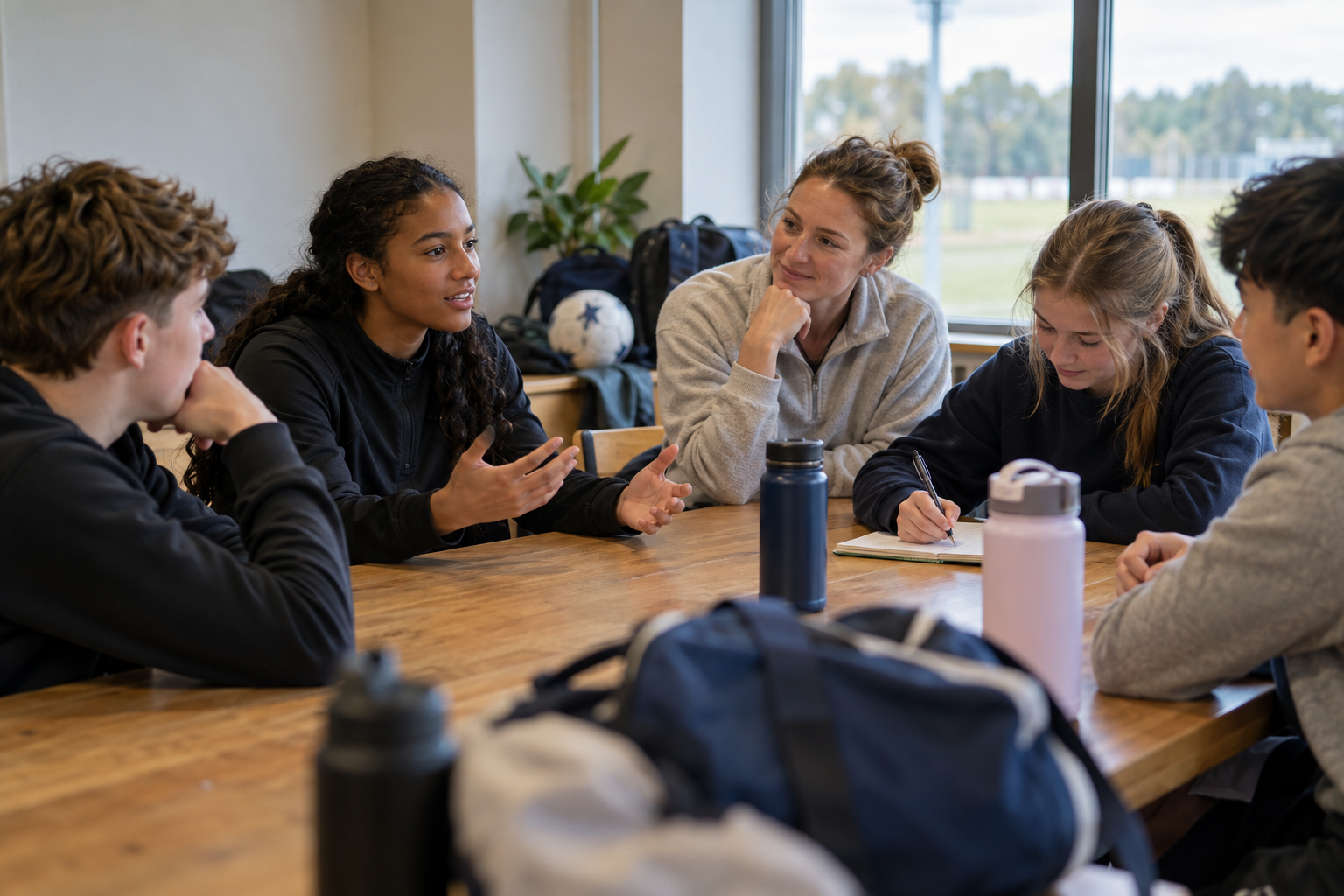
Curriculum alignment does not require a large written project. A light-touch approach can demonstrate learning while preserving time for participation.
Before travelling, students could select one personal objective and one team objective. During the tour, they might make brief observations about preparation, communication or problem-solving. A discussion, audio reflection or one-page review after returning can then help students explain what they learned.
Useful prompts include:
- What did effective teamwork look like?
- Which preparation decision affected performance most?
- How did the group respond when plans changed?
- What helped different students participate?
- What should the team do differently next time?
The format should suit the students’ age and abilities. Any evidence collected must also follow school policies covering student information, photographs and digital platforms.
Common Curriculum-Linked School Sports Tour Mistakes
One common mistake is writing the educational justification after choosing the itinerary. This often leads to vague claims about confidence and teamwork without planned activities to support them.
Another is claiming too many learning outcomes. Two or three well-supported curriculum links are more credible than an extensive list that teachers cannot realistically observe.
Schools should also distinguish operational tasks from learning. Following rooming rules, checking documents and arriving for the coach are essential responsibilities, but they become educational only when students understand and reflect on the underlying skills.
Curriculum value also does not replace tour management. Educational aims must sit alongside supervision, medical information, safeguarding, insurance, risk assessment and suitable transport arrangements.
Planning a School Sports Tour from Ireland
Once the educational purpose is clear, the itinerary should make that purpose achievable. Schools developing a football-focused programme can read our blog on activities beyond the stadium in Manchester and Liverpool when considering wider cultural and group experiences. Long transfers, late arrivals and tightly packed schedules may leave too little time for preparation, recovery or reflection.
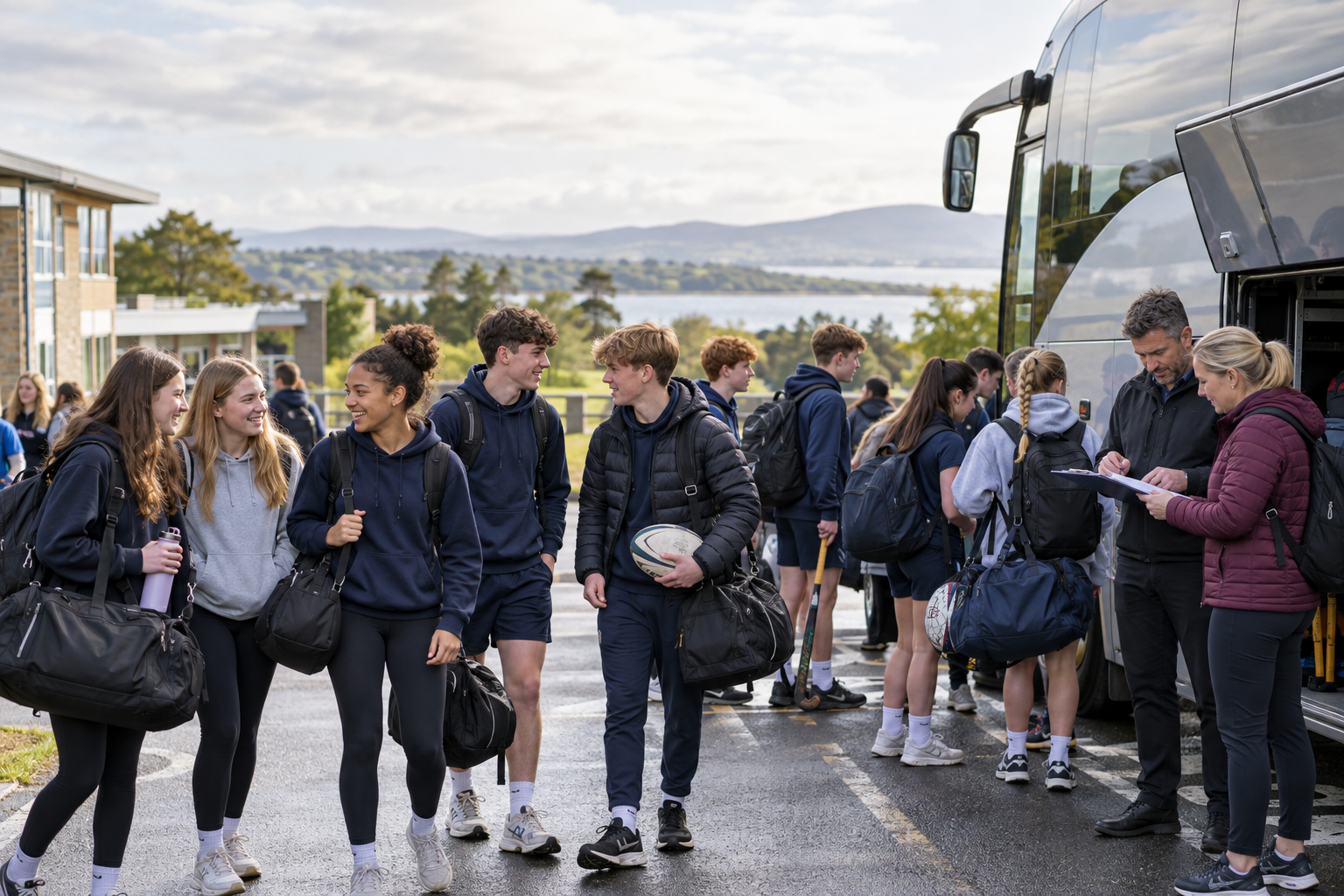
Schools planning independently must coordinate transport, accommodation, fixtures or training, meals, documentation and contingency arrangements. An organised provider can reduce these administrative handovers while the school retains responsibility for curriculum planning, student supervision and learning.
Celtic Horizon Tours can coordinate the main travel elements of a school sports tour from Ireland, allowing teachers to concentrate on student preparation and educational outcomes. Discussing the group’s sporting purpose early also makes it easier to build a practical itinerary around the school’s objectives.
Is a Curriculum-Linked Sports Tour Worth Organising?
Yes, provided the curriculum connection is specific, inclusive and proportionate. A carefully planned tour can give students a genuine setting in which to apply sporting knowledge, accept responsibility, manage group challenges and assess their own participation.
The strongest justification is not simply that students travelled. It is that they encountered purposeful situations, applied relevant skills and returned able to explain what they learned.
If your school is considering a sports tour, Celtic Horizon Tours can help coordinate transport, accommodation and sporting arrangements around your educational priorities. This reduces planning pressure while leaving teachers in control of learning, supervision and student support.