Highlands Packing List: Why ‘Irish Weather’ Isn’t the Same as ‘Highland Weather’
For travellers from Ireland, the prospect of a trip to the Scottish Highlands often feels like a home-from-home experience. We are accustomed to “soft days,” unpredictable Atlantic squalls, and the necessity of keeping an umbrella in the car boot year-round. However, assuming that a standard Irish wardrobe is sufficient for a week in Glencoe or the Isle of Skye is one of the most common planning mistakes we see at Celtic Horizon Tours.
In 2026, the Highland climate remains a beast of its own. While Ireland’s maritime climate is tempered by the Gulf Stream, the Highlands represent a more “boreal” environment. The peaks are higher, the wind tunnels in the glens are fiercer, and the legendary Scottish midge presents a challenge entirely absent from the Irish countryside. To ensure your 2026 tour is defined by the scenery and not by soggy socks, you need a strategy that goes beyond just “bringing a coat.”
The Highland Temperature Gap
The most significant difference between Irish and Highland weather is the altitude-driven temperature drop. Even in the height of July, the temperature in a sheltered Irish valley might feel balmy at 18°C, while a mere two-hour drive north into the Grampian Mountains can see that figure plummet to 10°C with a wind chill that feels significantly lower.
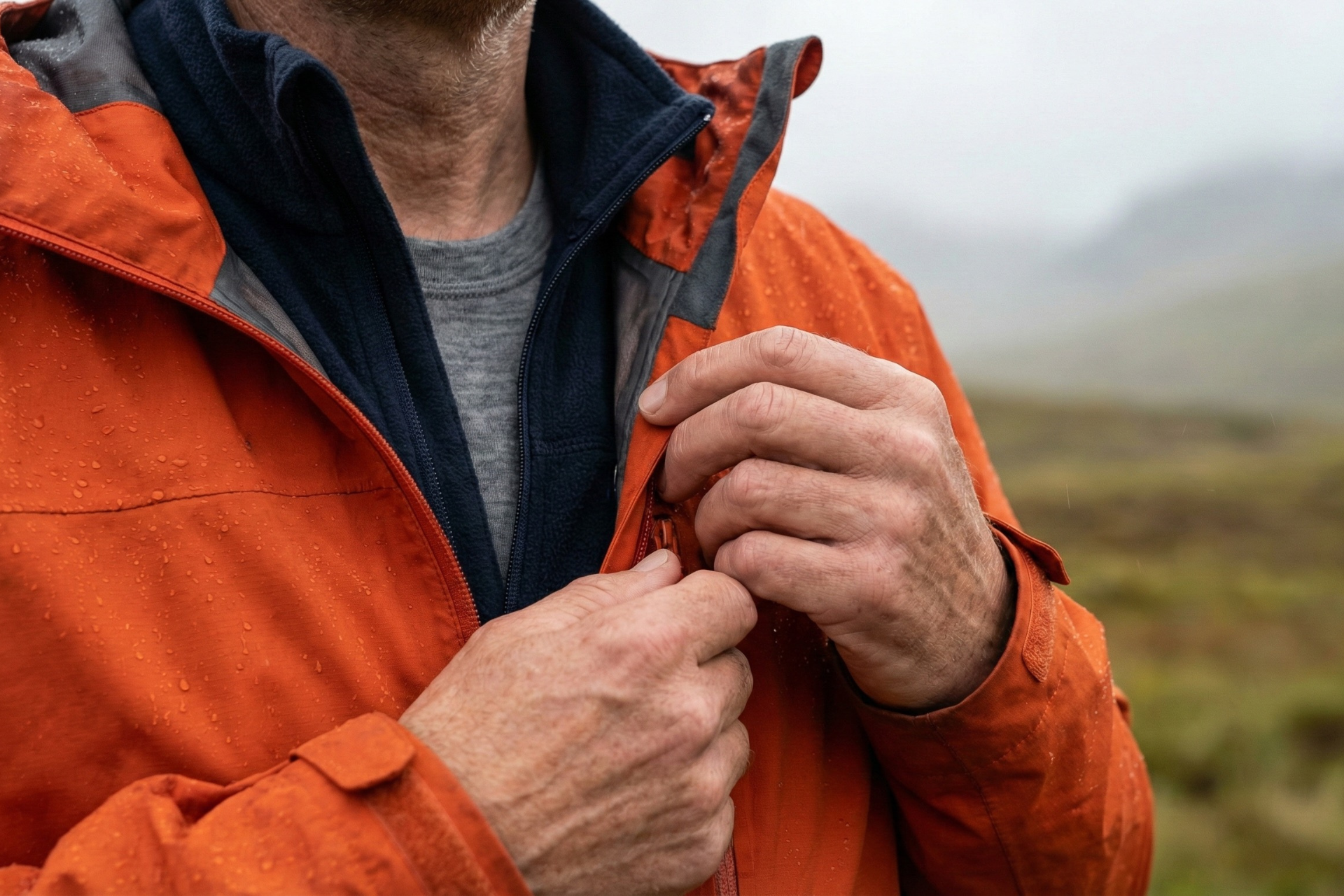
In the 2026 season, we are seeing more “four seasons in one hour” events than ever before. This is why the “Base-Mid-Shell” system is non-negotiable.
- The Base Layer: Avoid cotton. Once cotton gets damp from perspiration or a light mist, it stays cold against your skin. Opt for Merino wool or synthetic “wicking” fabrics that move moisture away from the body.
- The Mid Layer: A lightweight down gilet or a medium-weight fleece is essential. The beauty of a coach tour is that you can leave these in your overhead bin when the sun emerges, but you will be grateful for them the moment you step out at a wind-swept viewpoint like the Quiraing.
- The Shell: Your outer layer must be windproof and waterproof, not just “water-resistant.” In the Highlands, rain often travels horizontally. A high-quality raincoat with a structured hood is a far better investment than an umbrella, which will likely be inverted by the first gust of a Highland gale.
Footwear: The ‘Town vs Trail’ Distinction
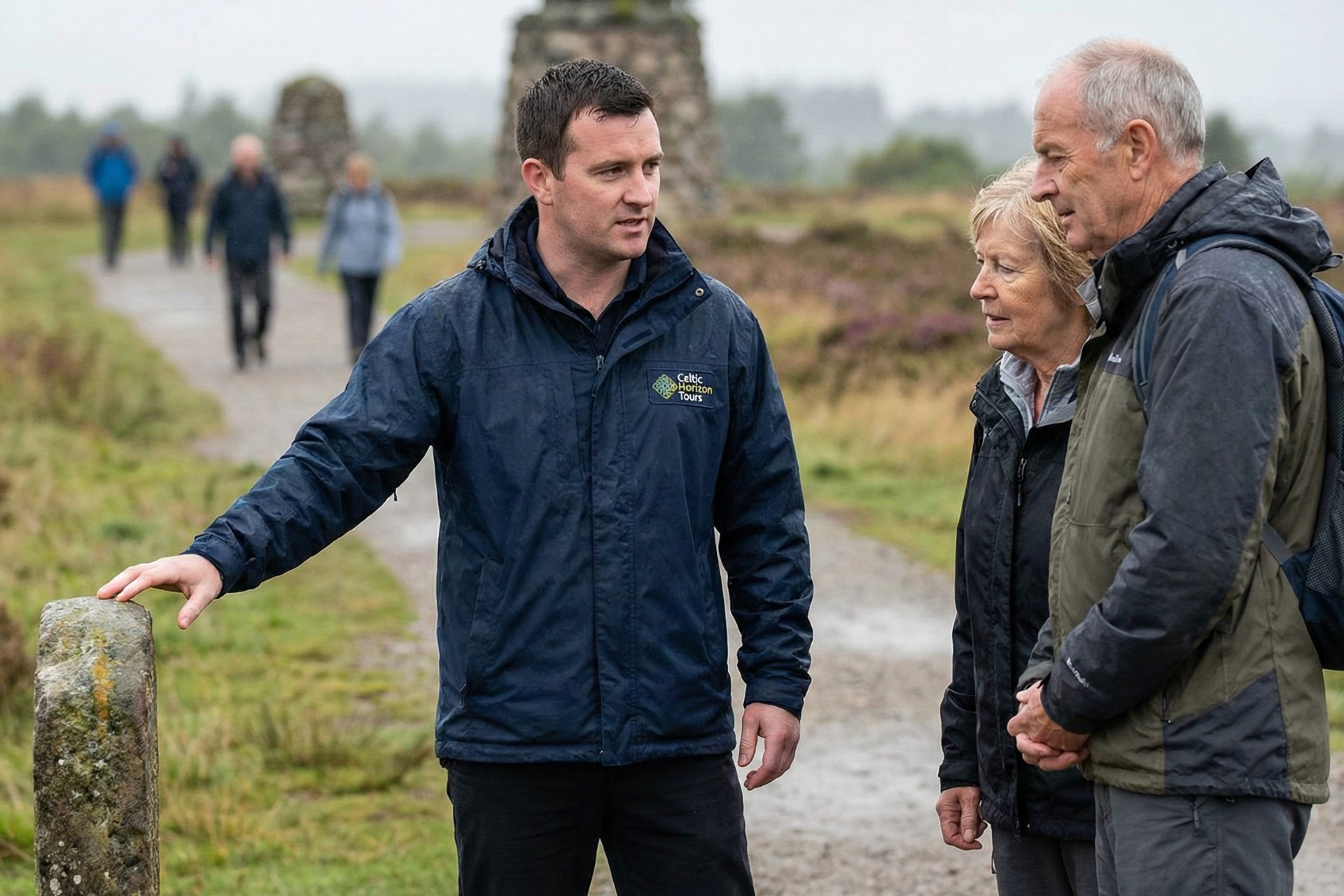
Many visitors underestimate the terrain of a standard Highland tour. Even if you are not “hiking” in the traditional sense, visiting sites like Urquhart Castle or the Culloden Battlefield involves walking on gravel, wet grass, and uneven stone paths.
In Ireland, we might get away with sturdy trainers for a walk in the park, but in Scotland, the ground is notoriously “boggy.” The peat soil holds water like a sponge. In 2026, we highly recommend waterproof trail shoes or light hiking boots with Gore-Tex lining. This ensures that a ten-minute walk to a waterfall doesn’t result in wet feet for the rest of the day. If you are joining us for a winter tour, insulated boots are a must, as the damp cold of the Highlands can seep through thin soles very quickly.
The 2026 Midge & Tick Strategy
The “Highland Midge” is a tiny insect with a legendary reputation. While they are primarily active from mid-May to September, their presence depends heavily on wind speed and humidity. If the air is still and the day is overcast, they can be a nuisance.
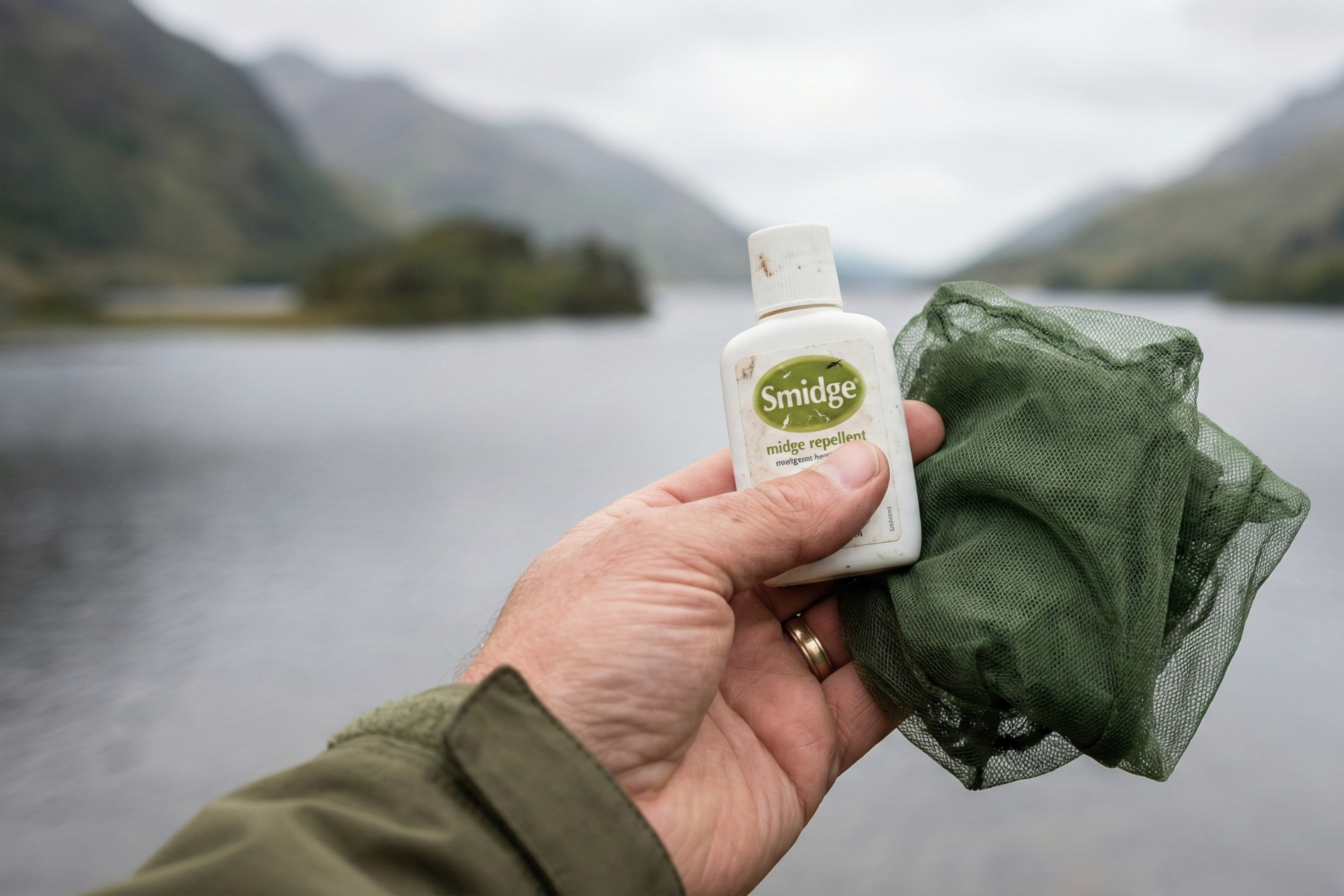
Unlike the larger, more docile insects we find in Ireland, midges move in swarms. For 2026, we recommend a two-pronged approach:
- Chemical Defence: “Smidge” is the local gold standard. It is DEET-free and developed specifically for the Scottish midge. Most Irish repellents designed for tropical mosquitoes are surprisingly ineffective against the Highland varieties.
- Mechanical Defence: If you are sensitive to bites, a “midge head net” is a lightweight, inexpensive addition to your daypack. It might look unusual, but when the midges are out at Loch Shiel, it will be the most valuable item in your possession.
Additionally, 2026 has seen a rise in “Tick Watch” alerts across northern the UK. When walking through long grass or bracken, ensure your trousers are tucked into your socks and use your midge repellent on your ankles, as most midge sprays also act as a deterrent for ticks.
Essential Small Items You CANNOT Forget!
Beyond the big-ticket items, there are several “2026 essentials” that often get left behind:
- Power Bank: Between the GPS on your phone and the hundreds of photos you’ll take of the “Harry Potter Bridge,” your battery will drain faster than usual. Our coaches provide USB charging, but a portable bank is vital for long stops.
- Sunscreen: Do not be fooled by the clouds. The Highland air is incredibly clear, and the UV levels can be surprisingly high, especially near the coast.
- Reusable Water Bottle: Scottish tap water is world-class. Bringing a refillable bottle is better for the environment and your wallet.
- Binoculars: For spotting golden eagles in the glens or seals off the coast of Skye, a compact pair of binoculars will transform your viewing experience.
Why a Tour Simplifies the Gear Stress
The biggest advantage of travelling with Celtic Horizon Tours is the “Coach as a Base” logic. When you travel independently, you are often limited by the luggage space of a small rental car or the physical weight of what you can carry on a train.
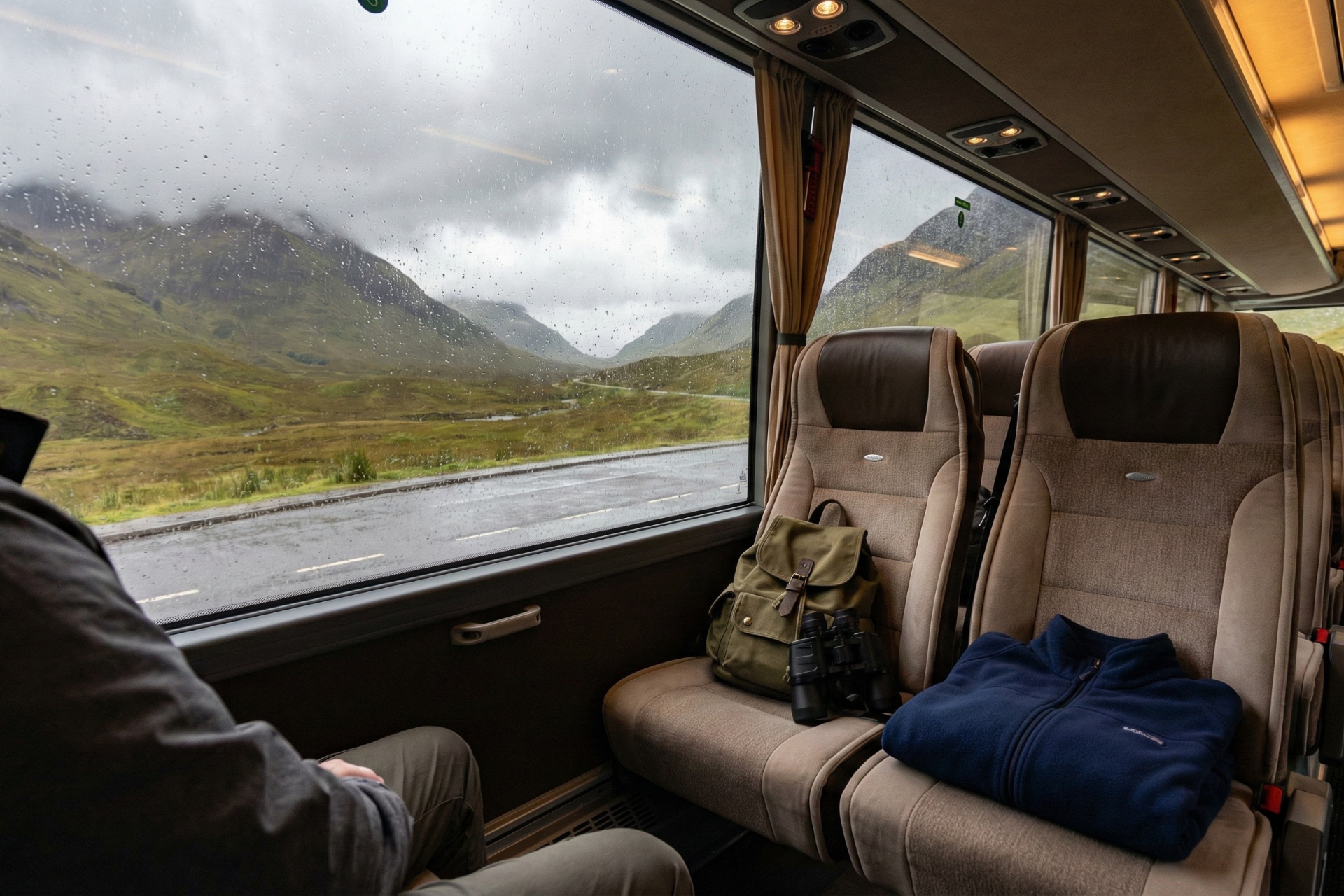
On our tours, you can pack for every eventuality without the burden of carrying it all day. You can keep your heavy waterproofs and your “just in case” fleece on the coach, stepping out in comfort regardless of what the Scottish sky decides to do. We handle the transitions between the warm, dry cabin of our luxury coaches and the wild beauty of the landscape, ensuring you are always prepared but never overloaded.
Don’t let the wrong gear dampen your Highlands adventure. Check out our Highlands of Scotland Tour and let us take care of the logistics while you focus on the views.