
How to Get to Monza Circuit from Milan: Transport Tips for Race Weekend
For many first-time visitors, attending the Italian Grand Prix feels straightforward on paper. Milan is well-connected, Monza is close, and Italy has a strong public transport network. In reality, race weekend introduces layers of complexity that surprise even seasoned travellers.
Monza is not a city-centre circuit. It sits deep inside a historic public park, and reaching the town of Monza is only the first step. The final journey to the circuit gates involves walking routes, crowd control, shuttle systems, and security checks that change day by day.
This guide explains how transport actually works during the Formula 1 weekend, what first-time visitors tend to underestimate, and how to choose the approach that best fits your travel style.
Where Is Monza Circuit and Why Location Matters
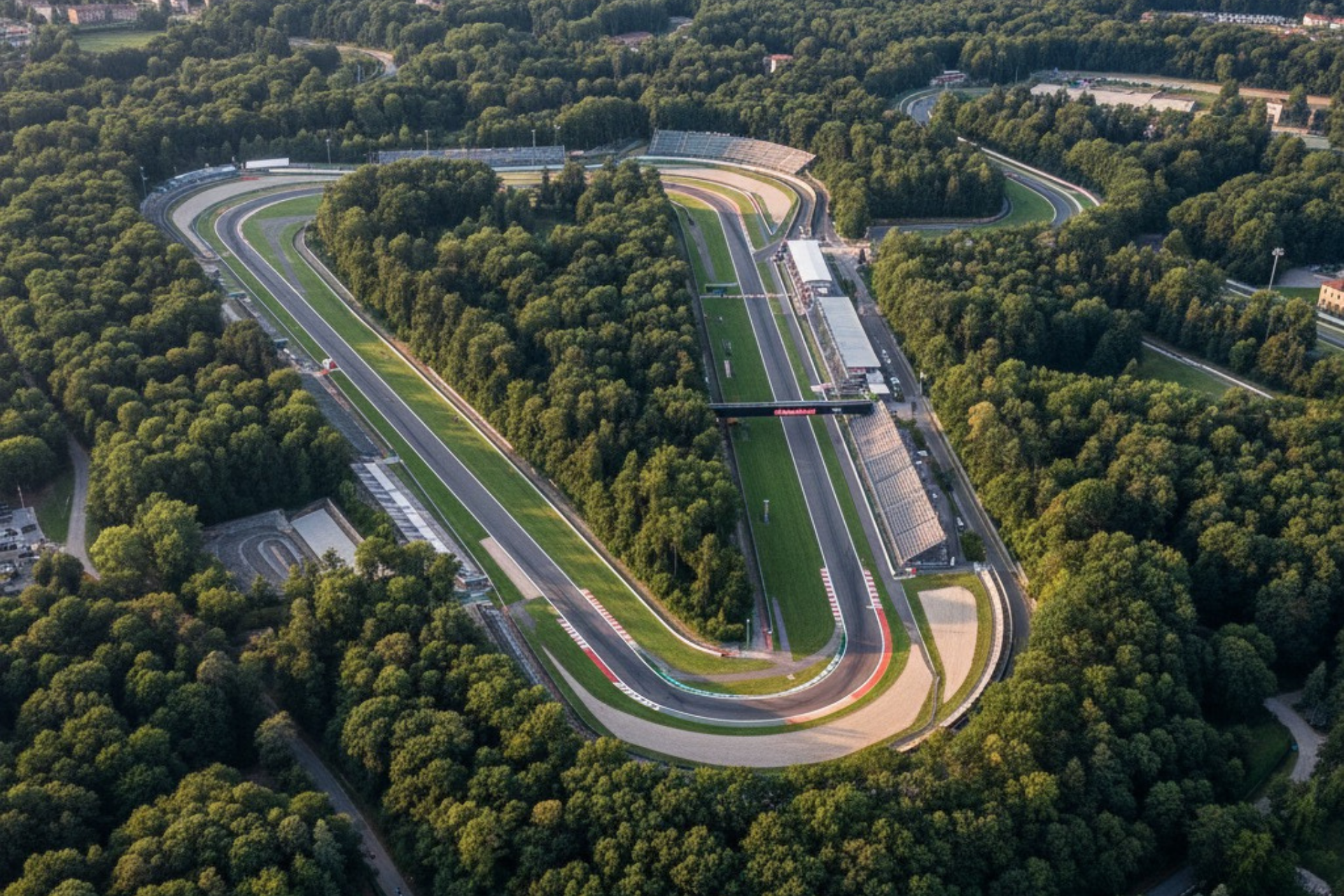
The Autodromo Nazionale Monza is located approximately 20 kilometres north of Milan, inside Parco di Monza, one of the largest enclosed parks in Europe.
This setting gives Monza its character, but it also defines the transport challenge. Unlike modern circuits built alongside highways or metro stations, Monza requires movement through parkland, temporary walkways, and managed access points.
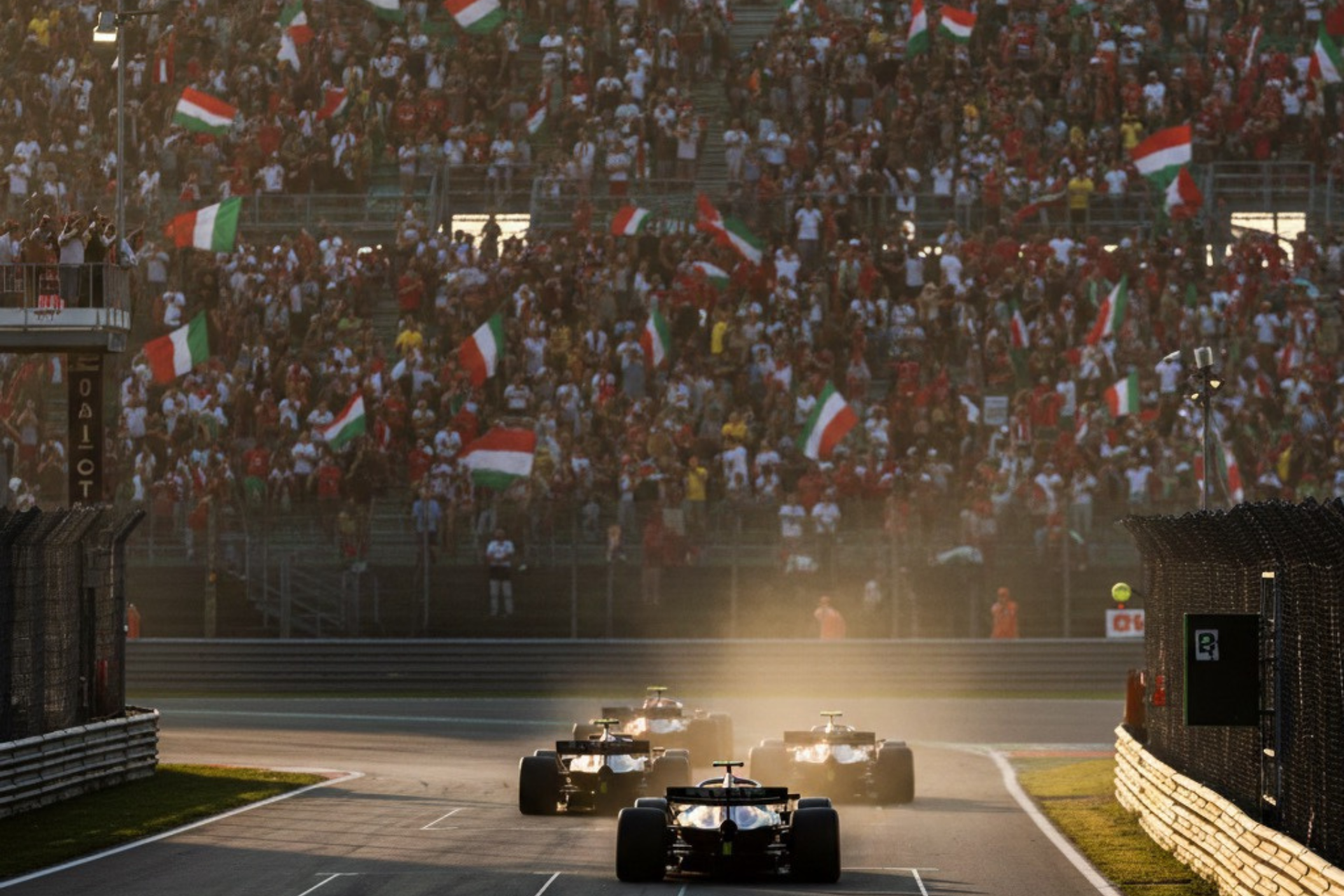
Once you pass the park gates, you are still walking significant distances to reach grandstands or General Admission areas. For most visitors, the Italian Grand Prix is not just a train journey. It is a walking event.
Taking the Train from Milan to Monza
For independent travellers, the train is the most common starting point.
Trains run frequently from Milano Centrale, Milano Porta Garibaldi, and Milano Lambrate to Monza, with journey times typically between 10 and 20 minutes. On normal days, this is one of the simplest regional routes in Lombardy.
On race weekend, however, trains become extremely busy, particularly on Saturday morning and Sunday. Platforms fill early, return services run at capacity, and delays are common in the evening once sessions finish.
After arriving at Monza station, visitors must either walk or join shuttle services to reach the circuit. This final leg can take anywhere from 30 minutes to over an hour, depending on crowd density and which entrance you are directed toward.
Shuttle Buses and the Last Stretch to the Circuit
Temporary shuttle buses operate during the Grand Prix, connecting Monza station and the surrounding areas to access points near Parco di Monza.
While helpful, shuttles are not door-to-door solutions. Drop-off points change depending on crowd flow, and walking is always required. Queues can build quickly, especially on Sunday morning when tens of thousands of fans arrive within a narrow time window.
First-time visitors often assume shuttles eliminate walking. They do not. They simply reduce the distance.
The 2026 “Colour-Coded” Shuttle System
Shuttle buses are helpful, but they are not door-to-door. In 2026, the shuttles are divided into three distinct lines:
- Black Line (Linea Nera): Connects Monza FS Station (Piazza Castello exit) to the park. This is the main route for train travellers.
- Blue Line (Linea Blu): Connects the stadium parking areas to Gate G.
- Purple Line (Linea Viola): Connects western parking lots to the Vedano (Gate A) entrance.
Note: The shuttle drop-off point is still roughly a 15–20 minute walk through the woods to reach the actual track gates.
Using Taxis or Ride-Hailing Services
Taxis and ride-hailing services operate across Milan and Monza, but access restrictions around the circuit increase significantly as race day approaches.
On Sunday, private vehicles are typically stopped well outside the park perimeter. Surge pricing is common, and availability drops sharply after the race ends.
Taxis can be useful late in the evening for short journeys back to hotels, but they are unreliable as a primary way to reach the circuit itself.
Driving Yourself to Monza Circuit
Driving is rarely recommended for first-time visitors.
Parking is limited, road closures are extensive, and navigation apps often fail to reflect temporary race weekend restrictions. Even with official parking, you should expect long walks and slow exits after sessions.
Unless you are familiar with the area and have secured parking well in advance, driving adds complexity without real benefit.
Why Monza Transport Feels Harder Than Expected
Monza is not difficult because it is poorly organised. It is difficult because it is historic.
The circuit was built long before Formula 1 crowds reached their current scale. Modern crowd management prioritises safety and flow over speed, which means walking routes are extended and arrival times are staggered.
First-time visitors often underestimate how long each stage takes, especially the final approach through the park. Those who arrive early tend to enjoy the day. Those who cut timings close often spend it waiting in line instead of cars.
How Organised Transfers Simplify Race Weekend
For visitors travelling from abroad, organised coach transfers remove most of the uncertainty.
Celtic Horizon Tours includes scheduled coach transfers between accommodation and Monza Circuit, designed specifically around race weekend conditions. Coaches follow approved routes, avoid unnecessary transfers, and drop as close as permitted to access points, reducing both walking distance and time pressure.
For first-time Monza visitors, this often turns the day from logistical problem-solving into a predictable routine.
What Time Should You Leave Milan on Race Weekend?
As a practical guideline:
On Friday, mid-morning departures usually work well.
On Saturday, aim to arrive at the circuit at least two hours before qualifying.
On Sunday, plan to arrive three to four hours before lights out.
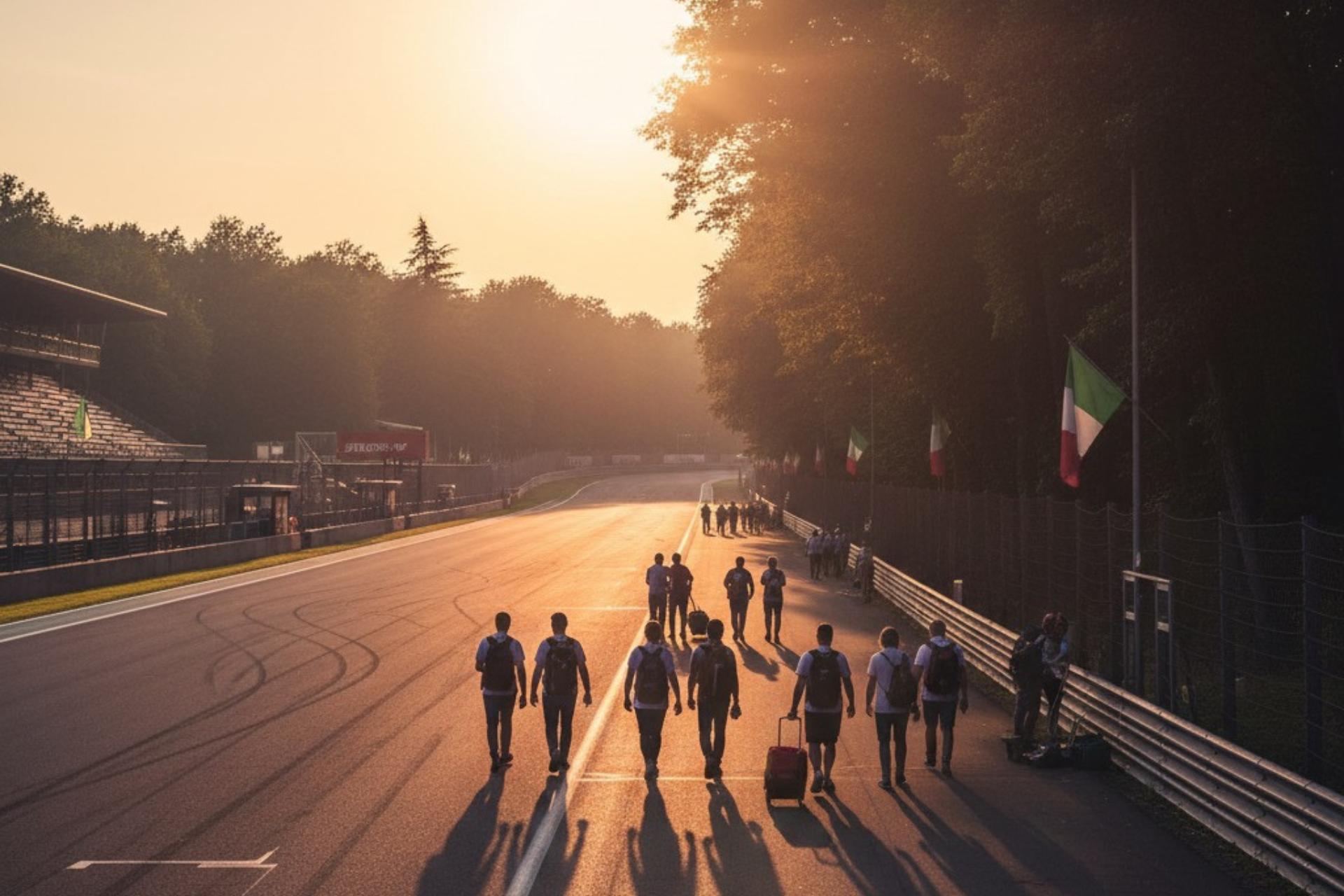
These buffers allow for security checks, walking distances, food queues, and unexpected delays. Arriving early at Monza rarely feels wasted, as the atmosphere builds steadily throughout the day.
Final Thoughts: Planning Transport Without Stress
Getting from Milan to Monza Circuit is not complicated, but it does require realistic expectations.
Trains, shuttles, walking routes, and security checks all form part of the journey. If you enjoy managing logistics and adapting on the fly, public transport works with preparation. If you value certainty, especially on your first visit, organised transfers simplify the experience considerably.
With the Italian Grand Prix returning in 2026 as one of the most anticipated events on the calendar, transport planning is not a detail. It is the foundation of the weekend.